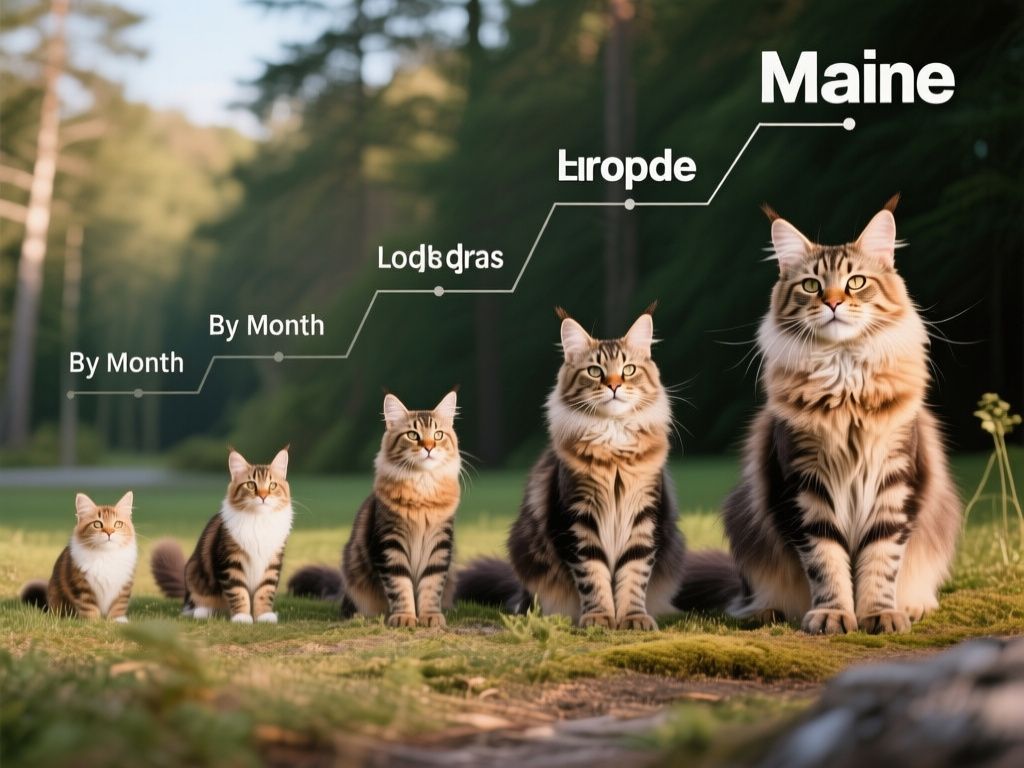
If you’re tracking Maine Coon growth stages by month, expect kittens to grow fast early (roughly 0–4 months), then slow into steady “fill out” (4–8 months), and finally mature into a long, slow build (8–18+ months). Most Maine Coons reach near-adult size by 12 months, but full bulk and coat can take 18–3 years.
How do Maine Coons grow, and when should I expect changes?
Maine Coons follow a fairly predictable growth arc: quick kitten growth, then a gradual shift toward muscle and mass, and finally slower “finishing” as they mature. “Growth” isn’t just weight—your cat’s proportions change too. Many people first notice it in the paws and tail getting bigger, then in the chest widening, and later in the overall body length and coat thickness.
Here’s the part I’ll be a little opinionated about: don’t obsess over the exact monthly number on a scale. Maine Coons vary a lot based on genetics, sex, litter size, and whether the kitten is getting consistent nutrition and vet care. Use monthly milestones as a sanity check, not as a pass/fail test.
What do “growth stages by month” actually mean?
“Growth stages by month” usually means you watch trends you can see and measure at home—weight, body length, appetite, energy, and coat development. Typical milestones for Maine Coons include:
- Early kitten stage: rapid weight gain, big eyes relative to the face, short-ish legs.
- Teen stage: longer limbs, taller-looking body, less “baby face.”
- Maturity stage: more pronounced muscle and chest, coat thickening, and slower gains.
Two important terms to know: “weaning” is the switch from nursing to solid food (often around 4–6 weeks). “Neutering/ spaying” (if planned) can change weight trajectory slightly—some cats gain an extra bit of fat if calories aren’t adjusted afterward.
What are the Maine Coon growth stages by month?
The months below are a practical “what you’ll likely see” guide for a healthy Maine Coon kitten. Because beginners usually want numbers, you’ll see weight ranges too, but treat them as approximate. If your kitten is consistently under- or overperforming, the right move is a vet check rather than guessing.
Birth to 1 month (0–4 weeks)
Newborn Maine Coons (like most kittens) are mostly growing in a “survival mode” way: lots of sleep, nursing, and rapid development of senses. At this stage, you’re mainly looking for normal nursing, steady weight gain, and no signs of lethargy or trouble breathing.
- Expected pattern: steady daily gains; kittens become more coordinated toward the end of the month.
- What changes visually: ears open, eyes start to open (often around 7–14 days).
2 months (5–8 weeks)
By two months, you should see a clear shift into kitten energy. Appetite increases, and kittens start exploring more than they should (which is adorable and also dangerous if you have cords or small objects around).
- What changes visually: legs lengthen, face still looks “kitten round,” fur starts to fluff.
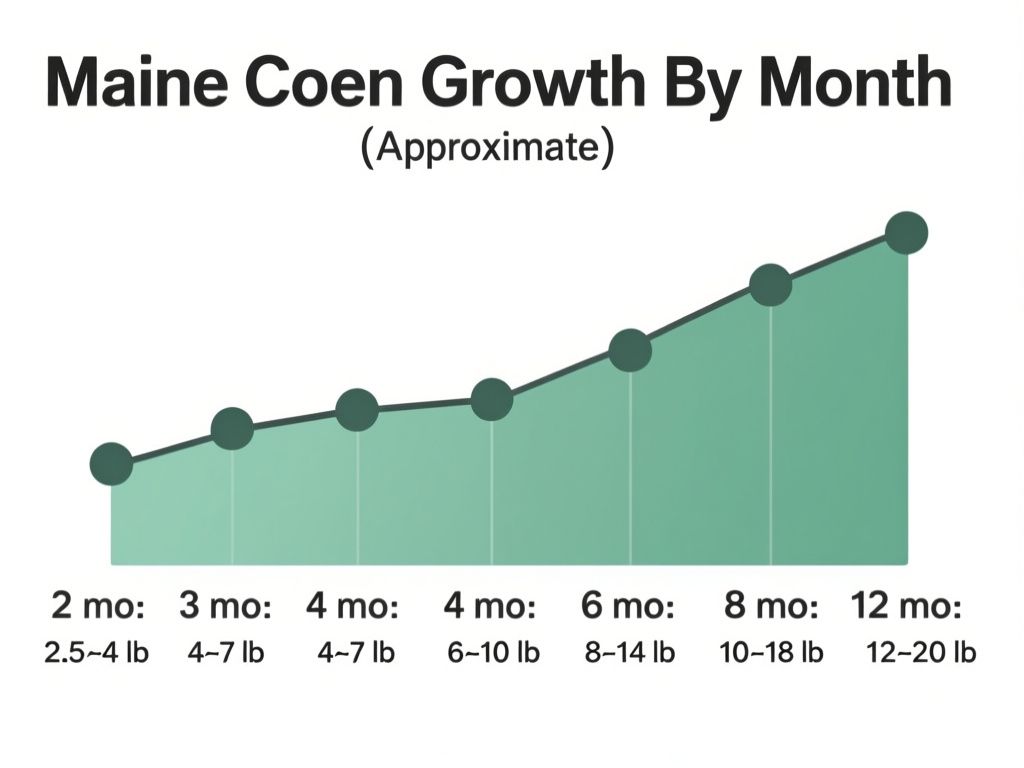
- Typical weight range: many kittens fall roughly around 2.5–4 lb (1.1–1.8 kg), but this varies a lot.
3 months (9–12 weeks)
Three-month-old Maine Coons often look like they belong on a magazine cover—big paws, strong curiosity, and that “almost-juvenile” body shape. Growth remains fast, and you’ll likely notice that the kitten looks slightly taller and less “blob-like.”
- Typical weight range: often around 4–7 lb (1.8–3.2 kg).
- What changes: more noticeable tufting around ears and paws begins to show up.
4 months
At four months, many kittens hit a noticeable speed bump: they keep growing fast, but the way they grow changes. Limbs catch up, and the body starts looking less “kittenish” and more like a young cat.
- Typical weight range: roughly 6–10 lb (2.7–4.5 kg).
- Common milestone: you’ll likely start seeing more long-body proportions.
5 months
Five-month-old Maine Coons often look slightly awkward in a lovable way—longer legs, chest still filling out. Coat development becomes more obvious, though the “full fluffy” look can take a while.
- Typical weight range: roughly 8–13 lb (3.6–5.9 kg).
6 months
Six months is prime “teen” territory. Energy is high, appetite is usually steady, and body shape shifts toward muscle and length. This is also a common time for some kittens to grow in fits and starts (a growth spurt one week, then more stable the next).
- Typical weight range: about 8–14 lb (3.6–6.4 kg).
- What changes: chest and back may look broader; paws keep growing.
7 months
At seven months, you may see early signs of adulthood in the face structure—still youthful, but the “baby roundness” fades. If your Maine Coon is male, you might notice the body getting thicker sooner.
- Typical weight range: roughly 10–16 lb (4.5–7.3 kg).
8 months
Eight-month-old Maine Coons often look like they’re moving toward the final silhouette. Not everything is “done,” but you can tell this cat has the classic Maine Coon proportions: long body, substantial tail, and a big frame.
- Typical weight range: about 10–18 lb (4.5–8.2 kg).
9 months
Nine months can be a steadier month for weight, even though growth continues. Many kittens are also starting to test boundaries more—teen behavior is real, and it’s not always about “bad habits.” Sometimes it’s just normal curiosity.
- Typical weight range: often 10–18 lb (4.5–8.2 kg), with individuals varying.
10 months
By 10 months, a healthy Maine Coon usually looks clearly “cat-sized,” not kitten-sized. Coat thickness improves further, and the chest and shoulders may look more filled in.
- Typical weight range: roughly 12–19 lb (5.4–8.6 kg).
11 months
At 11 months, growth often slows compared to the first half of the year. You’ll probably notice the cat looks more balanced—less “legs only” and more overall mass.
- Typical weight range: about 12–20 lb (5.4–9.1 kg).
12 months (1 year)
One year is a big psychological milestone, because it’s when many people expect “adult.” Most Maine Coons reach near-adult size around 12 months, but they may continue gaining bulk and developing the full coat for a lot longer.
- Typical weight range: roughly 12–20 lb (5.4–9.1 kg).
- What to expect: more “finish” in the body shape rather than huge changes.
13–18 months
This is where the slow build happens. Growth continues, but it’s usually smaller changes over time—like shoulders getting broader, tail thickening, and the coat becoming more impressive. Some cats may look “done” by 15 months; others keep thickening until closer to 2 or 3 years.
- Weight changes: usually gradual rather than dramatic.
- Visual changes: more pronounced mane-like fur around the neck and chest.
18–36 months (1.5–3 years)
Many Maine Coons technically keep maturing through their second and third year. If your cat is healthy and eating well, this is often the period where you see the most impressive “adult” coat and that full, heavy Maine Coon frame.
- Expectations: not constant weight gain, but continued body maturation.
Is my Maine Coon growing too slowly (or too fast)?
Here’s the honest answer: it depends on context. Growth rates vary, and body composition matters. A kitten can weigh “less” but look healthy, muscular, and energetic. Conversely, a kitten can hit a higher weight early but still be overfed.
Use these common red flags to guide what to do next:
- Sudden loss of appetite, persistent vomiting/diarrhea, or visible lethargy.
- Failure to gain weight over multiple check-ins (for example, not trending up between weighings).
- Very pronounced ribcage or “hollow” look that doesn’t improve.
- Breathing issues, persistent coughing, or straining (urgent vet territory).
If growth seems off, a vet visit is the fastest path to clarity. A clinician can assess body condition, teeth, hydration, and whether a kitten needs deworming or diet adjustments.
How do I help my Maine Coon grow well?
The biggest lever—way bigger than obsessing over monthly numbers—is feeding the right food at the right times. Maine Coons are large cats, so they benefit from complete, kitten-formulated nutrition during growth.
Food basics for growth months
- Use a kitten diet (or growth-formulated food) until your vet says to transition. Kittens generally need kitten food longer than small-breed cats.
- Follow feeding guidelines on the label, then adjust based on body condition (not just the scale).
- Choose quality over variety: constant switching can upset digestion.
- Water matters—especially as they start eating more dry food.
Weighing routine that actually helps
Beginners often weigh once and panic. A better method is simple:
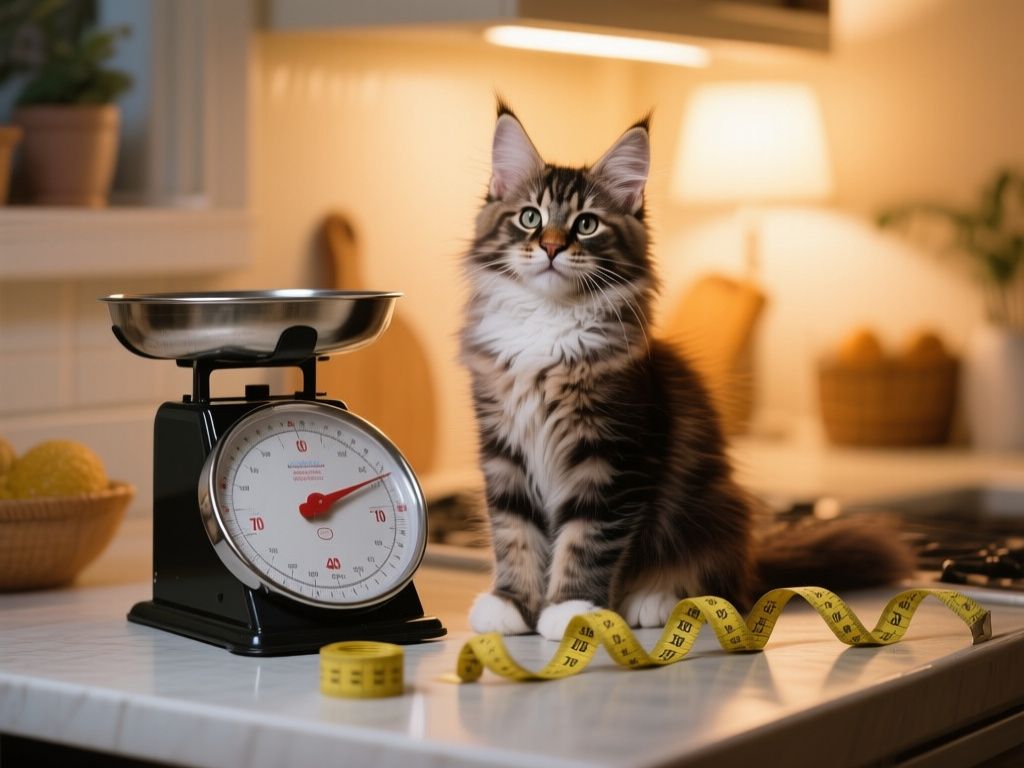
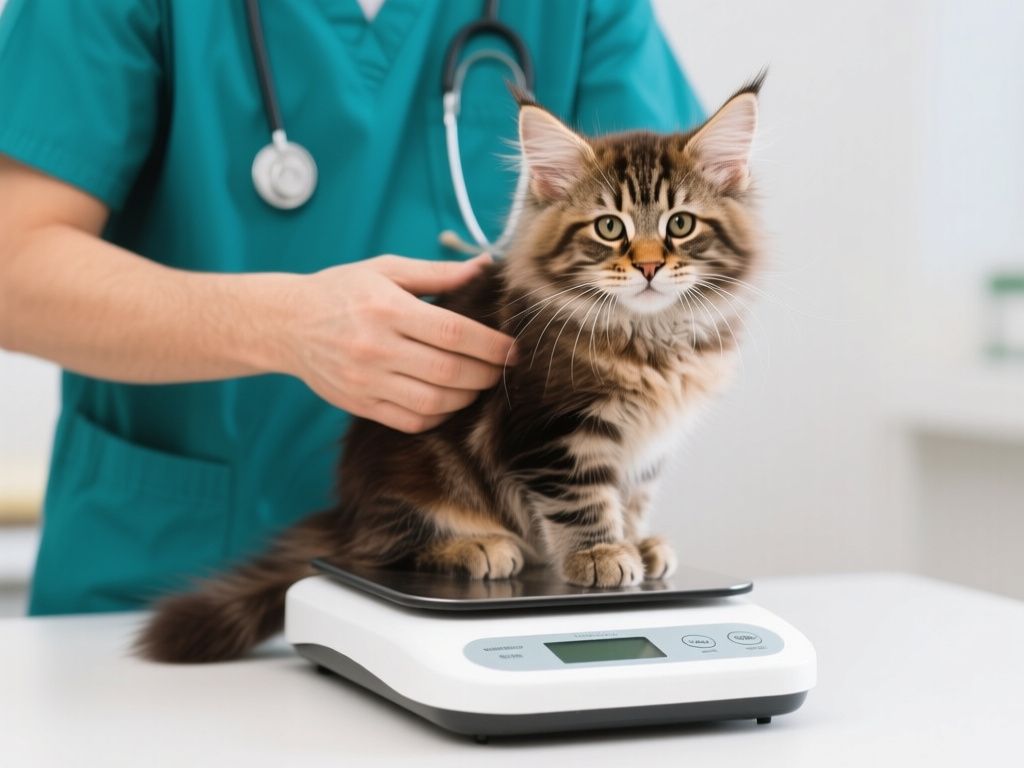
- Weigh the kitten every week at the same time (for example, after breakfast, before play).
- Record the number in a note on your phone.
- Look for a trend line upward over time rather than any single datapoint.
This keeps you from overreacting to natural day-to-day variation (yes, kittens can fluctuate).
Exercise and enrichment
Growth isn’t only about calories. Kittens need opportunities to move, climb, and play. That supports muscle development and helps them use energy instead of becoming sedentary. Provide safe climbing structures, supervised playtime, and puzzle feeders if your kitten is food-motivated.
One caveat: don’t force “hard exercise” during very early growth. Let them decide. Your job is safe, not intense.
What about neutering/spaying and growth?
Spaying or neutering is typically planned based on age, local veterinary guidance, and individual health. This can influence weight and appetite. If your kitten gains faster after surgery, the fix is usually diet portion adjustment—not more exercise (though play helps).
Ask your veterinarian about timing and how to adjust feeding before and after the procedure. That’s the most reliable way to avoid unwanted weight gain during late kitten/teen months.
Frequently Asked Questions
What is the average weight of a Maine Coon at 6 months?
Many Maine Coons land around 8–14 lb (3.6–6.4 kg) at about 6 months, but there’s wide variation. The best gauge is whether your kitten is energetic, eating well, and trending upward over weeks rather than hitting a single “target” weight.
When do Maine Coons stop growing?
Most Maine Coons reach near-adult size around 12 months, but growth doesn’t fully “stop” for many cats. Many continue maturing in bulk and coat thickness through 18 months and sometimes up to 2–3 years.
Do male Maine Coons grow bigger than females?
Typically, yes. Males often end up heavier and larger overall, and they may fill out earlier in the teen months. Even so, genetics varies, so don’t treat sex as the only predictor.
Should I worry if my Maine Coon is smaller than the range?
You should investigate, but don’t automatically panic. If the kitten is otherwise healthy—good appetite, normal stools, active play—and its weekly weight trends upward, it may simply be a smaller individual. If there’s no upward trend or there are symptoms, a vet check is warranted.
How much should I feed a growing Maine Coon kitten?
Start with the feeding guide on the kitten food label, then adjust based on body condition and weekly weigh-ins. A kitten that is gaining too slowly or too quickly may need portion or diet changes, so it’s worth checking in with your vet if you’re unsure.
Does Maine Coon coat fullness happen at a certain month?
Coat changes steadily over time. Many kittens show fluffier fur by 4–8 months, but the full “mane” look can develop much later. If your cat’s coat is patchy early, it’s often normal—just confirm there are no skin issues with your vet.
A practical takeaway you can use this week
If you’re using “Maine Coon growth stages by month” as your guide, track weekly weigh-ins and body condition, then compare monthly milestones as a trend check—not a strict ruler. A healthy Maine Coon can look different from another cat in the same month, and the long, slow “finish” is part of the charm of the breed.

Mim Creation
Writer at Helmet Today, covering helmet reviews, fit and riding safety.