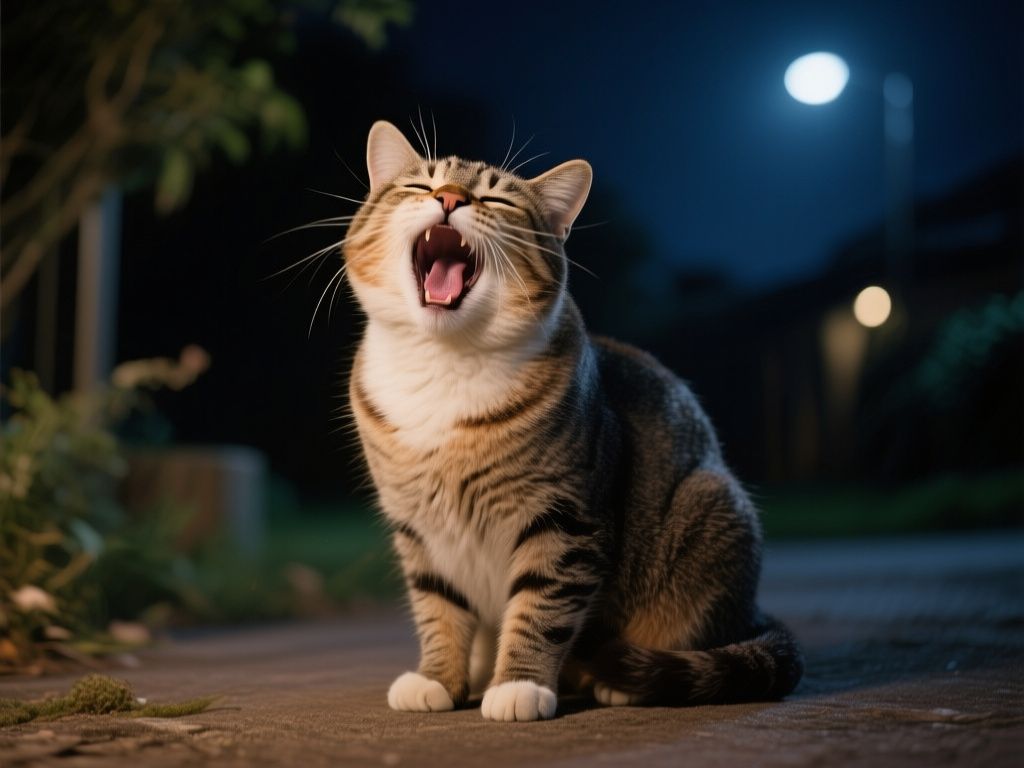
If your older cat suddenly meows at night, common causes include pain (often arthritis or dental issues), cognitive decline (senior “confusion”), hyperthyroidism, kidney disease, or changes in routine. The fastest path is to check for medical red flags first, then look at environment, stimulation, and nighttime feeding habits.
Why would an older cat start meowing at night?
Older cats often change their vocal patterns because something is off—physically, mentally, or in the routine they’ve relied on. Nighttime meowing in seniors is especially common because cats are naturally more active when the house is quiet, and a problem that was “manageable” during the day can feel worse at night.
Think of it like this: at night you have less light, fewer familiar cues, and more chance for discomfort to stand out. If your cat is coping with pain, cognitive changes, or hunger/thirst from a medical condition, the quiet hours can turn those issues into a noticeable behavior.
First things first: when should you treat this as urgent?
Sudden nighttime meowing can be benign, but some causes need prompt veterinary attention. If the meowing is paired with any of the following, don’t wait around:
- Not eating or drinking (or clearly reduced intake)
- Vomiting, diarrhea, straining to pee, or repeated urination with little output
- Rapid breathing, open-mouth breathing, or obvious breathing distress
- Sudden weight loss, severe lethargy, or collapse
- Disorientation: getting stuck behind furniture, walking into walls, or becoming lost in familiar rooms
- Behavior change plus a swollen face or visible mouth pain
If none of those apply, it’s still worth booking a vet visit soon—especially if the meowing is new, persistent for more than a couple nights, or seems to increase over time. In cats, hiding illness is common, so behavior changes can be one of the first visible signs.
What medical issues commonly cause nighttime meowing?
Night meowing is one of those symptoms that can come from multiple body systems. In practice, the most helpful approach is to connect the meowing to other changes you’ve noticed: appetite, thirst, litter box habits, grooming, mobility, temperament, and sleep patterns.
1) Pain: arthritis, injury, and dental problems
Arthritis is extremely common in senior cats, and it often flares more at night due to stiffness after settling into one position. You might see reluctance to jump, slowed movement, more time in the same spot, or a “tense” posture. Dental disease is another frequent culprit—cats can meow when the mouth hurts, and chewing might reduce during the day.
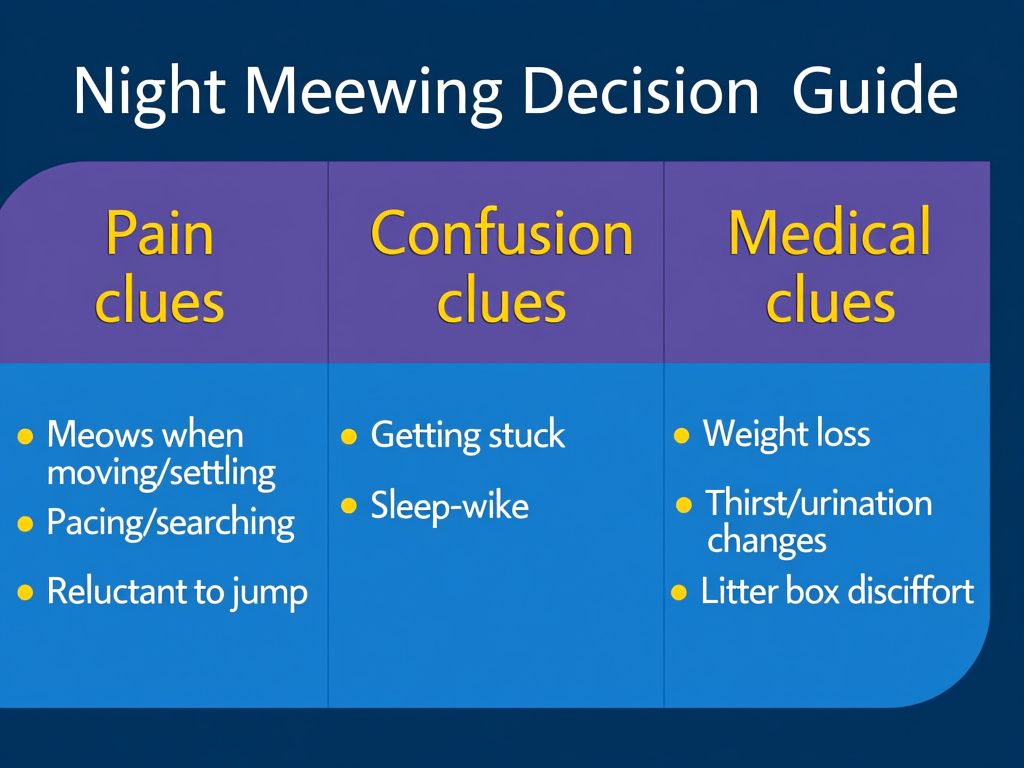
Clues that point to pain:
- Meowing when getting up, using stairs, or after jumping down
- Less grooming or grooming only parts of the body
- Bad breath, drooling, pawing at the mouth, or hard-to-eat foods ignored
2) Cognitive dysfunction (senior “confusion”)
Cognitive dysfunction syndrome (CDS) is a progressive condition in older cats that affects their memory, orientation, and sleep-wake cycle. A classic pattern is increased nighttime activity: more calling, pacing, or wandering, often with apparent confusion. Some cats vocalize as they search for something familiar that they can’t locate.
Signs that make CDS more likely:
- More disorientation at night (or worse recognition of familiar rooms)
- Getting stuck in corners or walking to the same spot repeatedly
- Changes in sleep timing: sleeping less at night, more broken sleep
- House soiling or altered litter box behavior (not explained by UTI alone)
It’s not a diagnosis you should guess from alone—but if the meowing plus confusion and nighttime pacing are consistent, it’s a strong reason to discuss CDS with your vet.
3) Hyperthyroidism (overactive thyroid)
Hyperthyroidism commonly affects older cats and can change both activity levels and behavior. Many cats become more talkative, and some appear restless or “wired.” While hyperthyroid cats often have increased appetite, they can still lose weight and sometimes have a messy coat from altered grooming.
Clues to watch for:
- Weight loss despite a normal or increased appetite
- Increased thirst and urination
- Restlessness or agitation at night
- Fast heart rate noted by your vet (they’ll confirm)
4) Kidney disease (chronic kidney disease)
Kidney disease can cause thirst, increased urination, nausea, and changes in appetite—any of which can disrupt sleep and lead to nighttime calling. Some cats vocalize when they’re thirsty, need to use the litter box more often, or feel unwell.
Clues include:
- Drinking more water than usual
- More frequent litter box visits
- Bad breath, reduced appetite, weight loss
- Overall “slower” behavior during the day, but restlessness at night
5) Urinary issues or pain with urination
Even without obvious accidents, cats can vocalize if they’re uncomfortable using the litter box—especially with bladder irritation or constipation. If the meowing corresponds to trips to the box, pay attention. Straining, small amounts, or frequent urgent visits matter.
How do you tell if it’s pain vs confusion vs “attention-seeking”?
You can’t diagnose at home, but you can narrow down what’s most likely by observing patterns. Cats don’t “meow just to annoy you” in the way people might imagine; if they’re meowing at night, it’s usually because something is rewarding (for them) or distressing.
Here are practical distinctions:
- Pain pattern: Meowing occurs when moving, jumping, or settling; the cat may pause, adjust posture, or appear reluctant to get comfortable.
- Confusion pattern: Meowing happens alongside pacing, repetitive searching, getting disoriented, or interacting oddly with familiar objects.
- Medical-restlessness pattern: Meowing clusters with thirst, litter box trips, weight loss, or increased appetite.
- Attention/routine pattern: Meowing happens at consistent times and you can interrupt it (briefly) with interaction, treats, or repositioning—without signs of pain or confusion.
One helpful way to reduce guesswork is to keep a simple night log for 3–5 nights: time of meowing, what your cat was doing right before it, how long it lasted, and whether it stopped after you did something (walked over, fed, turned on a light, etc.). Patterns show up fast.
What environment changes can trigger nighttime meowing?
Even with a medical issue in the mix, environment can amplify it. Older cats are often less adaptable to change, particularly if sight or hearing isn’t what it used to be.
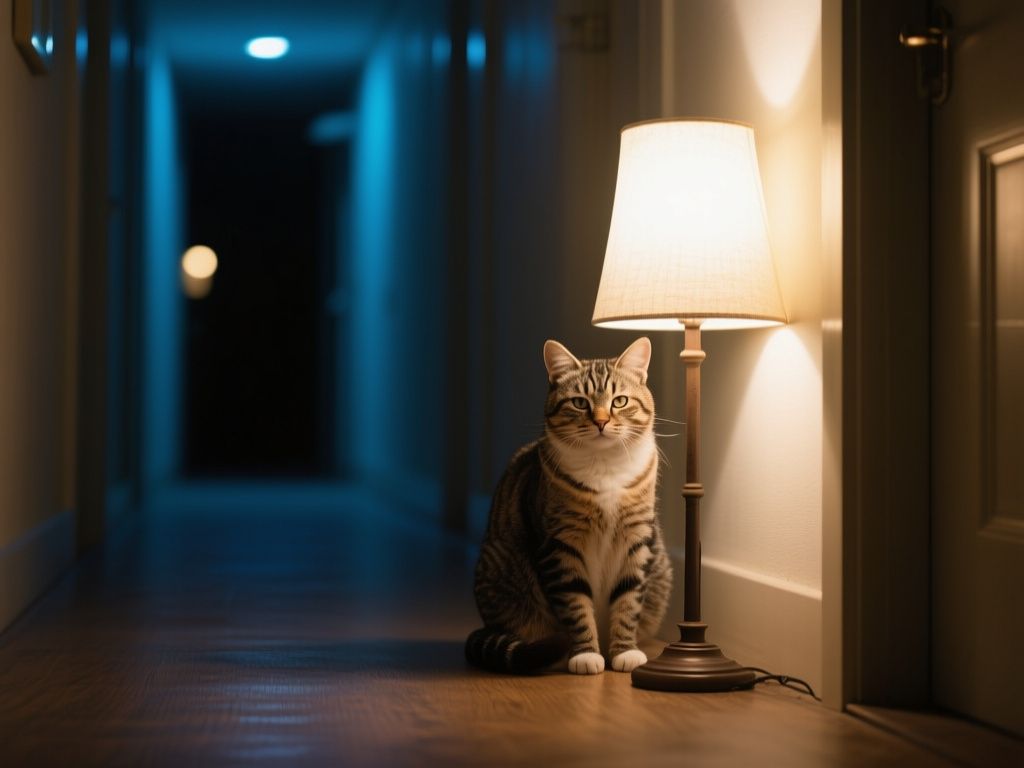
- Lighting shifts: If lights go off earlier than usual, or you moved furniture, the cat may not navigate comfortably and may vocalize while searching.
- Drafts or temperature: Some cats prefer warmth and will call if their favorite sleeping spot feels cooler.
- New sounds: HVAC cycling, a neighbor’s noise, or a new pet can increase nighttime arousal.
- Access changes: If you started closing a door, blocking a litter box route, or changing where the cat sleeps, nighttime calling can be “lost and seeking.”
- Competing schedule: If someone else in the home started sleeping differently, your cat may respond to the new routine.
Small tweaks can matter: placing night-friendly lighting (like a low-watt hallway lamp), keeping the litter box easy to reach, and leaving familiar bedding in the same location often reduce “searching” behavior.
What should you try at home tonight (and what should you avoid)?
If your cat is otherwise stable—eating some, no severe distress, no obvious pain—there are a few reasonable home steps that are low risk. The goal is to reduce discomfort, reduce disorientation, and avoid reinforcing a pattern that escalates.
Try these low-risk adjustments
- Make navigation easier: leave a dim light in the route to the litter box and a clear path to favorite beds.
- Create a “night nest”: put a warm, easy-access bed in a quiet area where your cat can settle without jumping far.
- Offer gentle movement support: if you have carpeted ramps, step stools, or soft ramps, use them so jumping isn’t required at night.
- Check litter box accessibility: ensure the litter box is clean, reachable, and not behind a closed door.
- Do a quick comfort check: watch your cat’s posture and grooming. If they hesitate to settle, pain may be involved.
- Use a calm interruption: if your cat meows, speak softly and redirect once (petting for a moment, then letting them choose). If they keep escalating, step back rather than turning the moment into a long attention session.
Avoid these common mistakes
- Ignore severe signs: if the cat seems in pain, can’t pee, or is disoriented in a new way, home fixes won’t be enough.
- Over-rewarding pacing: constant late-night feeding “to stop the noise” can train the pattern if the meowing is routine-based.
- Sudden environmental changes: moving furniture or switching feeding locations right when the behavior begins can worsen nighttime confusion.
How do vets evaluate “night meowing” in older cats?
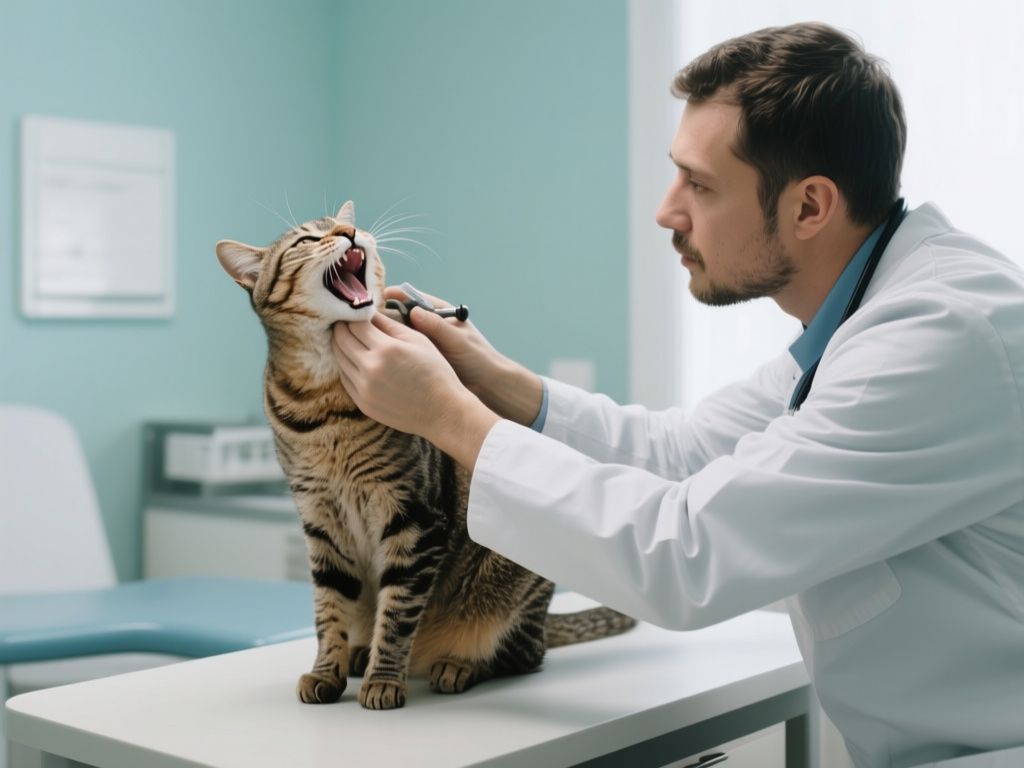
When you bring an older cat in, vets typically aim to sort medical causes first. Expect questions about appetite, weight change, thirst, urination, litter box habits, mobility, and any disorientation. Physical exams often include mouth evaluation and a heart rate check; depending on findings, blood and urine tests may be recommended.
Common workups can include:
- Bloodwork for thyroid status and kidney function
- Urinalysis for hydration, infection, or urinary tract clues
- Dental assessment (sometimes with imaging depending on symptoms)
- Blood pressure measurement if indicated
If pain, cognitive dysfunction, and metabolic disease have been reasonably addressed, your vet may talk through long-term management options tailored to your cat’s specific issues.
Is cognitive dysfunction treatable?
Yes, it’s often manageable, but results vary and it depends on ruling out treatable medical causes first. Treatment commonly focuses on reducing distress, improving routine, and in some cases using medications or supplements that your vet chooses based on your cat’s health profile.
At home, environmental management is usually a big part of improvement: consistent lighting, predictable meal timing, familiar scents, and minimizing changes that increase searching. If your cat is pacing at 2 a.m., those “boring” routines can be more effective than dramatic interventions.
Frequently Asked Questions
Could my older cat be meowing because they’re hungry at night?
It’s possible, especially if the meowing is tied to a consistent time and your cat seems alert and responsive. Still, for an older cat with a sudden change, hunger is worth checking against weight loss, increased thirst, and litter box changes because these can point to medical issues like hyperthyroidism or kidney disease.
How long should I wait before calling the vet?
If the meowing started suddenly and persists beyond a couple nights, a vet call is reasonable. Call sooner (same day or within 24 hours) if there are changes in eating, drinking, urination, breathing, vomiting, or obvious pain behaviors.
What if my cat seems confused but acts normal during the day?
That pattern can fit cognitive dysfunction, but it can also happen with vision or sensory changes, pain that feels worse at night, or metabolic issues that disrupt sleep. A good vet visit will help separate “senior confusion” from medical causes using history plus basic tests when needed.
Can I train my cat to stop night meowing?
You can sometimes reduce routine-based calling by changing how you respond (briefly redirecting, avoiding long late-night attention sessions, and keeping nights predictable). If there’s pain, urinary discomfort, or a metabolic condition, training alone usually won’t fix it—treat the cause and the behavior often improves.
What home changes help most for night disorientation?
Most cats do better when their routes are easy: dim night lighting, clear paths to the litter box, and beds placed where jumping isn’t necessary. Keeping furniture in the same spots and using consistent meal times also reduces “searching” behavior.
Can dental problems cause nighttime meowing?
Yes. Mouth pain can worsen with chewing and can also make settling uncomfortable, so cats may vocalize when resting or moving to get comfortable. If you notice bad breath, drooling, or difficulty eating, ask your vet to check the mouth promptly.
If you remember one practical step: track the meowing with a 3–5 night log and pair it with a comfort/health check (appetite, thirst, litter box, mobility, and any confusion). That small amount of structured observation helps your vet pinpoint whether you’re dealing with pain, cognitive decline, or a medical problem—and it saves time.

Mim Creation
Writer at Helmet Today, covering helmet reviews, fit and riding safety.