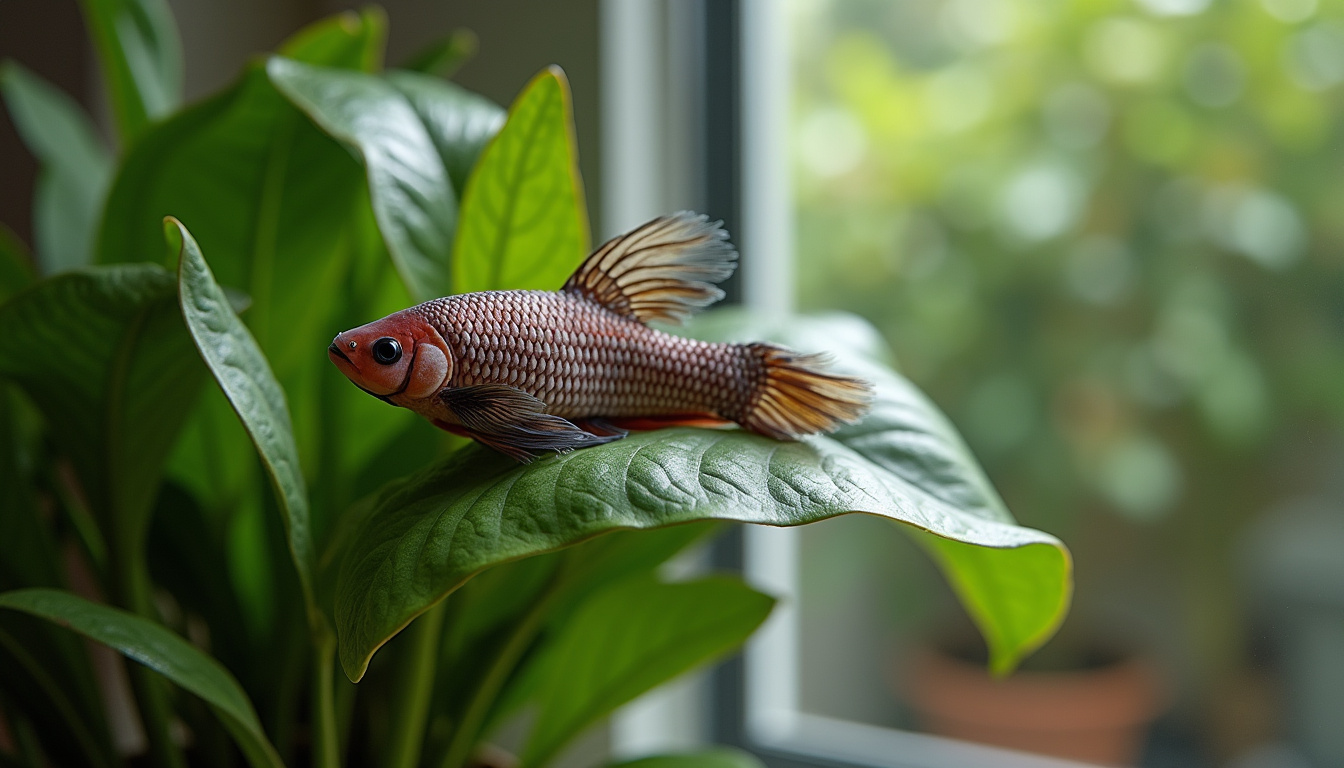
Finding your betta draped over a plant can be alarming, especially if he looks lifeless. Often, though, he’s simply choosing a comfortable resting spot. A broad leaf gives him support near the surface, while dense foliage can help him feel hidden and secure. A betta may also spend more time resting after moving to a new tank as he adjusts. Still, the plant itself isn’t always the explanation. Overheating, poor water quality, stress, or illness can make a fish unusually lethargic. Watch what happens when you approach or offer food: a healthy, resting betta should usually respond with interest and swim normally at other times. In this guide, we’ll help you tell ordinary sleep from a warning sign and check the tank conditions that could be affecting him. This guide covers everything about Why Is My Betta Fish Sleeping On A Plant that matters.
Why a Betta Fish May Sleep on a Plant
A betta may sleep on a plant because it provides a sheltered, comfortable place to rest while keeping him off the open tank floor. Broad leaves and dense stems can make an aquarium plant feel like cover, especially if your fish is new to the aquarium or still adjusting to unfamiliar surroundings. Some bettas also choose plants simply because they offer a convenient perch near the surface, where resting may require less effort than swimming continuously. The problem? Most guides skip the Why Is My Betta Fish Sleeping On A Plant part of the process.
This behavior can be normal when your betta still swims normally, responds to you or to food, and returns to regular activity after resting. It’s also common for a betta to change resting spots. Owners report seeing their fish use the substrate, heater, or an artificial plant at different times, particularly when they aren’t being watched (one owner’s observation). A new aquarium plant may therefore become his preferred sleeping site without indicating a problem. That’s where Why Is My Betta Fish Sleeping On A Plant changes everything.
However, plant-sleeping deserves closer attention if it comes with constant lethargy, poor appetite, rapid breathing, clamped fins, or unusual color changes. Overheating and poor water quality can make a betta weak and inactive, while a recent move may cause temporary stress. Check the whole pattern, not just the sleeping position. Here’s where the Why Is My Betta Fish Sleeping On A Plant details get tricky.
When Sleeping on a Plant Is Normal
- Sleeping on a plant is usually normal when your betta uses it as a brief resting spot, then returns to swimming, exploring, or eating.
- A healthy resting betta may remain still, hold his fins close to his body, and breathe gently. He should still respond when you approach the tank or offer food. His color should remain typical for him, without a sudden dull or gray appearance.
- The position matters, too. A betta that settles on a broad leaf, near the surface, often prefers the support and shelter. He may change spots during the day rather than staying on one leaf continuously.
- Recent changes can make this behavior more noticeable. After a move or tank upgrade, a betta may spend more time resting in cover while he adjusts; experienced keepers describe this as a possible settling-in period (Bettafish.com).
- Watch what happens after the rest. If he swims normally, accepts food, and chooses the plant only for occasional breaks, there may be no problem to correct.
- Treat the behavior as a warning sign instead if he stays there almost constantly, ignores food, breathes heavily, loses color, or shows clamped fins. Overheating, poor water quality, stress, or illness can turn ordinary resting into lethargy. Check the whole pattern, not just the sleeping position.
How to Tell Normal Resting From a Potential Problem
A healthy resting betta usually wakes for food and resumes normal activity, while a sick fish stays lethargic and shows other changes. The problem? Most guides skip the Why Is My Betta Fish Sleeping On A Plant part of the process.
| Normal resting | Potential problem |
|---|---|
| He rests on a leaf, near the surface, or in another familiar spot, then changes position or swims away. | He remains in one place for long periods and rarely responds when you approach the tank. |
| His body stays upright, breathing appears calm, and his fins look relaxed. | He struggles to stay upright, breathes heavily, keeps his fins tightly clamped, or looks unusually pale. |
| He becomes alert at feeding time, eats normally, and explores at least occasionally. | He refuses food, hides constantly, or loses interest in movement and feeding. |
| The behavior began after a tank change or move and gradually improves as he settles. Bettas may need time to adjust to a new environment. | The lethargy continues or worsens, especially alongside overheating or poor water quality, both of which can contribute to lethargy. |
Watch the pattern over several observations rather than judging one nap. I’d also check the water and heater if the change is sudden. A plant can be a comfortable resting place, but it shouldn’t be the only sign of life in the tank. Responsive behavior is reassuring; persistent inactivity calls for closer investigation. That’s where Why Is My Betta Fish Sleeping On A Plant changes everything.
Aquarium Conditions to Check First
- A betta sleeping on a plant is often harmless, but checking the tank conditions helps rule out heat, water, or stress problems.
- Check the water first. Poor water quality can make a betta sluggish, so test for ammonia, nitrite, and other signs of imbalance. If anything is abnormal, use a partial water change with conditioned water rather than replacing everything at once.
- Check the heater and thermometer. Overheating may cause lethargy, while unstable conditions can add stress. Make sure the heater is working correctly and isn’t creating an unusually warm area near the resting spot.
- Watch the filter flow. A betta may choose a leaf because strong current makes swimming tiring. Redirect the outlet or reduce the flow if the fish struggles to stay in place.
- Inspect the resting surface. Artificial leaves should be smooth and free of sharp edges that can tear fins. Live plants should be clean and free of decay. A broad leaf near the surface gives a tired fish an easier place to pause.
- Consider recent changes. A betta may rest more while adjusting to a new tank, new decorations, or a changed routine. Keep the environment steady and observe whether normal activity returns.
- Check the whole pattern, not one nap: appetite, breathing, posture, and response to movement matter more than the chosen sleeping spot.
Warning Signs That Your Betta May Be Unwell
A betta sleeping on a plant may be unwell if the rest of his behavior also changes, especially his appetite, breathing, posture, or response to you. Here’s where the Why Is My Betta Fish Sleeping On A Plant details get tricky.

- He stays in one spot for most of the day. A short rest is less concerning than remaining on the plant and barely moving, even when the tank is quiet.
- He ignores food. A healthy betta should show interest when food is offered; refusing several feedings is more concerning than sleeping between meals.
- His breathing looks difficult. Rapid gill movement, repeated trips to the surface, or obvious effort while breathing can signal a problem.
- He responds weakly to movement. He may not turn toward you, follow activity outside the tank, or move away when gently approached.
- His posture looks abnormal. Watch for sinking, floating uncontrollably, leaning to one side, or struggling to remain upright.
- His fins stay tightly clamped. Fins held close to the body, especially with low activity, can indicate stress or illness.
- His appearance changes. Look for a swollen body, missing scales, sores, unusual spots, or a marked loss of color.
- The timing suggests an environmental issue. Sudden lethargy after a temperature change, overheating, or poor water conditions deserves prompt attention.
If you notice several signs together, test the water, check the heater and filter, and seek advice from an aquatic veterinarian or experienced fish professional. Here’s where the Why Is My Betta Fish Sleeping On A Plant details get tricky.
What to Do if Your Betta Keeps Sleeping on the Plant
Start by checking the tank and your betta’s overall behavior, then make small changes rather than removing the plant immediately. Here’s where the Why Is My Betta Fish Sleeping On A Plant details get tricky.
- Watch him during feeding. A betta that wakes, swims toward food, and eats normally may simply prefer the plant as a resting place. Note whether he becomes active at other times, too.
- Inspect the plant closely. Make sure it has no sharp edges, rough seams, or loose parts that could tear fins. Replace unsafe artificial plants with soft, smooth décor.
- Check the water and heater. Test for ammonia and nitrite, confirm that the temperature is stable, and look for cloudy water or a malfunctioning filter. Correct problems gradually; sudden large changes can add stress.
- Improve his resting choices. Place a broad, smooth leaf or other safe perch near the surface, with clear access to air. Keep the plant from blocking swimming space or trapping him.
- Reduce disturbances around the tank. Avoid tapping the glass, strong room vibrations, and bright light for long periods. A secure, quiet area can make plant-resting less frequent.
- Recheck him over the next day or two. If he stops eating, breathes heavily, clamps his fins, loses color, or remains difficult to rouse, contact an aquatic veterinarian or experienced fish professional. A plant may be a preferred bed, but persistent lethargy needs investigation.
Frequently Asked Questions
Why is my betta fish sleeping on a plant?
It’s usually normal if he wakes for food, swims normally, and returns to his usual behavior. The leaves offer support and shelter, so your betta may simply have chosen a comfortable resting place. The problem? Most guides skip the Why Is My Betta Fish Sleeping On A Plant part of the process.
Does sleeping on a plant mean he feels unsafe?
Not necessarily. Bettas may rest among leaves because cover helps them feel secure. A recent move or tank change can also make a betta spend more time hiding while he adjusts; bettakeepers commonly note this adjustment period. The problem? Most guides skip the Why Is My Betta Fish Sleeping On A Plant part of the process.
When should I be concerned?
Look beyond the plant. Persistent lethargy, loss of appetite, rapid breathing, unusual color, clamped fins, or trouble staying upright points to a possible health or water-quality problem. Overheating and poor water quality can also cause lethargy. Here’s where the Why Is My Betta Fish Sleeping On A Plant details get tricky.
Should I remove the plant?
Usually not. First check that it has no sharp edges, provides a stable resting surface, and isn’t blocking movement. If your betta remains inactive even when food is offered, test the water and review the tank temperature and maintenance routine. Here’s where the Why Is My Betta Fish Sleeping On A Plant details get tricky.
Key Takeaways
A betta sleeping on a plant is usually choosing a secure resting place, but persistent inactivity can signal a tank or health problem. The problem? Most guides skip the Why Is My Betta Fish Sleeping On A Plant part of the process.
- Normal rest is brief and fits your betta’s usual routine. He should wake for food, respond to movement, and return to swimming or exploring.
- A plant offers cover and support, especially for a tired betta or one settling into a new environment. Soft, broad leaves can make resting easier.
- Check temperature, water quality, and maintenance before removing the plant. Overheating, poor water, and sudden changes can cause lethargy.
- Watch for warning signs: refusing food, rapid or difficult breathing, clamped fins, unusual color, sores, or trouble staying upright.
- If he stays inactive, test the water and review the tank setup. Make gradual changes, avoid repeatedly disturbing him, and seek veterinary advice if concerning signs continue.

Mim Creation
Writer at Helmet Today, covering helmet reviews, fit and riding safety.