The term “catfish” became slang for someone who creates a fake online identity after the 2010 documentary Catfish. The filmmakers used a story about placing catfish with cod during transport to keep the cod active. That story suggests a person who “stirs things up,” although historians have questioned whether the fish tale is literally true.
What does “catfish” mean online?
Online, a catfish is a person who pretends to be someone else, usually by using stolen photos, a made-up biography, or a false name. Catfishing often happens on dating apps and social media, but it can also occur in gaming communities, messaging apps, and online marketplaces.
The deception can serve different purposes. Some catfish want money, personal information, attention, or emotional control. Others create false identities because they are lonely, insecure, curious, or exploring parts of themselves they do not feel safe showing openly. The motive varies, but the central feature is intentional misrepresentation.
A person does not become a catfish simply because an online profile is incomplete or uses a nickname. Privacy is not the same as fraud. The term usually applies when someone knowingly presents a false identity in order to build a relationship, gain trust, or obtain something from another person.
Where did the word “catfish” come from?
The modern slang meaning comes from the 2010 documentary Catfish, directed by Henry Joost and Ariel Schulman. The film follows Nev Schulman as he develops an online relationship with a woman named “Megan,” who appears to be a talented young artist living in Michigan.
As the relationship develops, Schulman discovers that the online story is not what it seemed. The woman behind the account, Angela Wesselman, had created a network of fictional Facebook profiles and used other people’s photographs. The film’s title became strongly associated with deceptive online romance and false digital identities.
The term spread beyond the documentary after MTV launched the television series Catfish: The TV Show in 2012. The program featured people who had formed online relationships but had never met their supposed romantic partners in person. Its repeated use of “catfish” helped make the word familiar to a much wider audience.
So, the short version is this: the internet meaning of “catfish” came from a documentary, and the documentary borrowed its title from a fish-transport story.

Photo by cottonbro studio on Pexels
Why did the documentary use the name “Catfish”?
The documentary’s title refers to a story told near the end of the film by Nev Schulman’s older brother, Ariel. In the story, live cod shipped from Alaska to China supposedly became soft and sluggish during the long journey. Fishermen then placed catfish in the tanks with the cod. The catfish chased the cod around, keeping them active until they reached their destination.
The story’s lesson is that some people or situations keep others alert by creating tension. In the documentary, the metaphor suggests that Angela’s deception disrupted Schulman’s assumptions and forced him to confront how much of his relationship existed only through a screen.
That is why “catfish” is a striking metaphor. A false online identity does not merely tell one lie. It can introduce uncertainty, emotional pressure, and conflict into another person’s life. The person being deceived may spend weeks or months trying to understand what is real.
The analogy is not perfect. Real catfish are not placed in every shipment of cod, and the story has been repeated in several forms over the years. Still, it gave the documentary a memorable title and supplied a simple image for a complicated kind of deception.
Is the catfish-and-cod story true?
The fish story is widely repeated, but its factual status is uncertain. Versions of it appeared in popular writing before the documentary, including accounts connected with the fishing industry and business speaker Thomas J. Watson Jr. However, researchers and fish-industry observers have questioned whether live cod were actually transported this way or whether the story works better as a motivational anecdote than as verified history.
There are practical reasons for skepticism. Cod and catfish have different environmental requirements, and transporting live fish over long distances involves careful control of water temperature, oxygen, salinity, crowding, and waste. A story that sounds simple—put one fish with another to keep it moving—leaves out the difficult details of real fish transport.
The uncertain history does not change the origin of the online slang. The documentary used the story as a metaphor, and viewers connected its title with fake online identities. A phrase can become culturally influential even when the anecdote behind it is disputed.
Why are actual catfish called catfish?
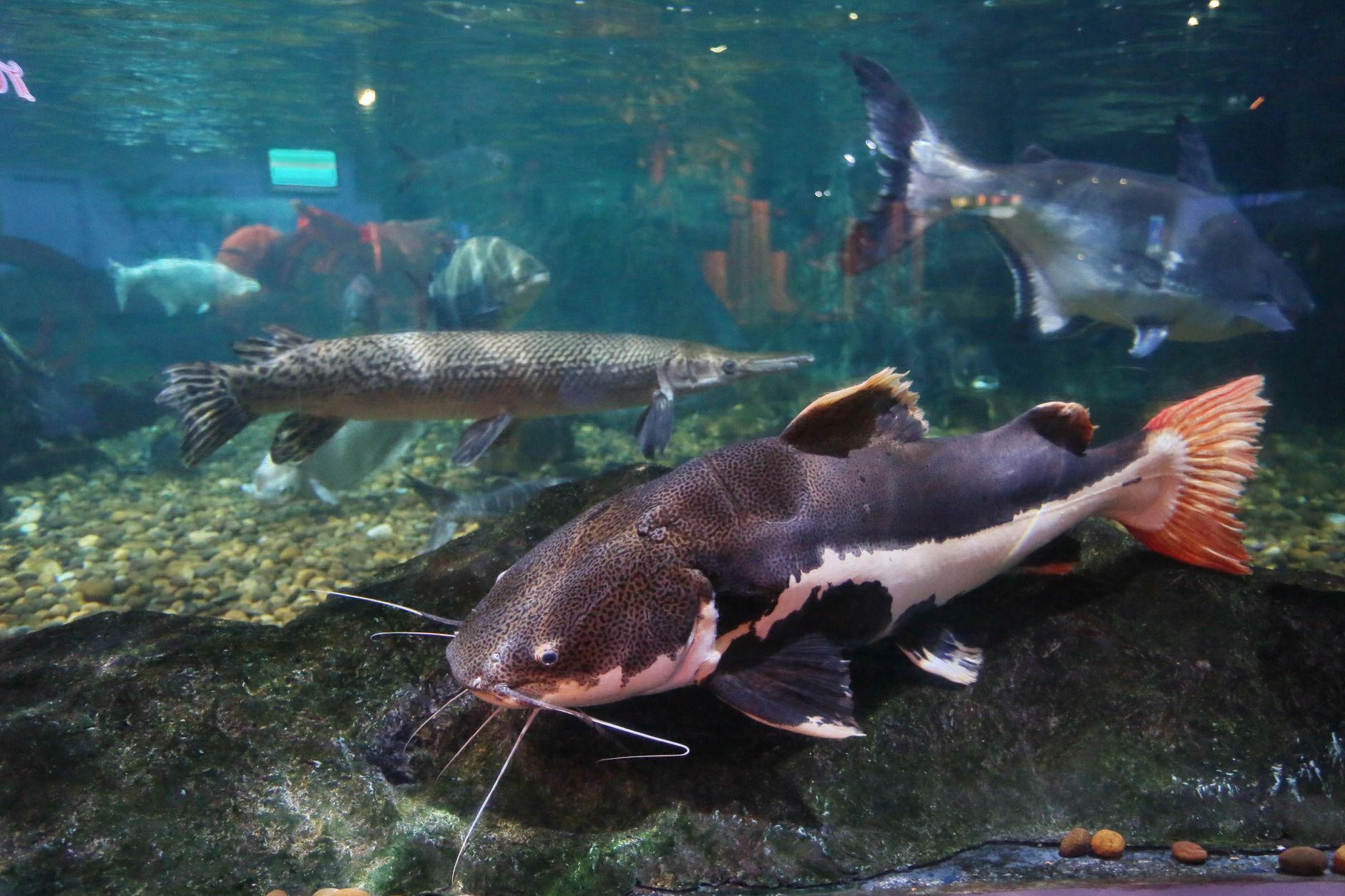
The animal name is much older than the internet expression. Catfish are freshwater and marine fish known for the long, whisker-like organs around their mouths. These organs are called barbels, and they resemble a cat’s whiskers.
Barbels help catfish sense their surroundings, locate food, and detect chemical signals in the water. Many catfish feed near the bottom, where visibility may be poor. Their whisker-like sensory organs are useful in muddy water and at night, when relying on sight is more difficult.
The name “catfish” therefore describes a visible physical feature, not deceptive behavior. English speakers have used similar animal comparisons for centuries, giving creatures names based on shapes, sounds, habits, or body parts. The later internet meaning is a separate metaphor built on the fish’s name.
| Use of “catfish” | Meaning | Origin |
|---|---|---|
| Catfish, the animal | A fish with whisker-like barbels around its mouth | Descriptive English name |
| Catfish, online slang | A person using a deliberately false identity online | Popularized by the 2010 documentary Catfish |
| Catfishing | The act of creating or using that deceptive identity | Verb form that grew from the documentary and television series |
How did “catfishing” become a common word?
The noun “catfish” came first in popular online use, and “catfishing” soon developed as the verb for the behavior. News reports, social media discussions, dating advice, and the MTV series all helped establish the term.
Television was especially influential because the show presented a recognizable pattern. A person would contact the program after forming a close online relationship. The other person might avoid video calls, refuse to meet, offer changing explanations, or rely on photographs that seemed too polished or inconsistent. The show then investigated the identity behind the account.
Those signs are not proof by themselves. Someone may avoid video calls because of disability, anxiety, poor internet access, safety concerns, or a complicated personal situation. Catfishing is determined by deception, not by one awkward habit. Several inconsistencies together, especially requests for money or secrecy, deserve closer attention.
The word also became useful because it was shorter than phrases such as “online identity fraud” or “romantic deception using a false profile.” It gave people a compact way to describe an experience that previously lacked a common label.

Photo by Helena Lopes on Pexels
How is catfishing different from a simple online lie?
Catfishing usually involves an ongoing false identity rather than a single inaccurate detail. A person might use another individual’s photos, invent a job, claim to live in a different country, or maintain several fake accounts that support the same story.
The deception often continues because the catfish is building trust. They may send affectionate messages, discuss a future together, or create a sense of exclusivity. In financial scams, the relationship may eventually lead to requests for emergency money, gift cards, cryptocurrency, travel expenses, or banking information.
Some cases are emotionally harmful even when no money changes hands. The person being deceived may lose time, confidence, friendships, or the ability to trust future partners. Stolen photographs can also harm the real person whose identity is being used.
At the same time, not every false profile is a catfishing scheme. Satire accounts, fictional role-playing, anonymous political accounts, and privacy-focused profiles may not be trying to trick a specific person for personal gain. Context and intent matter.
How can someone spot a catfish?
No single warning sign proves that someone is catfishing, but patterns can reveal that an online identity needs verification. Useful questions include:
- Does the person repeatedly avoid live video calls or in-person meetings?
- Do their photos appear on several unrelated websites under different names?
- Does their location, work history, age, or daily schedule keep changing?
- Do they create intense romantic feelings unusually quickly?
- Do they discourage outside advice or ask for secrecy?
- Have they requested money, gift cards, account access, intimate images, or copies of identification?
A reverse-image search can sometimes show whether a profile photograph belongs to someone else, although search tools do not find every stolen image. A live video conversation can provide stronger evidence than a collection of photographs, but even video is not a complete guarantee because identities can be manipulated and recordings can be reused.
The safest practical rule is simple: do not send money or sensitive documents to someone known only online. A genuine relationship can withstand reasonable verification and a refusal to provide financial help.
Why do people catfish others?
Catfishing has no single motive. Financial fraud is one major reason, particularly when the catfish builds trust before claiming to face a medical, legal, travel, or military emergency.
Some people catfish for emotional reasons. They may feel uncomfortable with their appearance, age, gender, social status, or personal circumstances and believe a different identity will make connection easier. Others seek attention or control, using a fake identity to experience how people respond to an idealized version of themselves.
There are also cases involving harassment, revenge, fantasy, and social experimentation. A person may create a false account to monitor an ex-partner or embarrass someone. The motive can explain the behavior, but it does not remove the harm caused by deception.
Frequently Asked Questions
Who invented the term “catfish” for online deception?
The modern online meaning was popularized by the 2010 documentary Catfish, made by Henry Joost and Ariel Schulman. The film connected a deceptive online relationship with a story about catfish keeping cod active during transport. MTV’s television series later made the term widely familiar.
Does “catfish” have anything to do with the appearance of the fish?
The animal’s name refers to its whisker-like barbels, which resemble a cat’s whiskers. The online meaning is a later metaphor and is not based on the fish’s body, color, or behavior.
Is the story about catfish keeping cod active proven?
The story is famous but disputed. It has appeared in popular accounts for years, yet the practical details of transporting cod with catfish are not firmly established. The documentary used it as a metaphor regardless of whether the anecdote is literally accurate.
Can someone be a catfish without asking for money?
Yes. Catfishing means using a deliberately false identity online, and financial theft is only one possible motive. A person may catfish for attention, romance, revenge, control, or emotional gratification.
Is using a nickname online catfishing?
Usually not. Many people use nicknames or limit personal information for privacy and safety. It becomes catfishing when someone intentionally creates a false identity to deceive another person or gain trust under false pretenses.
What should someone do if they think they are being catfished?
Stop sending money, intimate images, passwords, and identity documents. Save messages and payment records, tell a trusted person, report the account to the platform, and contact a bank or relevant authorities if fraud has occurred. Avoid confronting the person alone if threats or harassment are involved.
The name “catfish” began with whisker-like fish, gained its modern meaning through a documentary, and became common because it neatly describes the disturbance caused by a false online identity. When a relationship exists only through screens, independent verification is the most reliable protection.

Mim Creation
Writer at Helmet Today, covering helmet reviews, fit and riding safety.