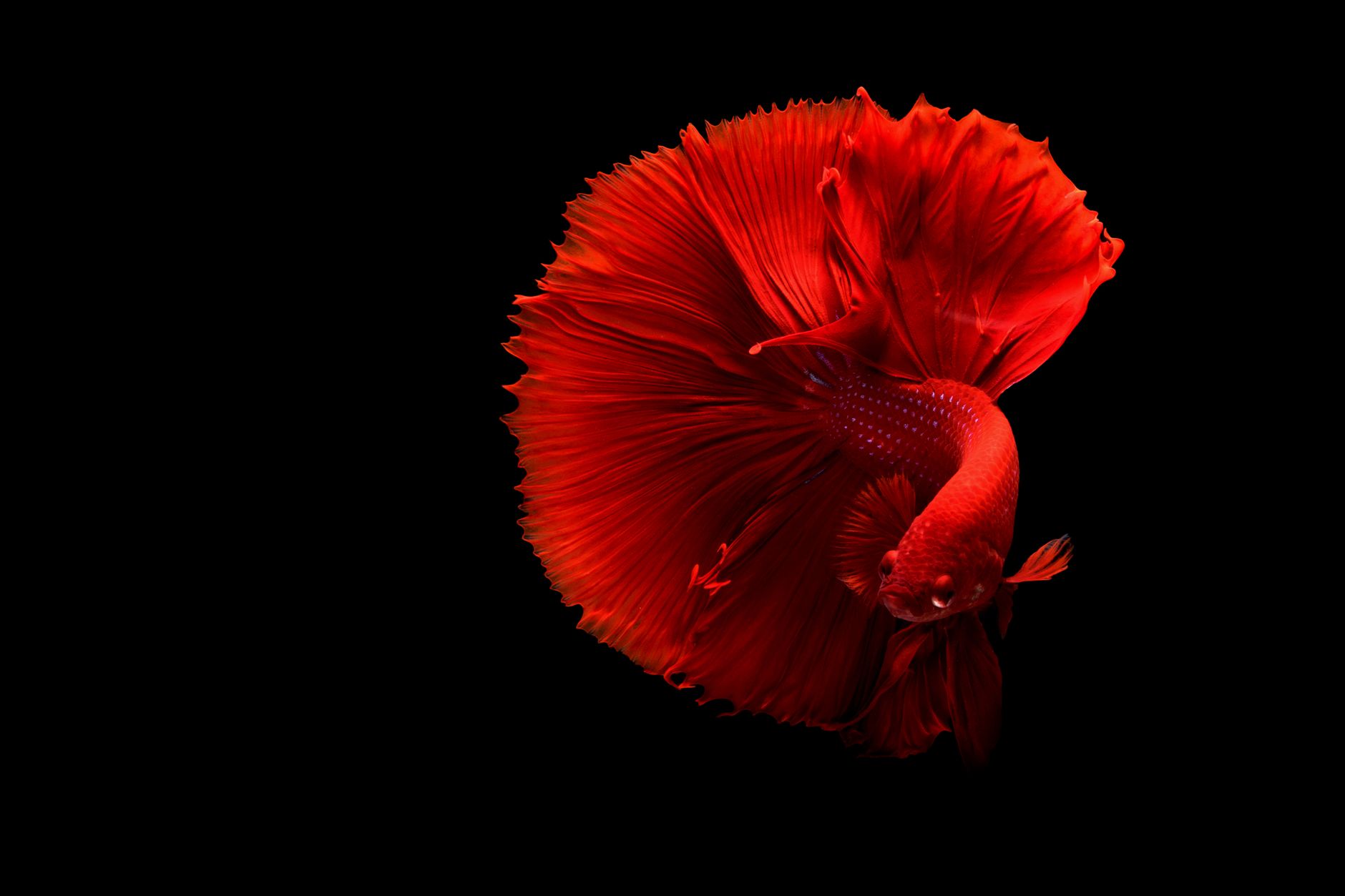
Chinese fighting fish, more commonly called betta fish or Siamese fighting fish, usually live for 2 to 4 years in captivity. With clean, warm water, a suitable aquarium, good food, and careful disease prevention, some reach 5 years. Fish kept in small unheated containers often live much shorter lives because water quality and temperature fluctuate.
What are Chinese fighting fish?
“Chinese fighting fish” is a common but imprecise name for betta fish, especially Betta splendens. The species is also known as the Siamese fighting fish because it originated in Southeast Asia, including Thailand and nearby countries, rather than China.
Betta splendens are freshwater labyrinth fish. A labyrinth organ allows them to breathe atmospheric air at the water’s surface, so a betta may survive in oxygen-poor water more easily than many aquarium fish. That adaptation does not make dirty, cramped, or cold conditions safe, however. A betta still depends on suitable water for long-term health.
Male bettas are strongly territorial and may attack other males. They can also injure females or other fish in unsuitable combinations. Their reputation for fighting explains the name, but aggression is only one part of responsible care.
How long do betta fish live in captivity?
Most pet bettas live about 2 to 4 years after reaching the aquarium trade. The exact lifespan depends on the fish’s age when purchased, its genetics, early care, water conditions, diet, and the way illness is handled.
A betta sold in a shop may already be several months old, and some are closer to a year old. As a result, a fish that lives for three years after purchase may have reached a total age of roughly 3½ to 4½ years. The label “two-year lifespan” can therefore be misleading if it refers to the time after purchase rather than the fish’s full life.
Five years is possible, but it should be viewed as an excellent outcome rather than a guaranteed target. Breeders sometimes report older fish, yet age is difficult to verify without reliable records. A healthy, active betta that reaches four years has already had a notably long life for a commercially bred aquarium fish.
| Living conditions | Typical result |
|---|---|
| Small unfiltered container with irregular care | Often less than 1 to 2 years |
| Basic heated aquarium with regular maintenance | About 2 to 4 years |
| Well-maintained aquarium, strong genetics, careful care | Sometimes 4 to 5 years or more |
These ranges are general rather than guarantees. A fish can become ill despite excellent care, while another may survive poor conditions for a time before developing problems that shorten its life.
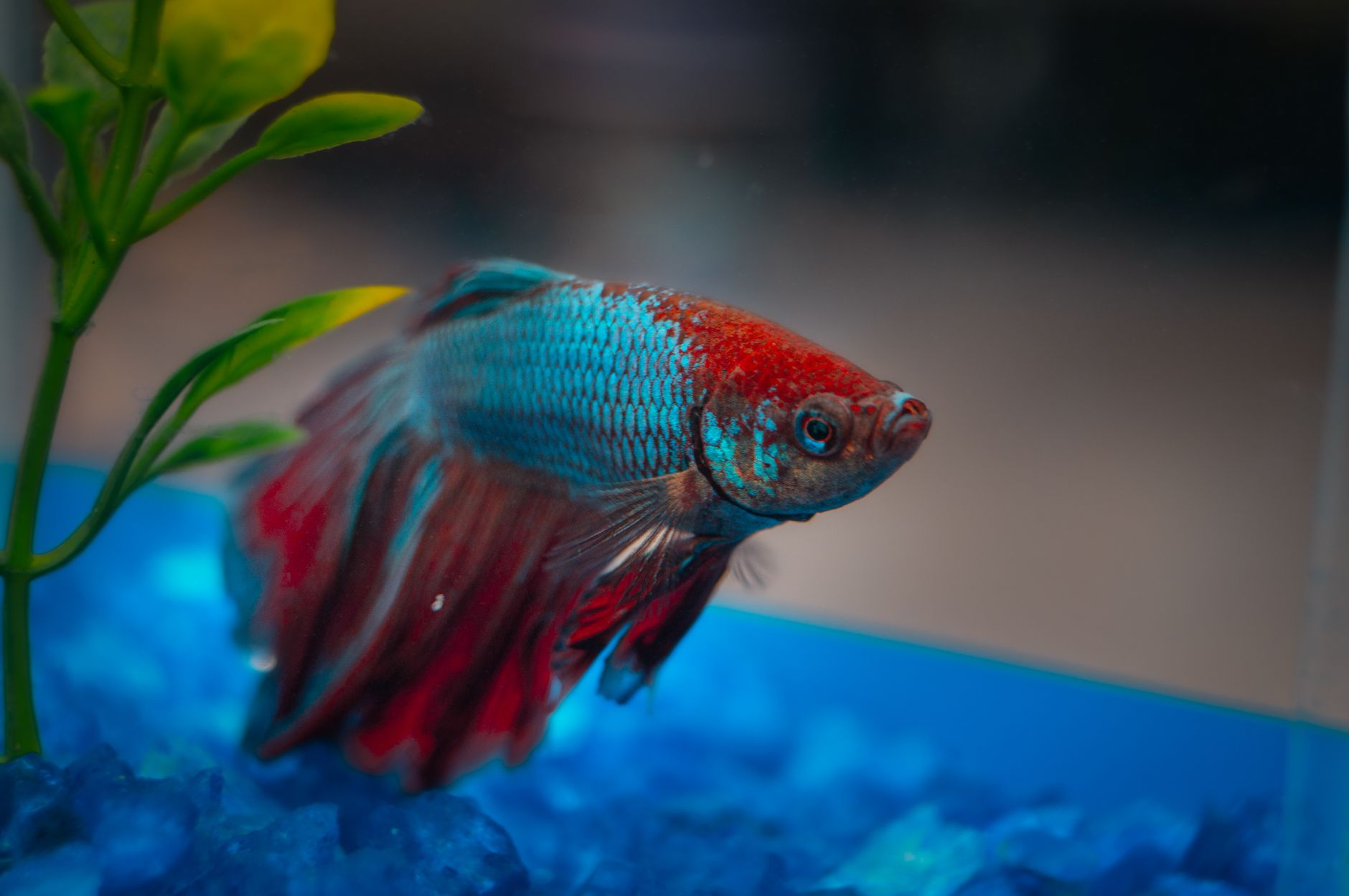
Photo by @casalfilmsestudio on Pexels
What factors affect a betta fish’s lifespan?
Water quality is one of the strongest influences on a betta’s health. Fish waste breaks down into ammonia, a toxic chemical, and beneficial bacteria normally convert it into less harmful substances. In a new or poorly maintained aquarium, ammonia and nitrite can rise quickly and damage the gills, skin, and internal organs.
A properly cycled aquarium contains an established biological filter. “Cycling” means building a bacterial community that processes fish waste before the fish is added or while the tank is carefully monitored during setup. Test kits for ammonia, nitrite, nitrate, and pH help reveal problems that clear-looking water cannot.
Temperature also matters because bettas are tropical fish. A practical target is about 24 to 27 degrees Celsius, or 75 to 81 degrees Fahrenheit. Water that stays too cool can slow digestion, reduce activity, and weaken immune function. Sudden temperature changes are stressful even when the final temperature appears acceptable.
Tank size affects maintenance as much as swimming space. Larger aquariums dilute waste and usually hold a steadier temperature. A tank of about 19 liters, or 5 U.S. gallons, is a sensible minimum for one betta, with more space often making filtration, heating, and furnishing easier to manage.
Diet quality supports growth, immunity, and tissue repair. Betta pellets made for carnivorous fish should form the main diet, with occasional frozen or freeze-dried foods such as bloodworms or brine shrimp. Feeding too much is a common mistake: uneaten food rots, and obesity can contribute to digestive and buoyancy problems.
Genetics and breeding history create limits that care cannot always overcome. Some ornamental bettas have long, heavy fins that make swimming tiring or leave delicate tissue vulnerable to tears. Certain lines may also be more prone to deformities or chronic health issues. A well-bred fish with a healthy body shape often has better prospects from the start.
How should a betta aquarium be set up?
A suitable betta aquarium needs a lid, heater, gentle filtration, hiding places, and broad-leaved plants or other smooth decorations. Bettas can jump, and their long fins can snag on sharp plastic or rough ornaments. Every decoration should be checked by running a piece of thin fabric over it; if the fabric catches, a fin may catch too.
- Use an aquarium of about 19 liters or larger for one betta.
- Install an adjustable heater and check the water with a separate thermometer.
- Choose a filter with gentle flow; strong currents can exhaust long-finned fish.
- Add live plants or silk plants, avoiding sharp artificial foliage.
- Provide a resting leaf, floating plant, or low shelter near the surface.
- Use a secure lid because bettas can leap through small openings.
Filtration should move water without forcing the betta to fight a constant current. If the fish struggles to swim, hides behind equipment, or is repeatedly pushed across the tank, the flow is too strong. A sponge filter or an adjustable internal filter is often easier to adapt than a powerful, unregulated unit.
Lighting should follow a regular day-and-night schedule, commonly around 8 to 10 hours of light daily. Excessive light encourages algae and can prevent the fish from resting. Bettas do not need bright lighting, and a shaded area helps them feel secure.
How often should betta water be changed?
Routine partial water changes are safer than replacing all the water at once. For a filtered, cycled aquarium, changing roughly 20% to 30% of the water weekly is a useful starting point, though testing results and tank conditions may require a different schedule.
New water should be treated with a conditioner that removes chlorine and chloramine. It should also be close to the aquarium’s temperature. Large differences can shock the fish, especially in a small tank.
Never rinse biological filter media under untreated tap water because chlorine can kill beneficial bacteria. Swishing the media gently in removed aquarium water preserves more of the bacterial colony. Gravel can be vacuumed during water changes to remove waste that has settled below the surface.
Water tests are particularly important when an aquarium is new, the fish appears unwell, or the tank has recently been overfed. Ammonia and nitrite should remain at zero in a properly established aquarium. Nitrate is less toxic, but it should not be allowed to build up unchecked.
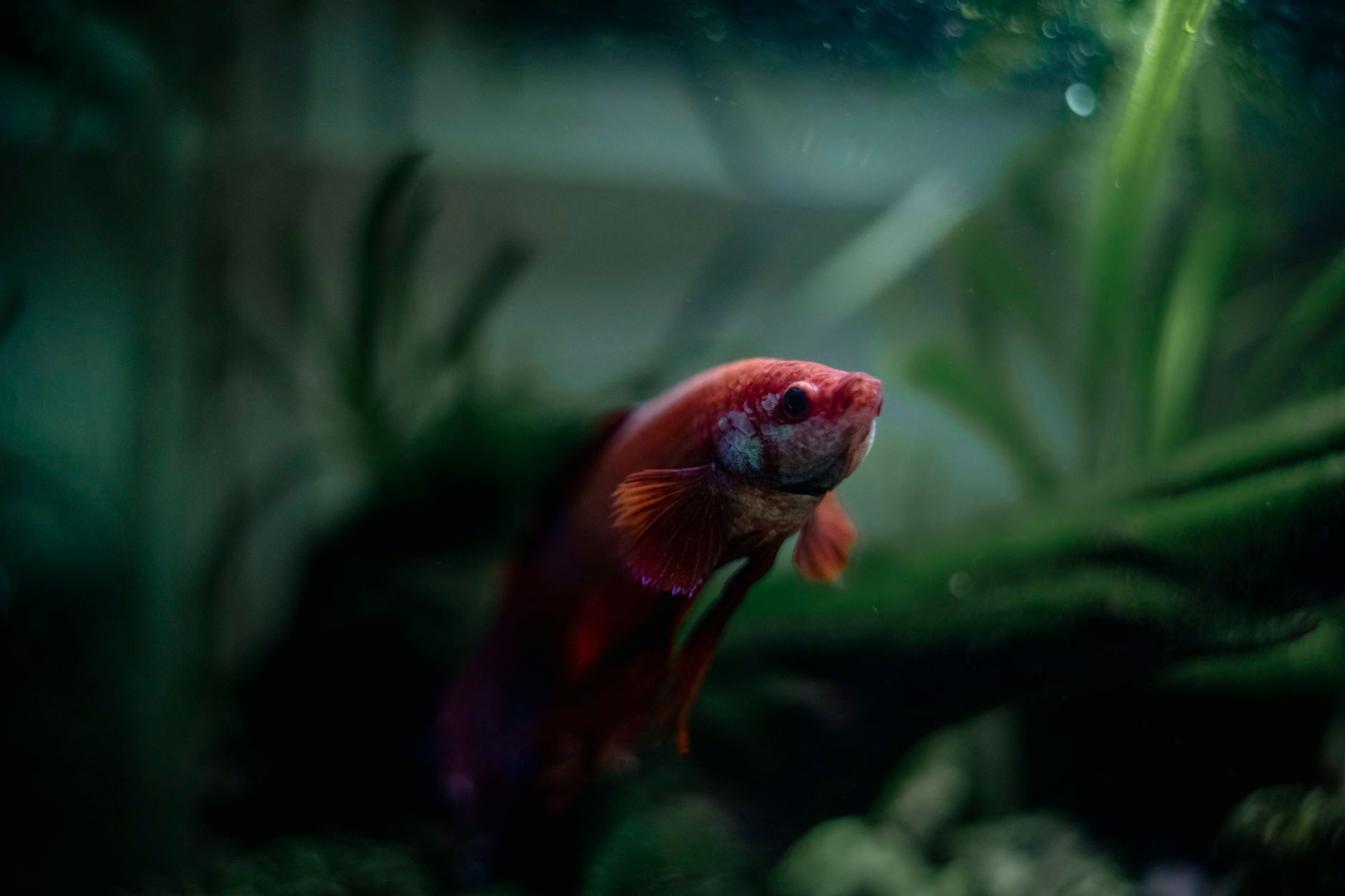
Photo by Himal Amarasinghe on Pexels
How much should a betta fish eat?
Small meals are better than one large serving. A typical adult betta can receive a few appropriately sized pellets once or twice daily, adjusted for the pellet’s size and the individual fish. The abdomen should look gently rounded after feeding, not swollen.
Uneaten food should be removed promptly. A single missed pellet is not an emergency, but repeated overfeeding can pollute the tank and cause constipation. A weekly fasting day is sometimes used for adult fish, though it is not a substitute for sensible portions throughout the rest of the week.
Variety can be useful, but treats should remain limited. Frozen foods are generally easier to portion than freeze-dried foods. If freeze-dried food is used, soaking it briefly can reduce the chance of expansion in the digestive tract, although proper portion size remains the main safeguard.
What signs show that a betta is aging or sick?
Older bettas often become less active, develop faded coloration, and spend more time resting. Their fins may look less full, and they may take longer to reach food. Gradual changes are consistent with aging, but sudden changes should be treated as possible illness rather than normal old age.
- Loss of appetite lasting more than a day or two
- Rapid breathing or constant gasping at the surface
- Clamped fins held tightly against the body
- White spots, cottony growths, ulcers, or unusual swelling
- Fins that deteriorate rather than slowly regrow
- Persistent hiding, lying on the bottom, or difficulty swimming
- A swollen body combined with raised scales
These signs can have several causes, including poor water quality, parasites, bacterial disease, injury, or inappropriate temperature. Testing the water is often the first practical step because correcting ammonia, nitrite, or temperature problems may be more urgent than adding medication.
Medication should be selected for the suspected condition, not added at random. Some products damage beneficial filter bacteria or stress fish when used unnecessarily. A veterinarian who treats aquatic animals can help with persistent or severe cases.
Can bettas live with other fish?
A male betta can sometimes share a carefully chosen community aquarium, but solitary housing is the safer default. Individual temperament varies widely, and even peaceful tank mates can nip fins, compete for food, or create constant stress.
Fast, peaceful fish that need different water conditions are poor choices. Fin-nipping species, other labyrinth fish, and additional male bettas should generally be avoided. Shrimp may be eaten, while snails are often more reliable companions, although no combination is guaranteed.
Any community setup needs a suitably large, planted aquarium, multiple hiding spaces, and a plan to separate the fish immediately if chasing or injuries begin. A small container is not a community tank, even if the fish appear calm for the first few days.
Photo by Stacey Koenitz on Pexels
Frequently Asked Questions
Do betta fish live longer in large tanks?
A larger tank does not automatically guarantee a longer life, but it makes stable care easier. More water dilutes waste, holds temperature more steadily, and provides room for a safe filter and enrichment. A well-maintained 19-liter tank is generally a better long-term home than a tiny bowl.
Can a betta fish live for 10 years?
Ten years would be extremely unusual for a domestic betta and is not a realistic lifespan expectation. Most live about 2 to 4 years in captivity, with some reaching 5 years when genetics and care are favorable.
How can someone tell a betta’s age?
A betta’s exact age is usually impossible to determine after purchase. Size, fin development, coloration, and behavior can offer rough clues, but they are affected by genetics and care. The seller or breeder may provide a more useful estimate than appearance alone.
Do betta fish live longer alone?
Often, yes. Male bettas usually do well alone because they do not need a social group and may become aggressive toward tank mates. Living alone also reduces the risks of fin damage, competition, and stress, provided the aquarium contains plants, shelter, gentle flow, and good water quality.
Does a betta need a filter and heater?
A filter and heater are strongly recommended for long-term care. The heater keeps the tropical water temperature stable, while the filter supports beneficial bacteria and removes suspended waste. The filter should produce gentle flow rather than a strong current.
What is the most common reason bettas die young?
Poor water quality is a frequent cause of early illness and death, especially in small unfiltered containers. Cold water, overfeeding, untreated tap water, and delayed treatment of disease also shorten lifespan. Regular testing, partial water changes, and a stable heated aquarium prevent many avoidable problems.
For the best chance of reaching the upper end of its lifespan, a betta needs one simple routine: keep its water warm and tested, feed modest portions, maintain gentle filtration, and respond quickly when its behavior changes.

Mim Creation
Writer at Helmet Today, covering helmet reviews, fit and riding safety.