If your cats groom, then suddenly start fighting, it’s usually not random “mean behavior.” Grooming can be a social signal, a comfort ritual, or even foreplay for play—then the energy spikes into overstimulation, stress, or resource tension. The fix is to spot the trigger and manage distance, timing, and resources.
Why do cats groom each other?
Cats groom for several reasons, and understanding which one is happening helps you predict what comes next. Grooming (licking a cat’s fur) can be a friendly social behavior, like when cats live together and maintain “group hygiene.” It can also be a dominance or status behavior, especially if the other cat doesn’t fully invite it and can’t move away comfortably.
In many multi-cat homes, you’ll see grooming followed by normal downtime. But sometimes grooming turns into “too much of a good thing.” Cats aren’t built for unlimited contact. If one cat’s body language says “I’m done,” the other cat may keep going until the situation flips into a scuffle.
What counts as “normal” play vs. a real fight?
Because beginners often lump everything together as “fighting,” it helps to separate the vibes. Gentle play usually includes loose, wiggly movement, play-biting without sustained chasing, and quick returns to relaxed behavior. It may look rough, but the cats can often re-set quickly.
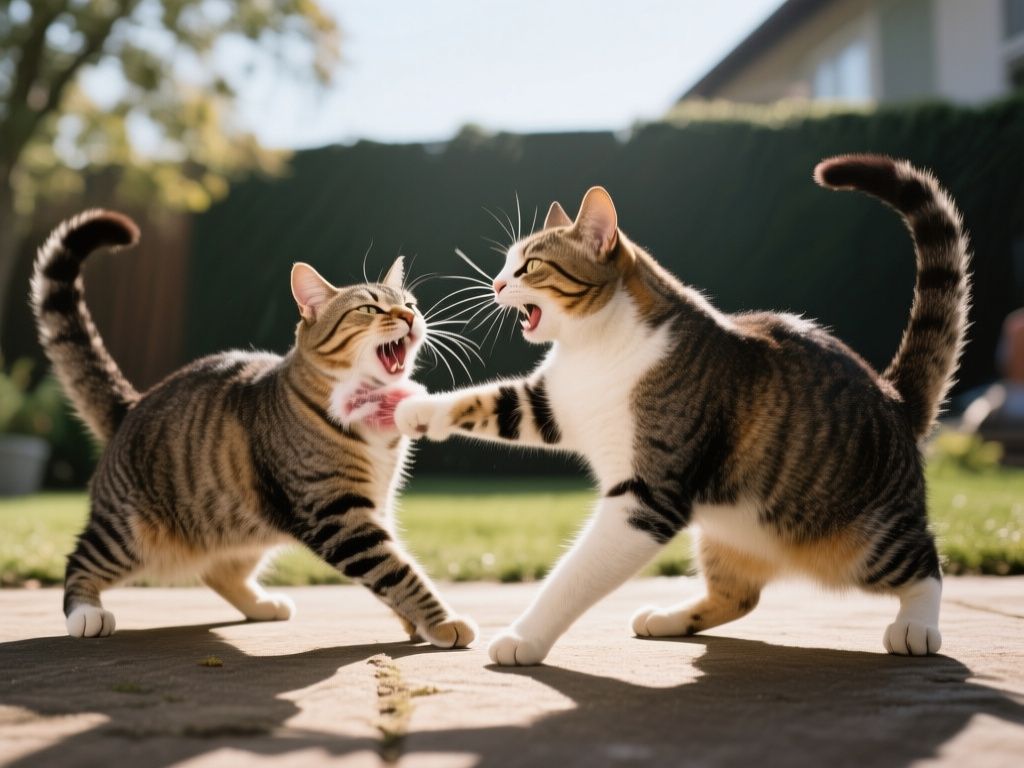
A real fight is more like a hard stop: sudden staring, stiff posture, loud vocalizations, one cat chasing the other with intent, or fur-ruffling and tail twitching. Watch for the “lock-on” stare and the “frozen, then explode” body language—those are common signs that it’s turning from grooming/interaction into conflict.
How does grooming suddenly turn into conflict?
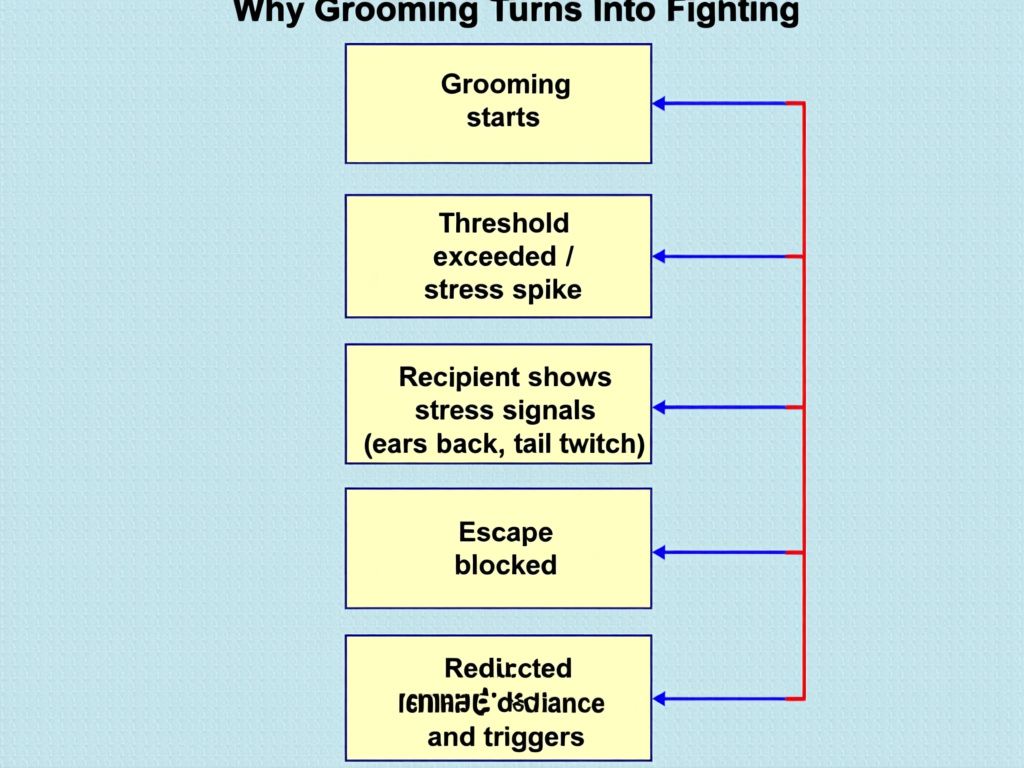
Grooming can be a trigger in a few common ways. The biggest one is overstimulation. Cats have a “threshold” for touch. When that threshold is crossed—especially during repetitive licking—many cats will either redirect aggression (aiming at the nearest moving target) or snap to end the interaction.
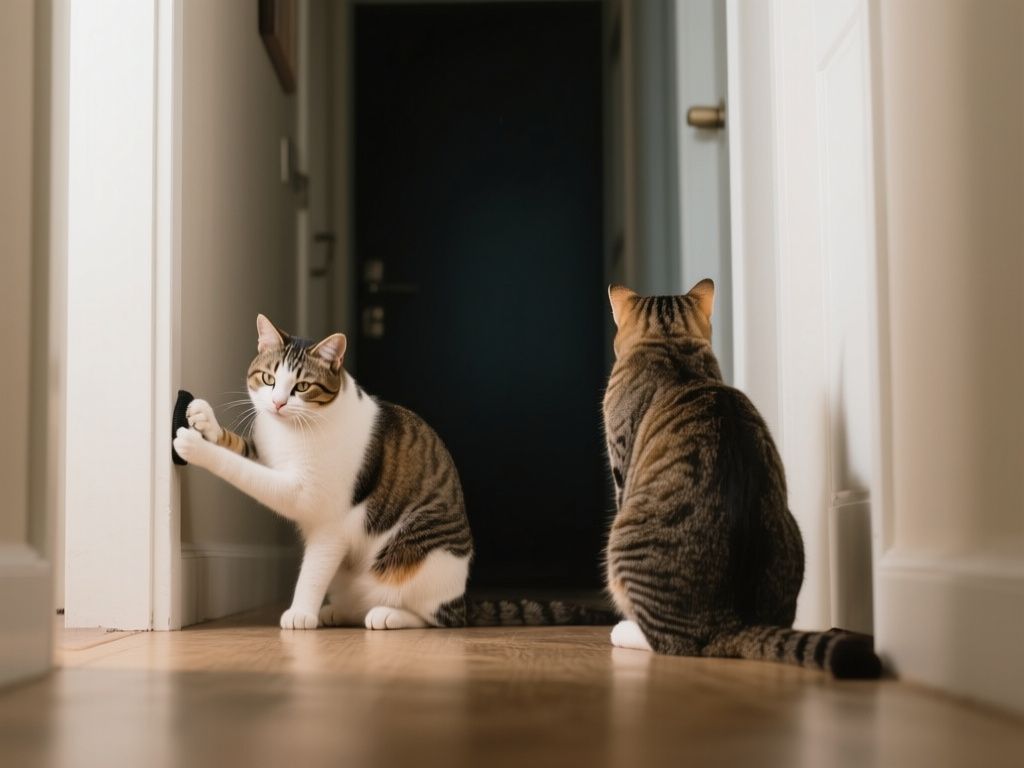
Another frequent cause is misread signals. One cat may think the other is inviting grooming (ears forward, relaxed tail, slow blinking). The receiving cat may tolerate it for a moment, then get uncomfortable and try to leave. If the groomer blocks escape routes, the uncomfortable cat may retaliate.
Finally, grooming can interact with stress and arousal. If something in the environment is already making one cat tense—new smells, a visitor, a noisy neighbor, a scary sound—then grooming becomes the final “spark.” The cat’s body goes from calm to ready to react, and the reaction often comes out as chasing or sudden swats.
Is resource tension (food, litter boxes, toys) the culprit?
Resource tension is one of the most common explanations when grooming and fighting happen close together. Even if cats are generally friendly, a crowded or uneven setup can create periodic flare-ups. The timing matters: if the “fight” happens right after grooming, it might be a buildup to something else—like hunger, bathroom timing, or a favorite perch.
Look for patterns. Does one cat always initiate grooming right before meal time? Does the fight happen near a closed door, the litter box area, or a preferred window spot? Cats don’t need to be “jealous” in a human sense; they just need their needs consistently met.
Could it be redirected aggression?
Redirected aggression is when a cat is aroused by one thing but attacks another cat nearby. This is surprisingly common. A cat might hear or see something outside (another animal, loud activity), get tense, and then—because the other cat is closest—it targets the cat during the spike.
You might notice that the “grooming then fight” sequence happens during specific times: early morning, right after you return home, around the window, or after a delivery. If the groomer suddenly gets jumpy, tail-thumping, or stares at a specific spot, redirected aggression moves up the list of possibilities.
What about age, hormones, and “grooming as intensity”?
Age and maturity changes how cats communicate. Kittens and young adults often groom vigorously or with play energy. Senior cats may tolerate less touch and can escalate faster if they feel cornered. Also, intact animals (not spayed/neutered) tend to have higher roaming and mounting behaviors, which can spill over into conflict.
Even spayed/neutered cats can have hormonal seasons that increase irritation or roaming. It won’t be the only cause, but it can explain why the behavior appears at certain times of year or becomes more frequent after periods of lower stimulation.
Is one cat “too intense” during grooming?
Sometimes the answer is painfully simple: one cat grooms like a vacuum cleaner. Signs that the groomer is pushing too far include continuing to lick when the other cat tries to move away, following the other cat into a less accessible spot, or switching from gentle licking to more forceful nibbling or pinning.
Watch the recipient’s body language. If you see flattening ears, twitchy tail, skin twitching, lip licking without grooming, or “freezing,” that’s a “stop” signal. A cat that can’t escape will eventually protest in the only language cats reliably get: snapping, swatting, and sometimes a chase.
How can you tell which scenario is happening in your home?
Instead of guessing, do a tiny bit of detective work. For one week, jot down (on your phone is fine) three things: the time, where the cats were, and what happened right before grooming. Also note who initiated grooming and what the “recipient” did with their body (relaxed vs stiff vs trying to leave).
Here’s a quick checklist that often narrows it down:
- If fights cluster near meals or the litter box area, suspect resource tension.
- If fights cluster near windows or after outside noise, suspect redirected aggression.
- If the recipient shows stress signals (ears back, tail flicking) before the fight, suspect overstimulation or a too-intense groomer.
- If fights happen after changes (guests, moving furniture, new pet smell), suspect stress arousal.
- If one cat always “won’t let go” and blocks escape, suspect misread social cues and blocked distance.
What should you do in the moment?
When cats start escalating, don’t try to physically separate them unless you must. Sudden grabbing can increase fear and make the next episode more intense. The safest approach for beginners is interruption and distance.
Try one of these options:
- Use a barrier: place a door, pet gate, or laundry basket between them if one exists nearby.
- Redirect attention with a neutral sound: a clap, shaker, or toss of a soft item (aim away from heads) can break the stare-lock.
- Interrupt with environment: turn on a light, run a white-noise app, or close blinds if the trigger is external.
After separation, give both cats time to calm in different spaces. If you immediately bring them back together, the arousal can “stick,” and the cycle repeats.
How do you prevent grooming-then-fighting?
Prevention is mostly about managing triggers and giving cats control over distance. My opinionated take: most “grooming leads to fights” problems improve when you stop treating it like a moral failure and start treating it like a communication/management issue.
Start with setup:
- Increase vertical space: cat trees, shelves, and window perches reduce “forced closeness.”
- Create multiple routes: if one cat is blocking escape during grooming, rearrange furniture so both have ways out.
- Make resources redundant: in a multi-cat home, aim for multiple feeding stations and more than one litter box.
- Schedule attention: if one cat becomes overexcited and seeks grooming/interaction when you’re busy, add structured play sessions before the “danger window.”
Then manage interactions:
- Reduce intense lingering contact: if one cat grooms hard, separate them during calm hours and re-introduce gradually.
- Use calm introductions and short sessions: treat it like teaching a new routine, not forcing “being nice.”
- Watch for buildup: if you see tail twitching, ears back, or a stiff approach, intervene early with a barrier or distraction.
Do you need a vet or behaviorist?
Sometimes fighting after grooming is the tip of a bigger problem. Pain can make cats snap or avoid touch; skin irritation, dental issues, arthritis, or discomfort under the collar/near the face can change grooming behavior. If the recipient cat seems uncomfortable before the fight, or if either cat suddenly becomes aggressive, a veterinary check is smart.
A feline behavior professional can also help when the pattern is persistent or when you’re dealing with serious injury risk. The best plans are personalized, because “why” matters. Two homes can show the same fight, but the triggers are totally different.
Could play be the real reason?
Sometimes “grooming then fighting” is actually a switch from one social behavior to another. Some cats use play-biting and chasing as an outlet for excitement. They might start with grooming-like social contact and then ramp into play that becomes too rough.
You can test this by observing whether the cats return to normal quickly after the scuffle. If they seem to bounce back, re-engage, and continue general play rather than staying tense, it’s more likely play-arousal or overstimulation than a deep grudge.
Frequently Asked Questions
Can cats be grooming each other and still be angry?
Yes. Cats can groom as a social signal and still be annoyed if the other cat crosses a comfort boundary. Grooming doesn’t guarantee mutual enjoyment; it can also happen when one cat tolerates contact longer than the other should.
How can I tell if my cat is overstimulated?
Look for sudden body stiffness, ears flattening, tail twitching, skin rippling, or licking lips without grooming. The important clue is timing: the recipient’s stress signals show up before the snap, and the intensity rises fast once the threshold is crossed.
Should I separate my cats permanently?
Not automatically. Permanent separation is usually a last resort, because it can increase stress and reduce positive opportunities. Many cases improve with environmental tweaks, careful timing, and early interruption when escalation starts.
What if the fight always happens after I feed them?
Then resource tension is likely. Try using separate feeding stations, adding extra dishes, and offering food in a way that reduces crowding. Also check litter box access and bathroom timing—after feeding is when many cats “need to go.”
Why do they chase after grooming instead of just stopping?
Chasing often happens when one cat’s arousal spikes and the other cat becomes the nearest moving target. If the recipient tries to leave and the groomer follows, the recipient may redirect aggression to end the pressure.
When is it an emergency?
If you see blood, deep puncture wounds, or repeated escalating episodes that don’t stop even with interruption, treat it seriously. Injuries can become infected quickly, and ongoing high-stress interactions can worsen behavior, so contacting a vet and/or behavior professional is the right move.
If you want one practical takeaway: watch the recipient cat’s body language during grooming—when you catch the “I’m done” signals early, you can interrupt before the threshold flips the whole interaction into a chase.

Mim Creation
Writer at Helmet Today, covering helmet reviews, fit and riding safety.