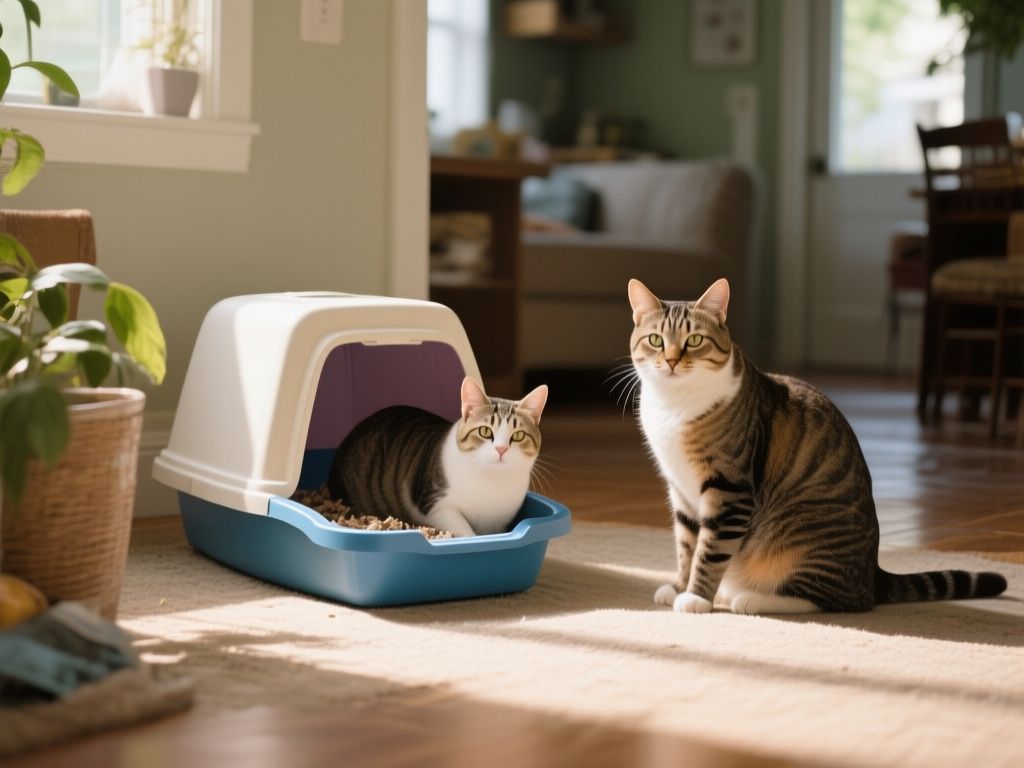
A good rule of thumb is “one litter box per cat, plus one extra.” For a 3-cat household, that usually means 4 boxes total. This ratio helps reduce territorial stress, gives cats options if one box is dirty, and lowers the chance of inappropriate elimination.
What’s the “litter box ratio” and why do cats need extra boxes?
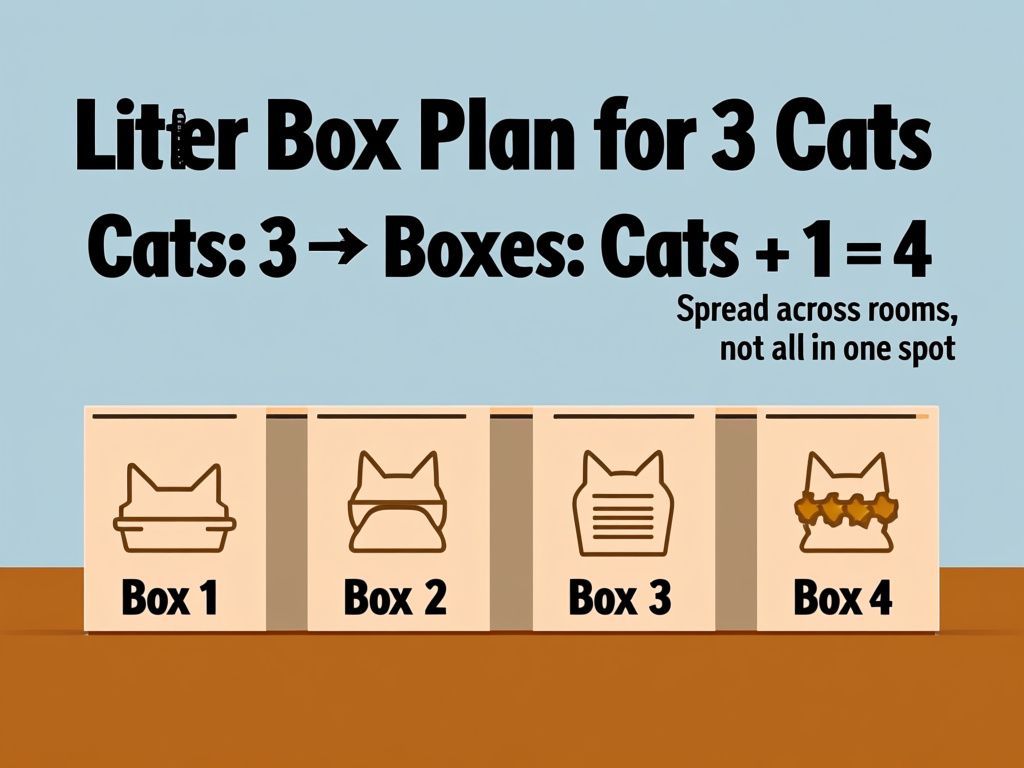
A litter box ratio is a practical guideline for how many litter boxes to provide based on the number of cats in your home. The widely used “one plus one” rule means: number of cats + 1 litter box. So for three cats, the recommended starting point is four litter boxes.
Here’s the part people don’t always expect: cats aren’t just “using a bathroom,” they’re also making choices about privacy, safety, scent, and access. Even friendly cats can feel tense when they must share a single resource. A clean, available box can prevent tiny daily conflicts from turning into litter avoidance.
How does the “1 box per cat + 1” rule work for 3 cats?
Let’s translate the rule into a simple plan. If you have 3 cats, you start with 3 + 1 = 4 litter boxes. That gives you enough capacity that one cat doesn’t always “own” the only box, and it gives others a fallback when a box is temporarily unavailable—like when a cat is covering, burying, or (let’s be honest) guarding.
It also matters how you space them. “Four boxes in one corner” isn’t as helpful as “four boxes spread across your home,” because cats don’t just compete over the box—they compete over the location and the path to get there.
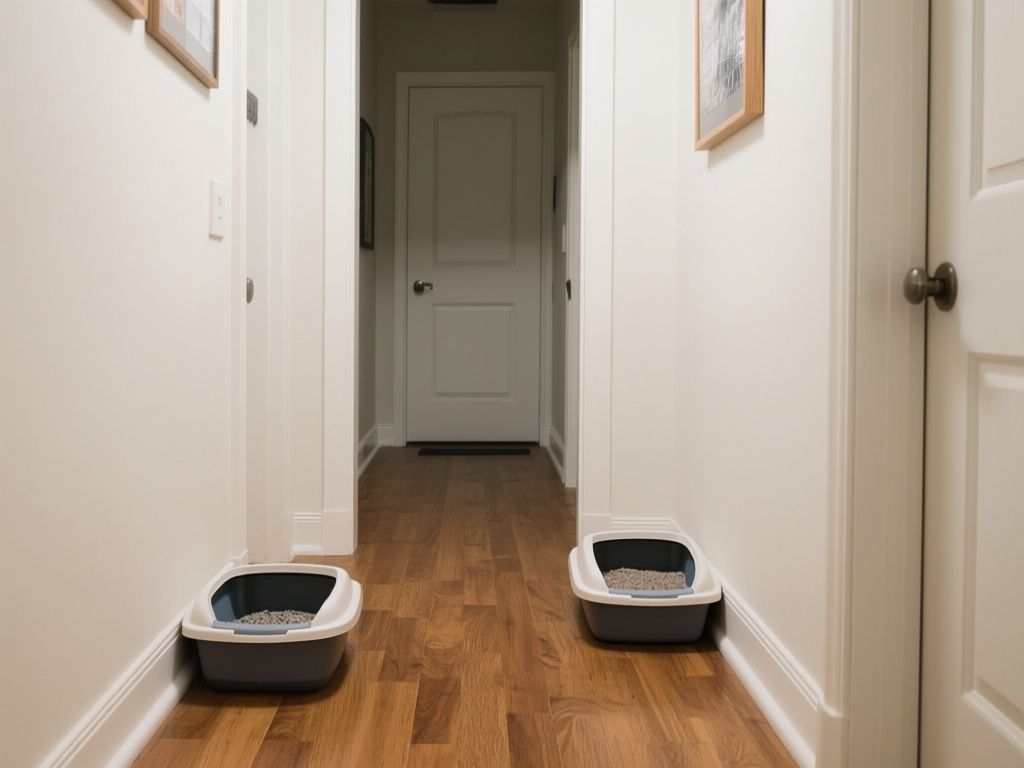
Where should the litter boxes go in a 3-cat home?
Placement is often more important than brand. A box should be easy to reach, low-friction to access, and located where your cats don’t feel surprised or trapped. Think about what a cat considers “safe”: predictable routes, minimal crowding, and no immediate threat from people or other pets.
In real homes, these are common best practices:
- Spread out locations: Aim for at least two different areas (for example, one upstairs and one downstairs, or one in the quiet side of the living room and one near the other bathroom area).
- Avoid high-traffic choke points: Don’t place a box in a narrow hallway where another cat can ambush or block access.
- Give “escape routes”: Cats prefer not to have their exit blocked. A box should have a clear line of retreat.
- Separate from loud or scary zones: Keep boxes away from washing machines, loud HVAC vents, or places your cats avoid.
- Keep it consistent: Don’t move boxes around weekly. Cats can accept change slowly, but sudden relocation can look like a threat.
If you live in an apartment or a small house, you may still benefit from spacing boxes so that each cat has a “nearby option” without crossing the same crowded route.
Is 4 litter boxes always necessary for 3 cats?
“Usually” is the honest answer. The one-plus-one guideline is not a magic law, but it is a strong starting point that matches how many cats behave in multi-cat households. Some households get by with fewer if the cats are relaxed, the home is small enough that access isn’t competitive, and the boxes are always very clean.
That said, if you’re dealing with any of these issues, the extra capacity tends to matter quickly:
- Urinating or defecating outside the box (especially sudden changes)
- One cat “holds” access so others wait or avoid the box area
- Stressed behavior near the litter area (lingering, blocking, staring, or swatting)
- Frequent box avoidance even when the box looks clean to you
Also, don’t forget a basic caveat: litter box problems can have medical causes. Painful urination, constipation, kidney issues, or infections can make a cat avoid using the box. If inappropriate elimination shows up, it’s smart to contact a veterinarian rather than assuming it’s “just litter management.”
What kind of litter boxes work best (size, type, and entry style)?
Most beginner litter box planning fails at the “box quality” stage. A box that’s too small or hard to enter can turn “4 boxes” into “4 bad options.” For cats, size and ease of entry matter because they need room to turn around and dig naturally.
How big should each box be?
As a practical rule, pick a box that allows your cat to comfortably stand, turn, and bury waste. Many owners underbuy on purpose to save space, and that backfires. If you have a larger cat, use a larger box even if it’s more awkward for your floor plan.
Should you use covered litter boxes or open pans?
Covered boxes can reduce odor and keep litter scatter down, but some cats dislike the enclosed feeling or the way it blocks visibility. A good approach is to treat box styles as a variable you can adjust. In multi-cat homes, I generally prefer at least some open boxes so cats aren’t forced to use an “audience” or “tunnel” setup.
What about entry style: front entry vs. top entry?
Top-entry boxes can help with litter tracking, but not all cats handle them. Kittens, senior cats, or cats with mobility issues may struggle. If your home includes any cat with arthritis or stiffness, prioritize easy access.
How many boxes to use if you’re also using multiple litter types?
Sometimes people add “another box” by splitting litter types: one box with clumping litter, one with non-clumping, one with different texture. This can help if you suspect preference. But here’s my opinionated take: don’t treat litter type as the main solution before you solve the basic ratio and placement issue.
If you’re going from 1–2 boxes to 4 boxes, first ensure access and cleanliness. Then, if one cat seems picky, you can consider adjusting litter texture in specific boxes rather than everywhere.
Cleaning frequency: the hidden reason litter box ratio matters
Even with four boxes, cleaning schedule affects success. Cats can be surprisingly picky about scent and freshness, especially in multi-cat settings where a box might become “the busy one.” A responsible baseline is:
- Scoop daily: Remove clumps and solid waste at least once per day.
- Stir litter if needed: If the litter becomes uneven or clumpy, a cat may avoid it.
- Full change on a schedule: Follow your litter product guidance, and don’t let old odor build up.
- Wash boxes periodically: Hot water and mild soap are typical; avoid strong scents that cling.
If you can’t scoop daily, the practical downside is that you’re effectively reducing the number of “available” boxes. In a three-cat home, that can collapse your benefits fast.
Quick starter plan for a 3-cat household (no overthinking)
If you’re brand new to multi-cat litter planning, use this simple setup approach.
- Set up 4 litter boxes immediately. Don’t wait for a problem to “prove” you need them.
- Place them in 2–3 different zones. For example: one near the living area, one near a quieter room, and one on a different floor.
- Choose accessible boxes. Prefer roomy, easy-entry styles for at least the primary boxes.
- Use the same general litter type at first. Keep it simple. Adjust later only if you see clear preference.
- Scoop daily and watch behavior. If one box gets consistently ignored, troubleshoot placement first, then box size, then litter.
| Household | Suggested litter boxes | What to do beyond the number |
|---|---|---|
| 1 cat | 2 boxes | Place in separate areas; scoop daily |
| 3 cats | 4 boxes | Spread locations; ensure easy access |
| 5 cats | 6 boxes | Prioritize placement and cleanliness |
What signs mean your litter box setup isn’t working?
Pay attention before things escalate. A few early signs can point to access, cleanliness, or stress issues.
- One box is always used while others go untouched (possible placement or dislike).
- Waiting behavior near the box area (a cat may be blocking or dominating).
- Messy or incomplete digging followed by quick retreat (anxiety or dislike).
- Urinating near the box instead of in it (often a deterrent issue or medical pain).
If you see inappropriate elimination, treat it as a two-track problem: environmental management (ratio, cleanliness, placement) plus medical screening. Cats can’t tell you, and they won’t “work through it” if pain is the driver.

Frequently Asked Questions
What is the best litter box ratio for 3 cats?
A common starting guideline is “one box per cat plus one extra,” which means 4 litter boxes for three cats. This helps reduce competition and gives cats options when one box is occupied or temporarily unpleasant.
Can I use fewer than 4 boxes for 3 cats?
You can, but it’s less reliable. Some households manage with fewer if cats are calm, boxes are kept extremely clean, and placement prevents blocking. If any litter avoidance appears, moving to 4 boxes usually helps.
Where should I place the extra litter box in a small apartment?
Even in a small space, place boxes so cats don’t have to cross the same crowded route. Try to separate them into different rooms or different sides of a room, and avoid blocking entrances with furniture or doors.
Does covered litter always reduce problems?
Not always. Covered boxes can help with odor and tracking, but some cats dislike the enclosed feel or reduced visibility. If you suspect dislike, test by providing at least one open box among your options.
How often should I scoop litter with 3 cats?
At least once per day is the usual baseline. With three cats, boxes can become “effectively dirty” faster because multiple cats contribute to odor and waste load.
What if one cat keeps using the same box and others avoid it?
That usually points to placement, accessibility, box size, or cat preference. Start by moving boxes to reduce choke points and by ensuring all boxes are easy to enter. If avoidance continues, consider veterinary checks to rule out discomfort.
Final practical takeaway: for three cats, plan for four litter boxes, place them in different areas, scoop daily, and treat any sudden litter problems as “possible medical + possible setup” until proven otherwise.

Mim Creation
Writer at Helmet Today, covering helmet reviews, fit and riding safety.