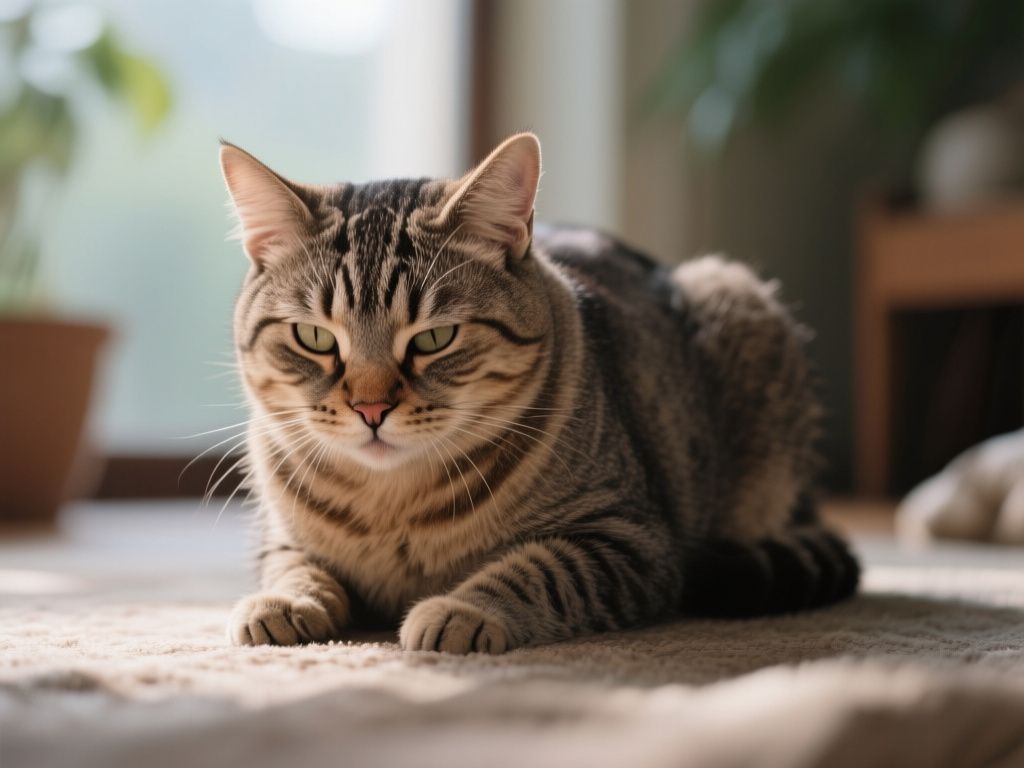
Silent pain in a senior cat usually shows up as subtle behavior and body-language changes: hiding more, moving differently, reduced grooming, changes in appetite or litter habits, and “off” vocalization or reduced social contact. Look for patterns over days, then check mobility, breathing, appetite, and elimination for clues that something hurts.
Why do senior cats hide pain so well?
Senior cats often act “fine” longer than their owners expect because cats are built to avoid showing weakness. In the home, that instinct still kicks in: discomfort can lead to hiding, reduced movement, and careful use of painful areas rather than obvious limping or crying.
It helps to think less about whether your cat looks “dramatic,” and more about whether their normal baseline has shifted. A cat who was once eager for breakfast but now approaches food slowly, eats smaller amounts, or skips jump-up spots is often telling you something—even if they never meow about it.
What counts as “silent” pain in older cats?
“Silent” pain doesn’t mean painless; it means the pain is expressed through muted signals. Common quiet expressions include:
- Less grooming (a dull coat, greasy-looking fur, or matted areas you don’t usually see)
- Reduced play or reluctance to jump to familiar perches
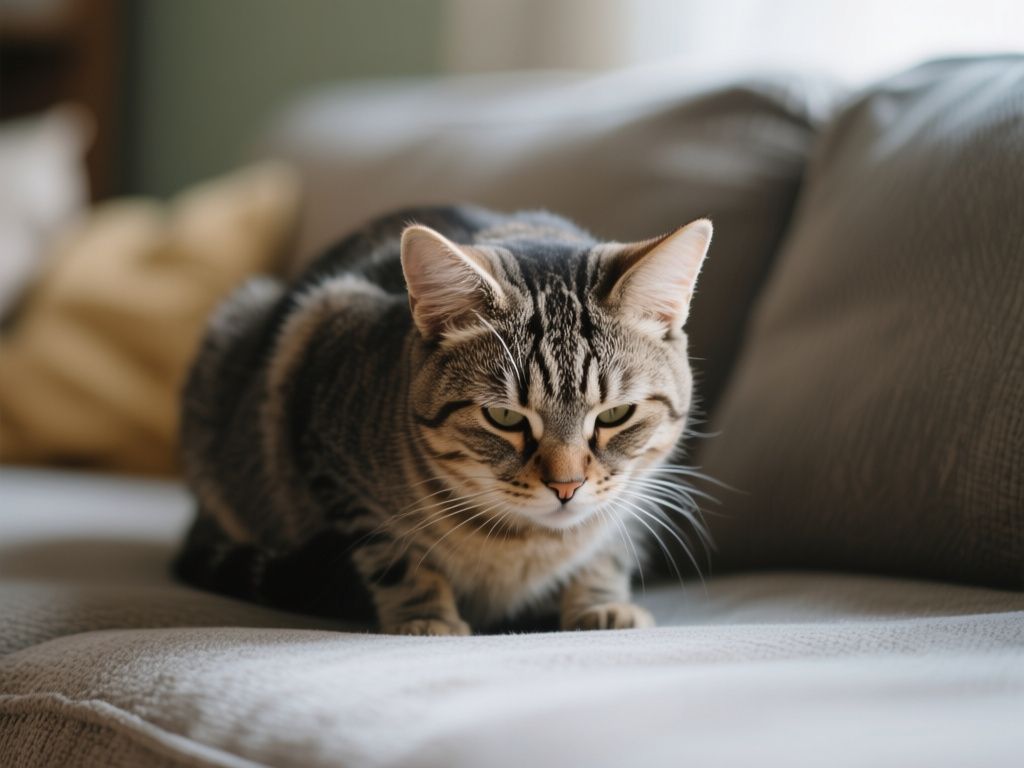
- Changes in posture (hunched back, tucked belly, head held low)
- Toileting changes (urinating outside the box, more frequent visits, accidents)
- Appetite changes (skipping meals, dropping interest in treats, chewing slower)
- Altered social behavior (more withdrawal, snapping when touched, or less tolerance for handling)
Some cats do vocalize when pain is severe, but many seniors don’t. Instead, they ration energy: fewer movements, fewer risks, and fewer interactions.
How does pain change a cat’s body language?
Body language is where you can catch pain early, especially in seniors. Here are specific signs to watch for, and what they often suggest.
Mobility signs: stiffness and “thoughtful” movement
Arthritis and muscle pain are common in senior cats. Pain often shows up as careful movement rather than sudden limping. Look for:
- Stiff first steps after resting (slower, shorter stride for the first minute)
- Taking stairs or using the litter box differently (sudden hesitation before climbing or stepping in)
- Weight shifting away from one side, or a “sore” posture when standing
- Less grooming because reaching certain areas is uncomfortable
If your cat used to jump and now lands more slowly or stops mid-jump, consider pain first. Cats may also choose the “safe” route: walking on the floor instead of jumping up.
Back and spine posture
For some cats, pain changes how their spine sits. Watch for:
- Hunched shoulders or an arched-but-rigid posture
- Tucked abdomen or a “closed” stance when you approach
- A reluctance to be picked up or held in certain positions
These can also overlap with neurological issues, so posture changes are worth a vet check if they persist or worsen.
Head, face, and mouth: dental pain can be quiet
Dental disease is one of the biggest “silent pain” drivers in seniors. Cats may not paw at the mouth; instead, they change eating behavior:
- Dropping kibble, slower chewing, or favoring one side of the mouth
- Selective appetite: willing for wet food but not dry, or vice versa
- Reduced grooming around the face
- Bad breath (sometimes strong enough to notice when they yawn)
If you notice food coming with messy drool or a “messy chin,” dental discomfort is a real possibility.
Breathing and stillness: sometimes pain changes respiration
Pain can make cats more still or can accompany conditions that change breathing. Watch for:
- Open-mouth breathing, rapid breathing while resting, or visible belly movement when breathing
- Resting in odd positions (curled tightly, low-to-the-ground, or stretched out in a way they don’t usually choose)
- Guarding behavior—staying in one spot because movement worsens discomfort
Breathing changes are also a “don’t wait” category, especially if your cat is struggling.
Which day-to-day changes are the biggest “pain” clues?
Silent pain tends to show up in routines. If you track just a handful of behaviors each day, you can often spot a pattern within 48–72 hours.
Eating: portions, speed, and food choices
Appetite shifts are often the first sign. “Less interest” can look like:
- Eating slower than usual
- Eating less overall (smaller meals, leaving food behind consistently)
- Switching foods (wet to dry or dry to wet) without a clear preference change
Important nuance: stress, constipation, kidney disease, and infections can also change appetite. Pain is one possibility, but not the only one.
Grooming: the fur tells a story
Reduced grooming is common with arthritis because reaching body areas is uncomfortable. Look for:
- Dull coat, greasy-looking fur, or dandruff you don’t usually see
- Mats in areas they used to clean
- Patchy grooming that doesn’t match shedding patterns
When grooming drops alongside stiffness or reduced jumping, pain climbs higher on the list.
Litter box and urination: pain changes elimination behavior
Some cats associate the litter box with discomfort and start avoiding it. Watch for:
- More frequent box visits but small amounts
- Straining, crying, or visible discomfort when entering/exiting
- Accidents outside the box even when they’re otherwise trained
- Blood in urine or very strong odor
Even if it seems “silent,” urinary issues can become urgent. If there’s straining or blood, it’s a vet-now situation.
Touch sensitivity: “They’re just getting grumpy” can be pain
When senior cats start snapping, pulling away, or acting defensive during petting, pain is often a leading cause—especially with arthritis, spinal discomfort, or dental pain. Consider:
- New aggression during grooming or when you brush certain areas
- Flinching when you try to handle paws or lift the back end
- Hiding more when someone approaches
One practical move: try brief, gentle touch in different places for a few seconds each and watch for withdrawal or tension. If pain seems likely, don’t “push through.”
How do you do a quick “at-home pain screen” without stressing your cat?
You’re trying to gather clues, not put your cat through a whole exam. Do this gently in a calm space, with short observations. If your cat is very defensive, stop and prioritize a vet visit.
Step 1: Observe movement for 1–2 minutes
- When they walk: watch stride length and whether they pause mid-step
- When they stand after resting: note stiffness during the first minute
- When they jump: see if they hesitate, use fewer favorite spots, or avoid climbing
Step 2: Check grooming and coat in 10 seconds
- Look for matted areas (often near the belly, hind legs, or flanks)
- Check for reduced face grooming (especially around the mouth)
Step 3: Watch eating and drinking next
- Offer their normal food and note whether they approach eagerly or slowly
- Notice chewing behavior and whether they drop food
- Check water intake—sudden changes can accompany illness
Step 4: Look at the litter box record
- Count how often they enter and whether amounts change
- Check for accidents or unusual locations
- If you see blood, straining, or repeated attempts with little output, don’t wait
Step 5: Do a light “posture check” from a distance
- Observe whether they rest hunched or stretched out
- Note if they guard the area when you pass by
If you find multiple red-flag categories (mobility + grooming + elimination changes), treat it as likely pain or another medical problem that needs attention.
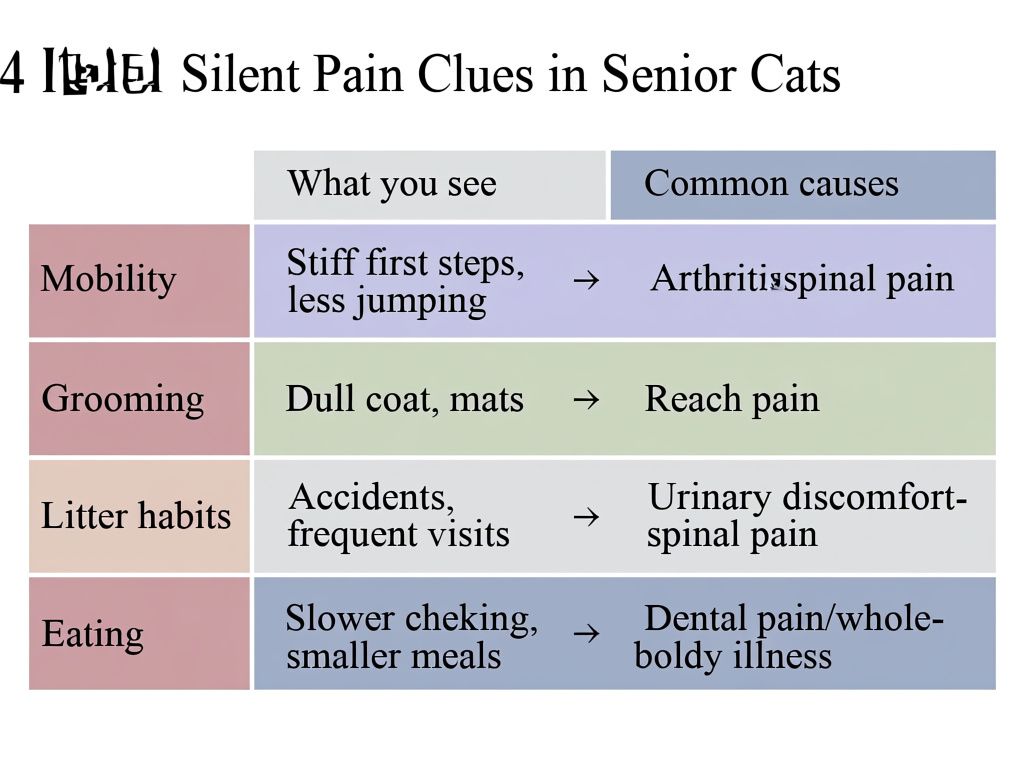
What conditions commonly cause “silent” pain in seniors?
Several problems can look quiet at first because cats don’t always dramatize discomfort. Here are the usual suspects you can connect to the clues above.
Arthritis and degenerative joint disease
This is the most common “slow change” cause: stiffness, reduced jumping, and less active exploration. Cats may also sleep more in one spot due to comfort limits.
Spinal discomfort and muscle strain
Back pain can lead to defensive behavior when touched, reluctance to move smoothly, and “guarding” during picking up or brushing.
Dental disease
Dental pain often shows up as chewing changes, drooling, bad breath, and switching food textures. Some cats still eat, but with less enthusiasm or more messy handling.
Urinary tract problems
Pain during urination can cause frequent litter box visits, straining, and accidents. In male cats, urinary blockage can be life-threatening, so urgency matters.
Internal illness that changes comfort
Weight loss, kidney disease, infections, and gastrointestinal issues can also reduce grooming, affect appetite, and change posture. The key point: pain-like behavior should prompt a vet assessment, not just supplements or rest.
When should you call the vet urgently?
Some signs are “don’t watch for a week” indicators. If any of the following is present, contact a veterinarian promptly or seek emergency care:
- Open-mouth breathing, persistent rapid breathing, or obvious breathing difficulty
- Straining to urinate, inability to urinate, or blood in urine
- Not eating for a day (or less if your cat is frail) or repeated vomiting
- Sudden severe limping, collapse, or inability to bear weight
- Sudden extreme hiding plus weakness or temperature/behavioral collapse
If your cat is simply “off” but stable, you can often monitor briefly while planning a visit. If you’re unsure, it’s reasonable to call and describe what you’re seeing.
What can you do at home while you arrange care?
Home changes won’t diagnose the cause, but they can reduce discomfort and prevent setbacks.
Make movement easier
- Add ramps or lower access to favorite spots (instead of relying on jumps)
- Use non-slip surfaces where possible
- Keep litter boxes easier to enter (lower sides can help, depending on your home)
Support grooming and comfort
- Brush gently and only for short sessions if touch sensitivity is present
- Offer warm, quiet resting areas away from high-traffic zones
Adjust feeding to reduce strain
- Consider wider bowls or raised feeding stations so they don’t have to reach awkwardly
- Warm wet food slightly (not hot) to improve smell and encourage eating
Track the pattern
- Write down: appetite, litter entries, stool/urine appearance, movement observations, and any avoidance behaviors
- Bring a list to the vet. Specific details beat “they seem different.”
One caution: avoid giving human pain meds (like ibuprofen or acetaminophen). Cats can be harmed by common over-the-counter drugs.
How does a vet confirm silent pain?
A good veterinary evaluation connects the behavioral clues to physical findings. Expect a combination of:
- A mobility and pain assessment (how your cat walks, rises, and responds to touch)
- Dental exam (often with imaging if needed)
- Urine testing if elimination changes are present
- Bloodwork if appetite drops or weight changes
Ask the vet what they think is most likely and what “next steps” look like. Pain can be real even when tests come back “not dramatic,” so the plan should be symptom-focused as well as diagnostic.
Frequently Asked Questions
How can I tell if my senior cat is in pain when they won’t let me touch them?
You can still assess using distance-based observations: changes in movement, jump reluctance, posture during rest, and changes in eating or litter box behavior. If they react strongly to handling, avoid forced exams and document what triggers withdrawal for your vet.
Is not meowing a sign my cat isn’t hurting?
No. Many senior cats show pain through reduced activity, altered routines, and avoidance rather than vocalizing. Treat the pattern of behavioral change as meaningful even if the volume doesn’t change.
What’s the most common cause of silent pain in older cats?
Arthritis is a top cause, especially when you see stiffness after resting and reluctance to jump. Dental disease and urinary discomfort are also frequent culprits when grooming or elimination/eating changes appear.
Can dental pain look “behavioral” instead of obvious?
Yes. Cats may eat less enthusiastically, chew slowly, drop food, or switch food textures without dramatic facial signs. Bad breath and reduced face grooming can be key hints.
How fast should I respond if litter box behavior changes?
Don’t assume it’s “just stress,” especially if visits increase, there’s straining, or accidents appear. If blood is present or your cat seems to be trying to urinate without success, seek prompt veterinary care.
Can I treat suspected pain at home before the vet visit?
You can reduce strain by improving access to resting and litter areas and monitoring appetite and elimination. But avoid giving any human meds; instead, call your vet for safe options and ask what they recommend while waiting for an appointment.
If you want one practical takeaway: pick 3 daily indicators (movement, appetite, litter habits) and look for consistent changes over a couple of days—then treat that pattern as enough reason to get a veterinary evaluation.

Mim Creation
Writer at Helmet Today, covering helmet reviews, fit and riding safety.