An adult cat typically needs about 3–4 ounces of water per 5 pounds of body weight per day (roughly 60–80 mL/kg/day). That can come from drinking plus water in wet food. If your cat is healthy and eating wet food, many don’t need to drink much extra—but changes in thirst, urination, or appetite are worth prompt attention.
How much water does an adult cat need?
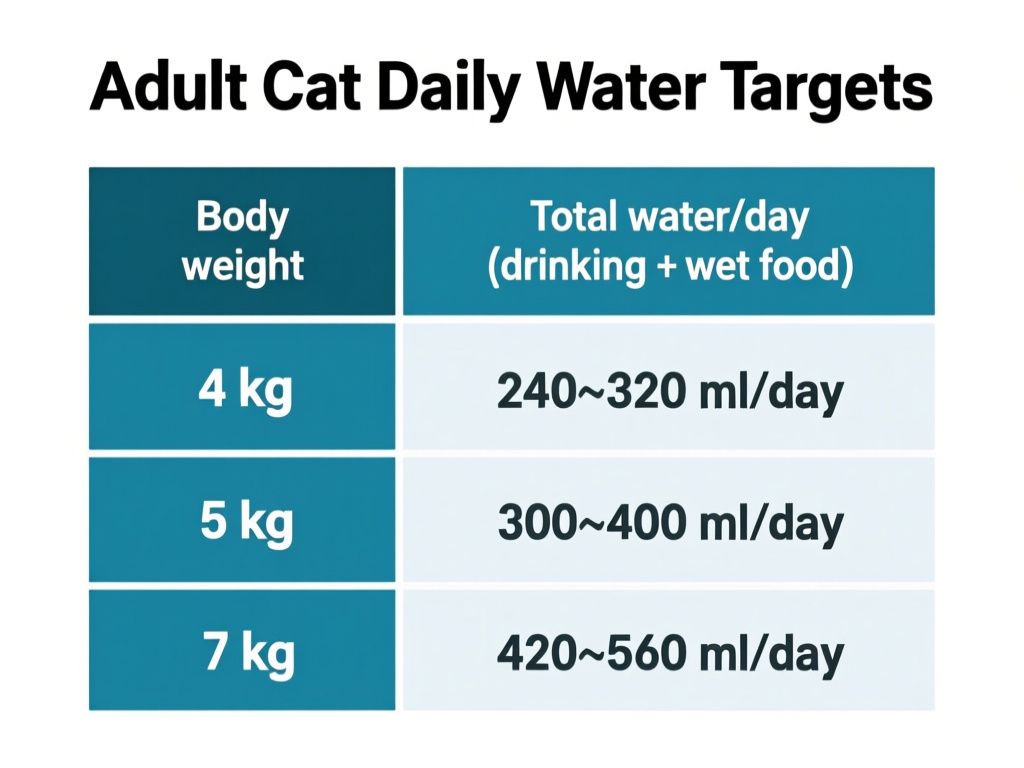
Most adult cats do best with total daily water intake (from drinking and from food) in the neighborhood of 60–80 mL per kilogram of body weight per day. If you prefer an easier rule of thumb, that lands around 3–4 ounces per day for an average 5–7 pound adult cat—again, assuming normal health and typical activity.
Here’s the key nuance: cats don’t just get water from the water bowl. They also get water from wet food and from moisture in their diet. That means the “right” amount of drinking can look surprisingly different from one cat to another.
What counts as “water intake”: drinking vs. food moisture?
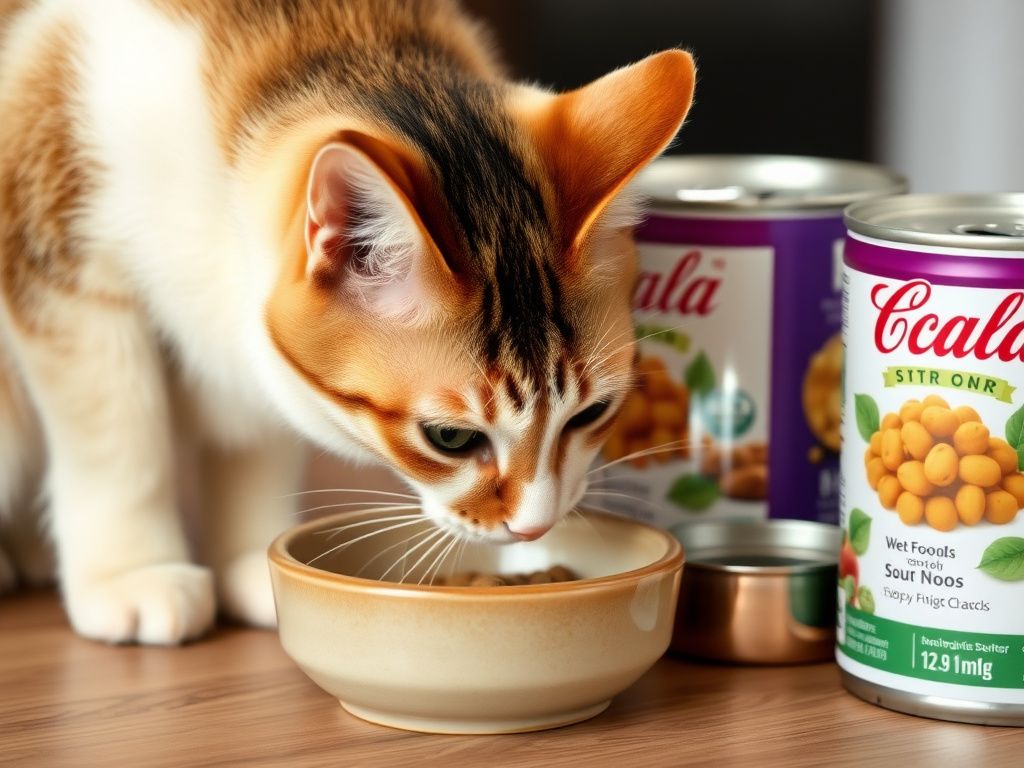
Water intake is best thought of in two buckets: drinking water and water in food. Wet cat food commonly contains a high moisture level (often roughly 70–80% water). Dry kibble is much drier (often around 10% moisture), so cats fed mostly dry food usually need to drink more to hit their daily water needs.
To make it practical, you can estimate your cat’s “total water” target and then figure out how much is likely coming from food.
Quick estimating method
Use this simple approach:
- Find your cat’s weight in pounds (or kilograms).
- Estimate total daily water needs at about 60–80 mL/kg/day.
- Estimate the water from food based on whether the food is wet or dry.
- Use the remainder as a rough guide for how much they should drink.
For example, a 4 kg adult cat (about 8.8 pounds) has a rough total target of 240–320 mL/day (about 8–11 ounces/day). If the cat eats canned food that’s, say, 75% moisture, a typical meal portion may already supply most of that.
How do different diets change a cat’s water needs?
Diet matters because “water intake” is a total number, not a bowl-only number. A cat eating mostly dry food often drinks noticeably more than a cat eating mostly wet food, even if both are hydrating well.
Mostly dry food
If your adult cat eats kibble only (or mostly), their water requirement is more likely to show up as bowl drinking. Dry food has relatively little moisture, so even a cat that “drinks fine” may still struggle if the water source is unappealing, if they prefer certain temperatures, or if their environment makes them feel unsafe.
Mostly wet food
If your cat eats canned food or other wet diets as the main meal, water intake often comes largely from food moisture. Many cats will still drink some water, but the “extra” drinking may be modest. That’s normal—as long as they’re urinating regularly, their litter looks typical, and they don’t seem dehydrated.
A mixed diet (wet + dry)
Mixed feeding usually leads to middle-of-the-road drinking behavior. You may notice your cat drinks more on dry-food days than wet-food days. That’s a good sign when it’s consistent and not paired with symptoms.
Do indoor cats need more or less water?
Indoor cats often drink less than you might expect, not because they need less overall, but because their environment can be cooler, less active, and less likely to make them pant. Still, indoor cats can be at risk if they aren’t offered appealing water sources or if they eat mostly dry food.
On hot days, during dry winter heating, or after energetic play, your cat may need more water. One practical approach is to watch intake patterns and urine output rather than chasing a fixed number.
Signs dehydration might be building
Dehydration isn’t always obvious, but you can watch for a cluster of clues:
- Dry, tacky gums or saliva
- Skin “tenting” that persists when you gently lift skin at the scruff (a less reliable sign in cats but can be meaningful)
- Lethargy or reduced appetite
- Smaller, less frequent urination or darker urine
- Strong urine odor changes (not specific, but sometimes helpful)
If you see these, it’s better to address the cause quickly—because dehydration can compound problems like constipation and urinary issues.
How can you tell if your cat is drinking enough?
Instead of only measuring water bowl volume, focus on a few real-world markers: behavior, appetite, and litterbox output. Those tend to reflect hydration more reliably than “how many ounces they drank today.”
What “good” looks like
- Your cat urinates regularly (the exact frequency varies by cat and diet, but there shouldn’t be a dramatic drop).
- Litterbox clumps form as expected for your cat’s routine.
- Your cat maintains normal energy and appetite.
- Wet food eaters look hydrated and don’t show thirst behaviors that seem out of character.
What “not enough” can look like
- They drink a lot but still urinate less (could indicate illness).
- They drink little and urinate less (possible dehydration or reduced kidney/urinary function).
- They strain, visit the box repeatedly, or vocalize (this can be a urinary emergency).
Notice how some of these patterns are “not enough,” but others could point to something else entirely. That’s why behavior trends matter.
How much should an owner expect a healthy cat to drink?
Some cats drink surprisingly little—especially those eating mostly wet food. Others drink more, especially if they eat mostly dry food or live in a hotter/drier home. Healthy drinking can be “low volume, steady routine,” not always big daily bowl numbers.
If you’re trying to get a sense of whether your cat is in a reasonable range, you can do a simple week-long observation:
- Measure how much water you put out (or use a marked container).
- Measure how much remains after 24 hours.
- Compare that to their diet (wet vs dry portions).
- Track litterbox output and appetite.
After a few days, you usually see a pattern. Sudden changes—especially paired with changes in urination or appetite—are more important than small day-to-day fluctuations.
Is it safe if your cat drinks too little or too much?
It can be safe, but it can also be a red flag. Cats are good at hiding illness until it becomes more obvious, so “off” drinking patterns deserve attention.
Drinking too little
Low water intake can lead to concentrated urine, which is one reason veterinarians often recommend encouraging hydration in cats—particularly cats prone to urinary issues. Chronic low intake can also contribute to constipation in some cats.
However, if your cat eats mostly wet food and urinates normally, “not drinking much from the bowl” can still be perfectly fine.
Drinking too much
Increased drinking (especially if paired with increased urination) can be caused by several conditions, including kidney disease, diabetes, hyperthyroidism, or urinary tract problems. Without diagnosing, the take-home is simple: a noticeable change from your cat’s usual behavior is worth a veterinary call, especially in older cats.
How can you encourage better drinking (without stressing your cat)?
Encouraging hydration is usually about making water more appealing and easier to access—not about forcing it. Many cats decide where and how they drink based on comfort and scent cues.
Practical hydration tips that often work
- Use fresh water daily (many cats dislike “old” water, even if it looks clean).
- Try a wider, shallow bowl. Some cats dislike water touching whiskers.
- Consider a cat water fountain if your cat likes running water. Clean it as instructed to prevent biofilm buildup.
- Place water away from the litterbox. Cats often prefer separation.
- Offer more than one water station if your home has multiple levels.
- Increase wet food proportion gradually if your cat tolerates it.
- Warm wet food slightly (not hot) to enhance aroma; some cats drink more when meals smell appealing.
If your cat is refusing water entirely, don’t just wait it out—especially if they’re also eating less. That combination deserves timely medical advice.
Special situations: kittens, older cats, and medical conditions
Water needs vary with life stage and health status. The 60–80 mL/kg/day guideline is a helpful baseline for many healthy adult cats, but it’s not a substitute for veterinary guidance in special situations.
Kittens
Kittens generally have different needs because they’re growing fast and may eat smaller meals more frequently. They’re also more likely to transition between wet and dry diets. If you’re changing diet types, it’s wise to adjust slowly and observe hydration and stool quality.
Older cats
In older cats, hydration patterns can change due to kidney function shifts or other conditions. Some older cats drink more; others drink less. Either way, a new pattern should prompt a check-in with a veterinarian.
Urinary tract issues and urinary crystals
Some cats are prone to urinary problems where water intake becomes especially important. Owners often notice changes like frequent litterbox visits, small urine amounts, or straining. Those can be emergencies, particularly in male cats, so don’t treat them as “just dehydration.”
When should you call a veterinarian?
Even good guidance like “aim for 60–80 mL/kg/day” can’t cover every situation. If something looks off, it’s safer to get professional input.
- Your cat is drinking much more or much less than usual for more than a day or two.
- Your cat is urinating less, seems to have difficulty urinating, or is straining.
- There’s vomiting, diarrhea, or a significant drop in appetite.
- You suspect dehydration (dry gums, lethargy) or you see sticky/tacky gums.
- Your cat has a known medical condition (kidney disease, diabetes, hyperthyroidism) and hydration is changing.
If your cat is in pain while trying to pee, that’s urgent. Cats can sometimes develop blockages that require immediate treatment.
Frequently Asked Questions
How many ounces of water should my adult cat drink per day?
A useful starting point is about 3–4 ounces per 5 pounds of body weight per day as total water intake (drinking plus wet food moisture). Actual bowl drinking varies widely based on how much wet food your cat eats.
Can my cat get enough water from wet food alone?
Often, yes. Wet food has a high moisture content, which can supply most of the day’s water needs. Many cats still drink some water, but low bowl-drinking isn’t automatically a problem if urination and behavior stay normal.
What if my cat drinks less than expected?
First check diet and routine. If your cat eats mostly wet food and urinates normally, “less drinking” may still mean adequate total hydration. If drinking drops along with reduced urination, appetite, or energy, contact a veterinarian.
Is it normal for cats to drink little water from the bowl?
Yes, especially for cats eating mostly canned food. Some cats prefer moisture from meals, and their drinking can be modest. The best confirmation is consistent litterbox output and normal behavior.
My cat drinks a lot and pees more—should I worry?
It can be a sign of an underlying condition, particularly in older cats. Increased thirst and increased urination should be discussed with a veterinarian rather than treated as a simple behavior change.
What’s the best way to measure whether my cat is hydrated?
Track multiple signals: total water intake (including wet food), litterbox output, appetite, and energy. A simple week of observation can reveal your cat’s baseline, making sudden changes easier to spot.
If you want one practical takeaway: focus less on a single “perfect water bowl number” and more on total intake plus normal urination and behavior—then act quickly if those patterns shift.

Mim Creation
Writer at Helmet Today, covering helmet reviews, fit and riding safety.