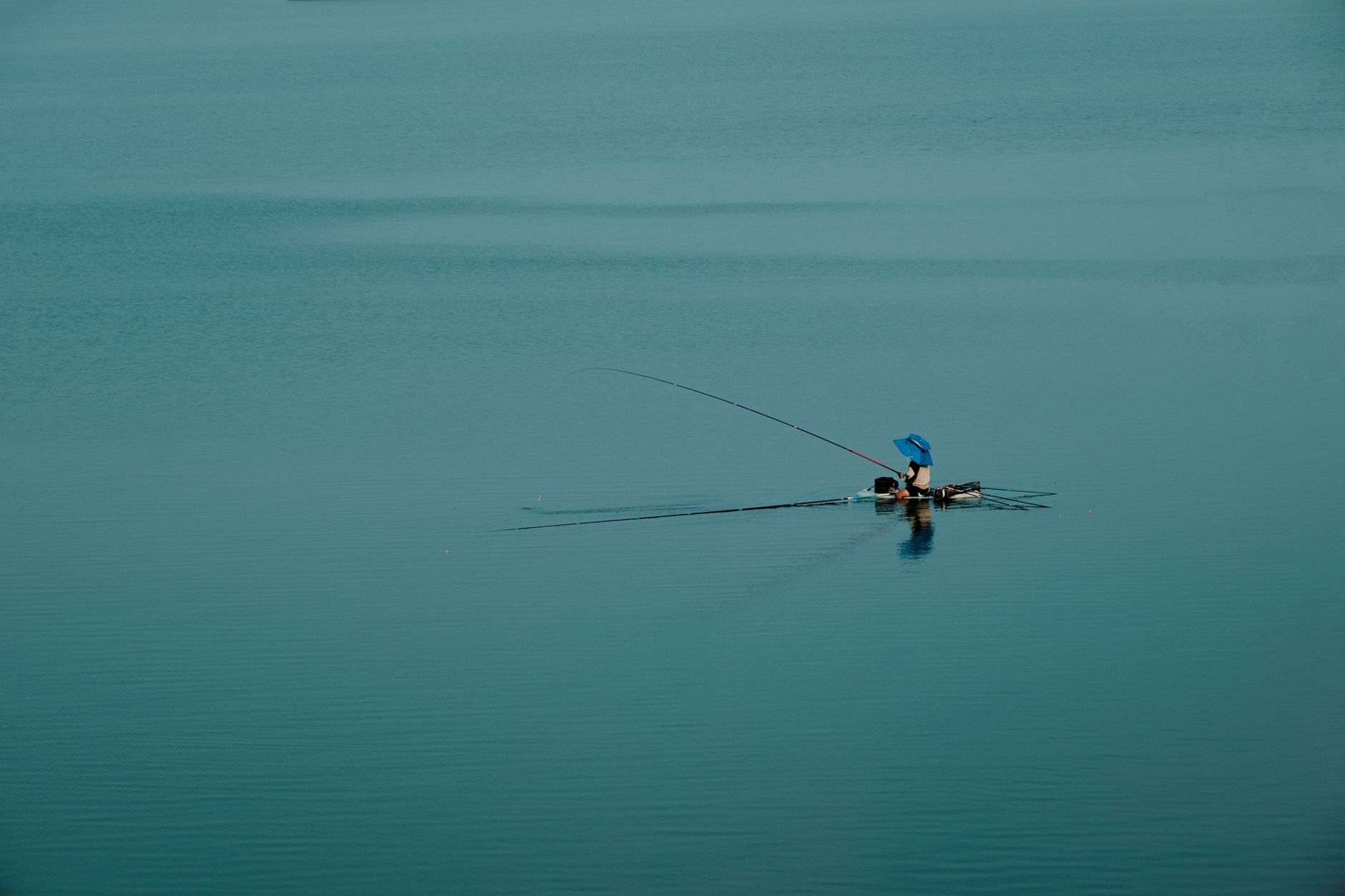
To go fishing, choose a legal fishing spot, get the required license, assemble a rod with line, hook, and bait or lure, then cast into suitable water and wait for a bite. When a fish takes the bait, set the hook, reel steadily, and land it carefully. Beginners usually start with simple bait fishing from shore.
What do you need to go fishing?
A beginner can start fishing with a modest amount of equipment. The basic setup is a spinning rod and reel, fishing line, a hook, bait or a lure, and a way to remove the hook safely.
- Rod and reel: A 6- to 7-foot medium-light or medium spinning outfit is versatile for common freshwater fish.
- Fishing line: Monofilament line around 6- to 10-pound test is forgiving and easy to handle. “Pound test” describes the approximate force the line can withstand before breaking.
- Hooks: Small bait hooks, such as sizes 6 through 10, work for species including bluegill, perch, and smaller catfish. Hook sizes run backward: a size 10 is smaller than a size 6.
- Bait or lure: Worms, corn, bread, or commercially prepared bait are simple choices. Artificial lures imitate prey and require more active casting.
- Bobber and sinkers: A bobber, also called a float, shows when a fish pulls the bait underwater. Small split-shot sinkers help the bait reach the desired depth.
- Useful tools: Bring needle-nose pliers, nail clippers or line cutters, a small landing net, measuring tape, and a container for tackle.
Wearing suitable clothing matters more than many first-time anglers expect. Closed-toe shoes, sunglasses, sunscreen, insect repellent, drinking water, and a light rain jacket make several hours beside the water much more comfortable.
Children should use equipment sized for them and fish under close adult supervision. Hooks are sharp, slippery banks can be hazardous, and fish with teeth or spines require careful handling.
How do you choose a place to fish?
Choose a location where fishing is legal, access is permitted, and the target fish are known to live. Public lakes, ponds, rivers, reservoirs, piers, and managed fishing parks are common starting points, but local rules differ.
Before leaving home, check the local fish-and-wildlife agency or the manager of the lake, park, or pier. Look for information about fishing licenses, open seasons, size limits, daily bag limits, bait restrictions, and access hours. A license may be required even when fishing from private property, depending on local law.
Fish often gather near places that provide food, cover, shade, or a change in depth. From shore, look for the following features:
- Reeds, lily pads, fallen trees, docks, and rock edges
- The boundary between shallow and deeper water
- Inlets, creek mouths, and areas where water moves
- Shade along a bank, especially during bright weather
- Visible insects, baitfish, bird activity, or small fish near the surface
Moving water deserves extra caution. Riverbanks can collapse, rocks can be slick, and water levels can change quickly after rain. Beginners should avoid standing on unstable banks or wading into unfamiliar currents.

How do you set up a fishing rod?
A spinning rod is usually the easiest setup for a first fishing trip because the reel is simple to operate and the line comes off smoothly during a cast.
- Connect the rod sections if the rod comes in more than one piece. Align the guides, which are the small rings that guide the line.
- Open the reel’s bail, the wire arm that controls the line. Run the line through every rod guide, starting with the largest guide near the reel.
- Tie the line to the hook, lure, or swivel using a reliable knot. The improved clinch knot is a practical first knot for many monofilament lines.
- Trim the loose end of the line with clippers, leaving a short tag end so the knot does not unravel easily.
- Add a bobber and one or two small split-shot sinkers if using bait. Place the sinker several inches above the hook and adjust the bobber to control depth.
Avoid adding too much weight. A heavily weighted beginner rig casts poorly and can make small fish less willing to take the bait. The hook should remain sharp, and the knot should be pulled firmly before casting.
Live bait must be hooked in a way that keeps it on the hook while allowing natural movement. A worm can be threaded onto a small hook, with enough point exposed to catch a fish. Check local regulations before using minnows, crayfish, or other live bait because some waters restrict their use or require bait from approved sources.
How do you cast a fishing line?
A basic overhead or sidearm cast sends the bait away from shore with a controlled motion rather than a hard throw. Start in an open area and keep people, branches, and power lines behind and above you.
- Hold the rod in your dominant hand with the reel beneath the rod.
- Reel in until the bait hangs about 6 to 12 inches below the rod tip.
- Hook the line against the rod with your index finger.
- Open the reel bail while keeping the line held lightly against your finger.
- Bring the rod back, then swing it forward smoothly toward the target.
- Release the line as the rod points toward the target.
- Close the bail by hand and gently reel up slack.
The most common beginner mistake is trying to cast too far. Fish may be close to shore, particularly near weeds, rocks, docks, and submerged cover. Accuracy and a quiet landing usually matter more than distance.
Practice with a casting plug or a hook removed from the rig before fishing around other people. Keep the hook covered or removed while learning. A smooth cast also reduces tangles, which are often caused by releasing the line too early, too late, or with excessive force.
How do you know when a fish is biting?
A bite may appear as a bobber that dips, slides sideways, or disappears. With a lure, a bite can feel like a tap, sudden heaviness, or a sharp interruption in the retrieve.
Do not react to every tiny movement. Wind, waves, current, and a sinker touching the bottom can all move the float. Watch for a clear, repeated signal or for the bobber to stay underwater.
When a fish takes bait beneath a bobber, lower the rod slightly, remove slack, and lift the rod with a firm but controlled motion. This movement is called setting the hook. The goal is to pull the hook point into the fish’s mouth without violently jerking the rod.
Hook-setting timing depends on the bait and fish. A small fish nibbling a worm may require a quick response, while a fish carrying bait away may need a moment to take it fully. If the hook is swallowed deeply, cutting the line near the mouth is often safer for the fish than forcing it out.

Photo by Christina & Peter on Pexels
How do you reel in and land a fish?
Keep the rod pointed upward at roughly a 45-degree angle and maintain steady pressure after setting the hook. The bent rod acts like a spring, protecting the line from sudden pulls.
Reel when the fish is not taking line, but stop cranking when it makes a strong run. Many spinning reels have an adjustable drag, which allows line to leave the reel under heavy pressure. A drag set too tight can snap the line; a drag set too loose may make it difficult to control the fish.
Guide the fish away from weeds, branches, rocks, and boat traffic. Do not wrap the line around your hand, and do not grab the line to pull a fish toward shore. Use a landing net when possible, especially for a larger fish or one with sharp teeth.
Once the fish is close, keep it in the water until you are ready to handle it. Wet your hands before touching a fish that will be released, because dry hands can remove the protective slime covering its skin.
| Situation | Best handling choice |
|---|---|
| Small fish with an easy-to-see hook | Wet hands, support the fish, and remove the hook with pliers. |
| Deeply swallowed hook | Cut the line close to the hook instead of pulling forcefully. |
| Fish with sharp teeth or spines | Use long pliers and avoid placing fingers near the mouth or dorsal spines. |
| Fish intended for legal harvest | Confirm its species, size, and daily limit before keeping it. |
Should you keep a fish or release it?
Keep only fish that are legal to harvest and that you genuinely plan to eat. Measure the fish from the closed mouth to the end of the tail according to local regulations, and count it toward the correct daily limit.
For release, minimize time out of the water. Remove the hook with pliers, support the fish horizontally rather than hanging it by the jaw, and return it gently to the water. If the fish is exhausted, hold it upright in calm water until it swims away on its own, but do not push it back and forth.
Fish kept for food should be dispatched and stored promptly. An insulated cooler with ice is more suitable than leaving fish in direct sun. Follow local health guidance for cleaning and cooking, since some waters carry consumption advisories caused by pollution or contaminants.
What should you do if nothing bites?
Not catching fish is normal, especially during a first trip. Change one variable at a time so you can learn what helped: move to a different depth, cast near cover, reduce the bait size, or try another location.
- Fish at dawn, late afternoon, or another period when local fish are active.
- Use fresh bait and replace it when it becomes waterlogged or falls off.
- Try a smaller hook and lighter sinker if fish are nibbling without getting caught.
- Move every 15 to 30 minutes if the water appears lifeless.
- Ask a local tackle shop what species are biting and which bait is currently working.
Weather and water conditions can change results quickly. Cold fronts, heavy rain, bright sunlight, rising water, and strong wind may alter where fish feed. A quiet day still teaches useful skills such as casting, knot tying, reading water, and handling equipment.

Photo by Michal Dziekonski on Pexels
What are the basic fishing safety and etiquette rules?
Fishing safely begins with controlling the hook. Look behind you before every cast, keep hooks covered while walking, and give nearby anglers plenty of room. Never cast over another person’s line.
- Wear a life jacket when fishing from a boat, kayak, or unstable dock.
- Stay away from overhead electrical wires because a rod can conduct electricity.
- Carry out line, bait containers, and other litter.
- Respect private property, posted closures, and other anglers’ space.
- Do not release unwanted bait or fish into a different body of water.
- Check weather forecasts and leave exposed banks during lightning.
Responsible fishing protects the place that makes the activity possible. Dispose of damaged line properly, avoid trampling vegetation, and follow local rules even when enforcement is not visible.
Frequently Asked Questions
What is the easiest way for a beginner to go fishing?
Fishing from shore with a spinning rod, a small hook, a bobber, and a worm is usually the simplest approach. It requires little casting distance and gives a visible signal when a fish bites. A public pond or managed fishing lake is often easier than a fast-moving river.
Do you need a license to go fishing?
Many places require a fishing license for adults, although age exemptions and local exceptions vary. Some private ponds, free-fishing days, and designated parks have different rules. Check the relevant fish-and-wildlife agency before fishing rather than relying on assumptions.
What bait should a first-time angler use?
Worms are a practical all-purpose bait for many freshwater species, including panfish, trout, bass, and catfish. Other options, such as corn or prepared dough bait, can work for particular fish and locations. Local regulations may restrict certain baits, so verify them first.
How long should you wait for a bite?
Wait about 15 to 30 minutes in one spot if the bait is fresh and the rig is working correctly. If there is no sign of fish, change depth or move closer to cover. Staying in one unproductive location for hours is rarely the best learning strategy.
What should you do if a fish swallows the hook?
Do not yank a deeply swallowed hook out, because that can cause severe injury. Cut the line as close to the hook as practical and release the fish if regulations allow. A dehooking tool and long-nose pliers can make future incidents easier to manage.
Can you go fishing in cold or windy weather?
Yes, but conditions affect both fish behavior and personal safety. Wear layers, secure loose equipment, avoid dangerous currents and lightning, and recognize that strong wind can make casting and bite detection difficult. Beginners generally learn faster on a calm day with moderate temperatures.
For a first trip, keep the plan simple: choose a legal accessible spot, use a bobber and worm, practice short accurate casts, and bring pliers. Learning to handle the equipment safely matters more than catching a large fish.

Mim Creation
Writer at Helmet Today, covering helmet reviews, fit and riding safety.