They call it “catfish” because the term comes from a story about catfish being placed with cod during transport to keep the cod moving and alert. The 2010 documentary Catfish turned that old fish story into a metaphor for someone who creates a false online identity to deceive another person, especially in a romantic relationship.
What does “catfish” mean today?
A catfish is a person who pretends to be someone else online, usually by using fake photos, a false name, or an invented personal history. The deception often happens on dating apps and social media, but it can also occur in gaming communities, messaging apps, and online groups.
“Catfishing” usually involves more than using a nickname or keeping personal details private. The term describes deliberate deception about a person’s identity. A person who uses a screen name but is open about who they are is not necessarily catfishing; someone who claims to be a different person and maintains that lie generally is.
Catfish schemes can have different goals. Some people seek attention or companionship, while others want money, intimate images, account access, or personal information. In some cases, the catfish identity is created to harass someone or manipulate them emotionally.
Where did the catfish expression come from?
The modern metaphor became widely known through the 2010 documentary Catfish, directed by Ariel Schulman and Henry Joost. The film follows Nev Schulman as he develops an online relationship with a woman named Megan, only to discover that the identity behind the relationship is far more complicated than it appeared.
Near the end of the film, a man named Vince tells a story about transporting cod from Alaska to China. According to the story, the cod became dull and poor in quality when shipped alone, so live catfish were put into the tanks with them. The cod supposedly stayed active while trying to avoid the catfish, arriving in better condition.
Vince then compares those catfish with people who keep others alert, challenged, or emotionally stirred up. The documentary applies that comparison to the false online identity at the center of the story. The metaphor suggests that a catfish creates tension and movement in another person’s life, even through deception.
The film did not simply explain an obscure fish nickname. It gave a memorable name to a recognizable online experience. After the documentary reached a broad audience, “catfish” became common shorthand for online identity fraud and deceptive internet relationships.

Photo by Artem Podrez on Pexels
Is the cod-and-catfish story true?
The story is widely repeated, but the details are disputed and should not be treated as established fish-shipping science. Accounts differ about the type of fish, the route, and whether catfish were actually used to keep cod healthy during transport.
The story resembles a well-known idea called the “catfish effect.” That phrase describes a situation in which competition or pressure motivates people to stay active rather than become complacent. It has appeared in business writing and popular discussions about motivation, sometimes with a similar story about live fish.
There is also a practical problem with taking the tale literally. Transporting live fish depends on species, water temperature, oxygen levels, tank conditions, stocking density, and travel time. Adding another fish would not automatically improve the health of the transported animals. A predator could injure or kill them, increase stress, or make the conditions worse.
So why did the story stick? It works as a compact parable. The image is easy to remember: calm fish, a disruptive fish, and a trip that changes because of the intruder. The documentary used that image to describe how a false person can disrupt someone’s emotional life.
Why are catfish named after cats?
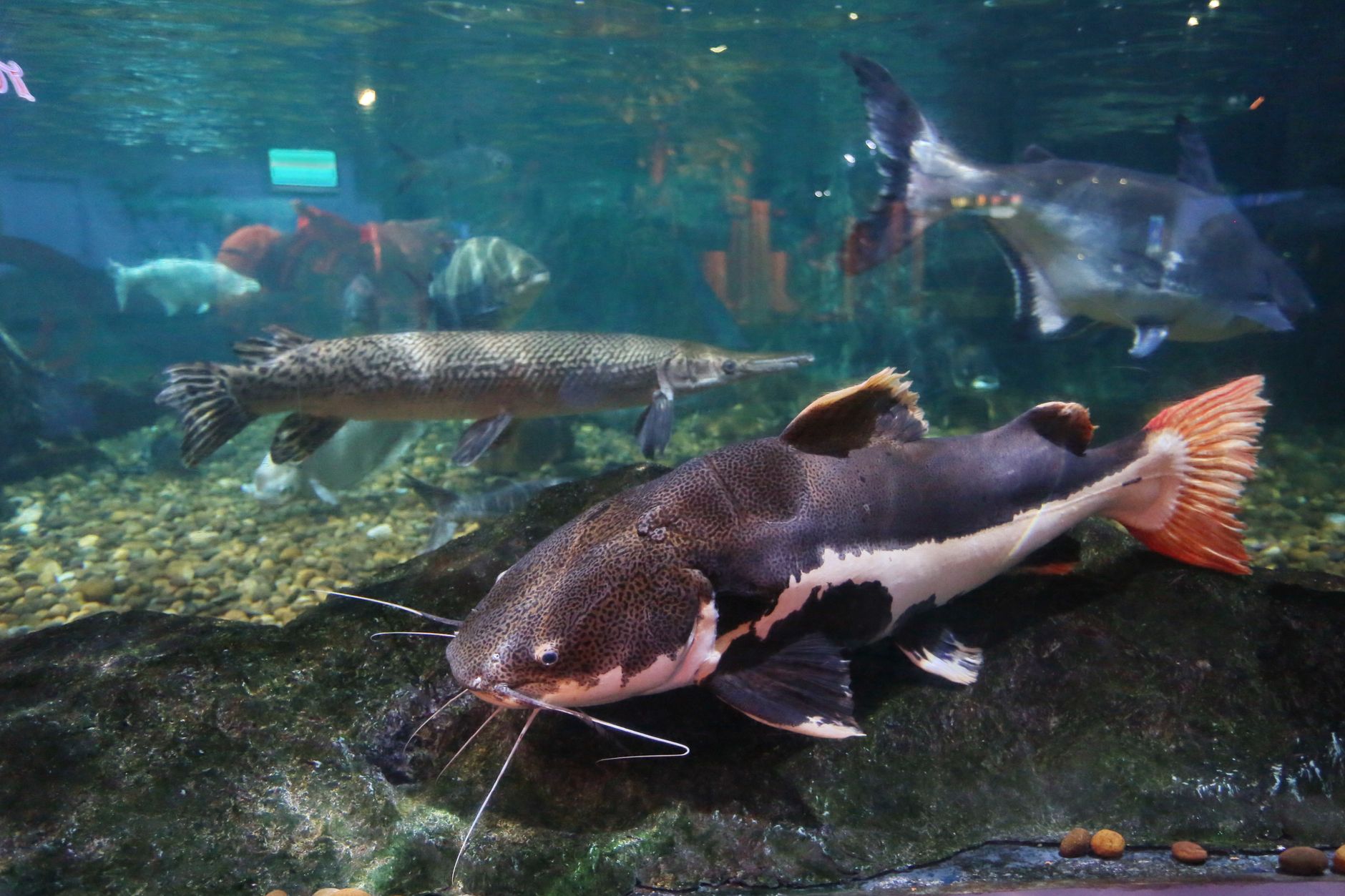
The fish name itself comes from the animals’ whisker-like feelers. Catfish have slender sensory organs called barbels around the mouth. These barbels help them detect food and investigate their surroundings, especially in cloudy or murky water where vision is limited.
People compared those barbels to a cat’s whiskers, which led to the common name “catfish.” The name does not mean catfish are closely related to domestic cats. Catfish belong to a large group of ray-finned fish, while cats are mammals in the order Carnivora.
Catfish are found in freshwater and marine environments around the world. Many species have smooth-looking skin because they lack the typical overlapping scales seen on fish such as salmon or carp. Some catfish also have sharp spines in their fins, and certain species can cause painful injuries if handled carelessly.
That biological meaning existed long before the internet meaning. The online use is a metaphor built on top of the fish’s common name, just as people use animal names in expressions such as “wolf in sheep’s clothing” or “snake oil.”
How did “catfish” become an internet term?
The documentary supplied the popular origin story, but its timing also mattered. Around 2010, online dating, social networking, webcams, and digital photography were becoming ordinary parts of everyday relationships. People could create convincing profiles without meeting face to face.
That technology made identity mistakes easier and intentional deception more scalable. A person could copy photographs from a real individual, invent a biography, and communicate for months without having to appear in person. The documentary gave viewers a single word for that pattern.
The word soon developed into several related forms:
- Catfish: a person who uses a deceptive online identity.
- Catfishing: the act of creating or maintaining that deception.
- Catfished: the description of someone who has been deceived by a catfish.
- Catfish account: an online profile suspected of using false information or stolen photos.
News reports, dating-app discussions, and the television series Catfish: The TV Show helped make the vocabulary familiar. The show, which grew out of the documentary, featured people investigating online relationships and trying to determine whether the person they had been talking to was genuine.
What makes someone a catfish?
The defining feature is intentional misrepresentation, not merely online privacy. A person may use a partial name, avoid posting a clear photo, or take time before sharing personal information without trying to deceive anyone.
A profile is more likely to be catfishing when several warning signs appear together. Common examples include:
- Photos that appear unusually polished, limited, or inconsistent with the person’s claimed life.
- A refusal to make a normal video call despite weeks or months of close communication.
- Stories that change when basic details are revisited.
- Claims of sudden emergencies followed by requests for money, gift cards, cryptocurrency, or financial help.
- Pressure to move quickly from a public platform to private messaging.
- Excuses for never meeting, often involving travel, illness, military service, or work emergencies.
- Requests for intimate images that could later be used for blackmail.
One warning sign alone does not prove deception. Some legitimate people have privacy concerns, poor internet access, unusual work schedules, or safety reasons for avoiding video calls. The useful question is whether the person responds to reasonable verification with consistency and respect, rather than whether their profile looks slightly unusual.

Photo by Ketut Subiyanto on Pexels
Why do people catfish others?
Catfishing has no single motive. Some catfish want emotional connection and create a more attractive or confident version of themselves because they feel ashamed of their real identity. That explanation may describe the behavior, but it does not remove the harm caused by the lie.
Financial fraud is another major motive. Romance scammers often build trust first and ask for money later. The request may be framed as help with a hospital bill, an immigration problem, a broken vehicle, a plane ticket, or an investment opportunity. The emotional relationship is used as the mechanism for extracting cash.
Other catfish seek sexual material, personal data, access to accounts, or leverage over the victim. Some create fake profiles to spy on a former partner, test a current partner, impersonate someone they dislike, or embarrass a target publicly.
There are also cases where people use fake identities as a form of escapism. An online persona can feel safer, more attractive, or more socially capable than the person’s offline identity. Even then, the behavior becomes catfishing when the invented persona is presented as a real person and another individual is encouraged to form a relationship under false pretenses.
How can someone avoid being catfished?
Simple verification steps reduce risk, especially before sending money, intimate images, or sensitive information. The goal is not to investigate every new acquaintance like a detective; it is to avoid making major commitments before basic identity claims have been checked.
- Keep early conversations on the original platform. Scammers often try to move chats quickly to private apps where moderation and reporting are weaker.
- Ask for a live video call. A prerecorded clip or a collection of photographs does not prove that the person is the owner of the account.
- Search for copied photographs. Reverse image-search tools can reveal when the same picture appears under different names, although a clean result does not prove that a profile is genuine.
- Check the timeline. Look for consistent details about work, location, family, and daily routines. Contradictions matter more than a single awkward answer.
- Never send money to an online romantic contact. This includes wire transfers, gift cards, cryptocurrency, and payments for supposed travel or emergencies.
- Protect intimate material. Once an image is sent, the sender loses control over where it may be stored or shared.
- Tell a trusted person. An outside perspective can make manipulation easier to spot, particularly when strong feelings are involved.
People who suspect catfishing should save messages, profile links, payment records, and relevant photographs before blocking or reporting the account. If money was sent, contacting the bank or payment provider quickly may improve the chance of stopping or reversing a transaction.
Does every fake online profile count as catfishing?
Not necessarily. The term is strongest when a person deceives someone about identity in a relationship or sustained personal interaction. A parody account, anonymous political account, fictional role-playing character, or private account that reveals little information may be misleading in some sense but is not automatically catfishing.
Context matters because online identity is not always simple. People may hide their real names to avoid stalking, protect their employment, explore their sexuality, or participate safely in a community. Deception becomes more serious when a person adopts another real person’s identity, manufactures intimacy, or uses false details to obtain money, sex, access, or control.
| Online behavior | Usually considered catfishing? | Why |
|---|---|---|
| Using a nickname while openly explaining it | No | Privacy is not the same as false identity. |
| Role-playing a fictional character in a game | No | The fictional setting makes the invented identity clear. |
| Using another person’s photos and pretending to be that person | Yes | The profile deliberately misrepresents identity. |
| Inventing a romantic relationship to request money | Yes | The false identity is being used for fraud. |
| Creating a parody account clearly labeled as parody | Usually no | The audience is not meant to mistake it for a real person. |
Frequently Asked Questions
Who invented the term “catfishing”?
The modern popular use is closely associated with the 2010 documentary Catfish. The film connected an online identity deception to a story about catfish keeping cod active during transport, and the term spread through media and online dating culture afterward.
Is catfishing illegal?
Using a fake online identity is not automatically illegal everywhere. However, related conduct such as fraud, identity theft, blackmail, harassment, stalking, or obtaining intimate images through deception may violate criminal or civil laws, depending on the jurisdiction.
Can catfishing happen without asking for money?
Yes. A person can catfish someone for attention, emotional control, revenge, sexual material, or companionship without making a financial request. Money is a common warning sign, but it is not required for the behavior to qualify as catfishing.
How can someone tell whether a photo belongs to a catfish?
A reverse image search may show that a photograph appears under different names or on unrelated websites. Other useful checks include a live video call, consistent personal details, and a willingness to answer ordinary questions without creating repeated emergencies.
Why do catfish avoid video calls?
A catfish may avoid video calls because the person is using stolen photos or has invented the entire identity. Some genuine people avoid video for privacy, disability, cultural, or technical reasons, so refusal alone is not proof; repeated excuses combined with other inconsistencies are more meaningful.
What should someone do after discovering a catfish?
Stop sending money or personal material, save evidence, report the account to the platform, and block the person if contact is unsafe. Anyone who shared financial information, suffered threats, or sent money should contact the relevant bank, payment service, local authorities, or a fraud-reporting organization promptly.
Photo by Solen Feyissa on Pexels
The name began with fish whiskers, gained a memorable second life through a documentary, and now describes a serious form of online deception. When an internet relationship includes pressure, secrecy, inconsistent stories, and requests for money or private material, slowing down is the safest first move.

Mim Creation
Writer at Helmet Today, covering helmet reviews, fit and riding safety.