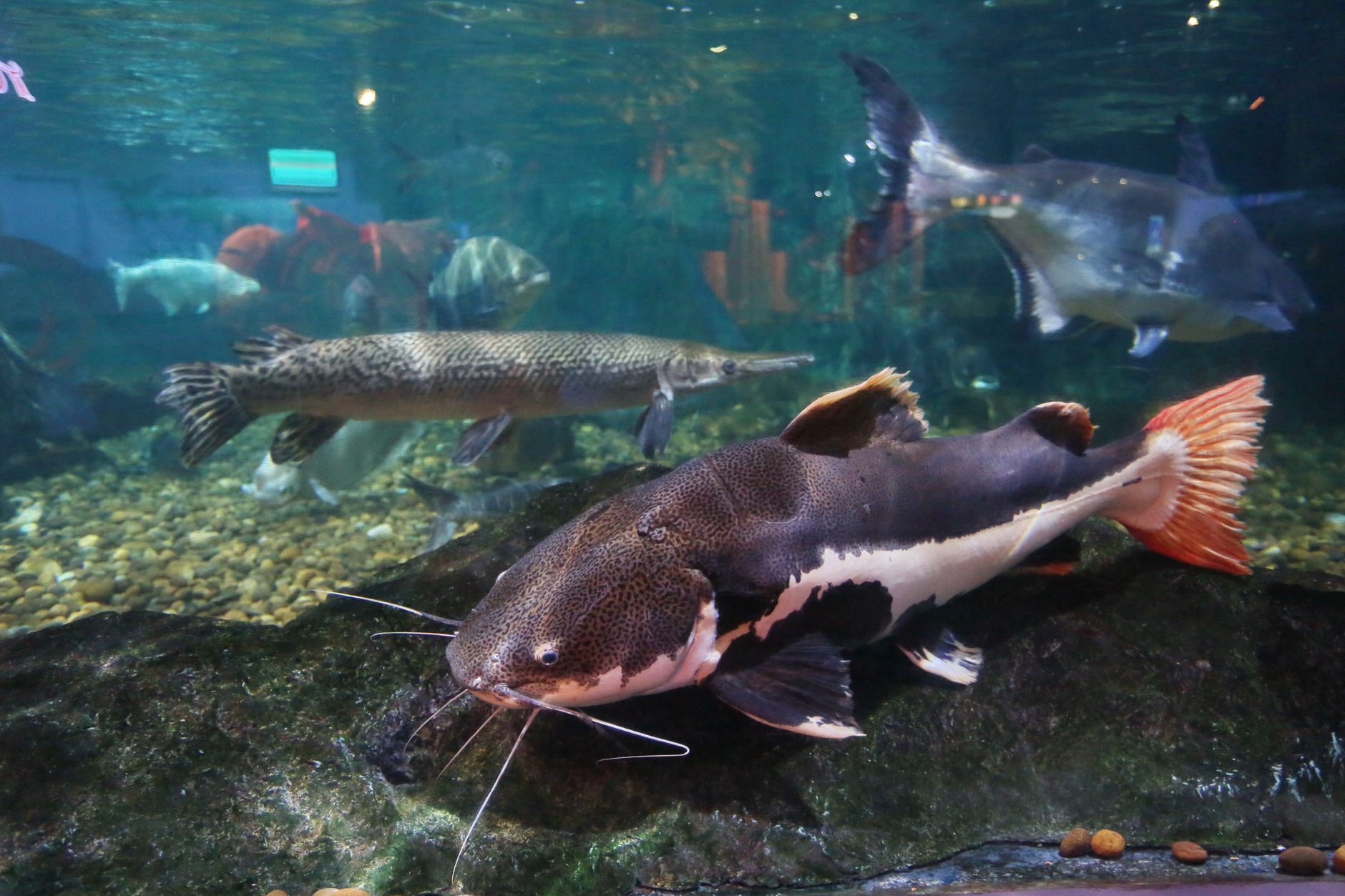
Catfish are freshwater or saltwater fish known for the whisker-like barbels around their mouths. Those barbels help them find food in dark or muddy water. “Catfish” also describes a person who creates a false online identity to deceive someone, usually in a romantic or financial relationship. The meaning depends on context.
What is a catfish fish?
A catfish is a ray-finned fish in the order Siluriformes, a large group that includes thousands of species. Most catfish live in freshwater, although some species inhabit coastal waters, estuaries, or the open sea. They range from small aquarium fish to very large river predators.
The name comes from the barbels around the mouth. These flexible sensory organs resemble a cat’s whiskers, although they are not hair and do not work like mammal whiskers. Barbels contain taste and touch receptors, helping catfish detect food, chemicals, movement, and changes in their surroundings.
Catfish often look unusual because their bodies lack the large, obvious scales found on fish such as trout or carp. Some species have smooth skin, while others have rows of bony plates. Their skin may be covered by a protective layer of mucus, which helps reduce abrasion and provides some defense against microbes.
Where do catfish live?
Catfish live on every continent except Antarctica, but their habitats vary greatly by species. They commonly inhabit rivers, streams, ponds, lakes, swamps, reservoirs, and flooded forests. A few species spend part of their lives in brackish or salt water, where freshwater mixes with the sea.
Many catfish prefer areas near the bottom, especially places with submerged logs, rocks, vegetation, or soft sediment. Bottom-dwelling does not mean that every catfish stays on the floor constantly. Some species swim through open water, climb damp surfaces, or even leave the water briefly to reach another pool.
Water temperature, oxygen levels, current, and available shelter shape where a catfish can survive. For example, a cold-water stream supports a different catfish community from a warm, muddy floodplain. Species that live in tropical waters often have body shapes and feeding habits suited to dense vegetation or seasonal flooding.

Photo by Maria Doina Mareggini on Pexels
How do catfish use their whiskers?
Catfish use their barbels to locate food when visibility is poor. Muddy water, nighttime conditions, and deep river channels can make vision less useful, so sensory organs around the mouth provide another way to investigate the environment.
A catfish may brush its barbels over the bottom, taste a chemical trail, or sense a small animal moving nearby. The barbels do not automatically mean that the fish eats only from the bottom. They are detection tools, and different species use them while scavenging, hunting, grazing, or searching among plants.
Most catfish have four pairs of barbels, though the number and shape differ among groups. The pair beside the mouth is often the most noticeable. Other barbels may sit on the chin or beneath the lower jaw. In some species, the barbels are short and hard to see.
What do catfish eat?
Catfish diets depend on the species, its size, and the habitat. Many are opportunistic feeders, meaning they eat a range of available foods rather than specializing in one item. Their meals can include insects, worms, crustaceans, mollusks, small fish, amphibians, plant material, seeds, and carrion.
Young catfish commonly eat tiny aquatic animals and other small food items. As they grow, some shift toward larger prey. A large flathead catfish, for example, is built to ambush live fish, while many smaller species pick through sediment for insect larvae.
People sometimes describe catfish as “dirty” because certain species feed near the bottom or consume dead material. That description is misleading. Feeding location does not determine whether a fish is safe or healthy to eat. Water quality, species, handling, cooking, and local advisories matter far more.
How do catfish protect themselves?
Many catfish have sharp spines at the front of their dorsal and pectoral fins. These spines can lock into an upright position, making the fish difficult for a predator to swallow. They can also injure a person who grabs a catfish carelessly.
Some species have venom associated with the spines or with glands near the spine. A puncture can cause severe pain, swelling, and other symptoms, although the seriousness varies by species and location. Freshwater catfish in North America are generally handled with care rather than treated as highly venomous animals, but their spines can still create deep wounds.
The safest way to handle a catfish is to avoid the sharp fin spines, support the body, and use tools when removing a hook. Anyone with a puncture wound should wash it thoroughly and seek medical advice if pain, swelling, redness, numbness, or other symptoms develop.
What are the most common types of catfish?
Several catfish groups are familiar to anglers, aquarium keepers, and seafood shoppers. Their appearance and behavior can differ dramatically, so “catfish” is a broad label rather than a description of one standard fish.
| Type | Typical features | Common setting |
|---|---|---|
| Channel catfish | Forked tail, dark spots, adaptable diet | Rivers, lakes, ponds, and fish farms |
| Blue catfish | Large body, blue-gray color, deeply forked tail | Large rivers and reservoirs |
| Flathead catfish | Broad flattened head, lower jaw extending beyond upper jaw | Warm rivers and reservoirs |
| Bullheads | Rounded tail, stout body, smaller size | Ponds, slow streams, and shallow lakes |
| Corydoras | Small armored bodies and short barbels | Freshwater aquariums and South American streams |
| Walking catfish | Air-breathing ability and strong pectoral fins | Tropical wetlands and flooded ground |
Channel, blue, and flathead catfish are especially familiar in North American fishing. Channel catfish are often stocked in ponds and raised commercially. Blue catfish can reach very large sizes in suitable rivers and reservoirs. Flathead catfish are predators that commonly prefer live prey.
Aquarium species include corydoras, plecos, pictus catfish, and many others. Some stay small and peaceful, while others become far too large for a typical home aquarium. A fish sold as a juvenile may need a much larger tank later, so adult size should be checked before purchase.
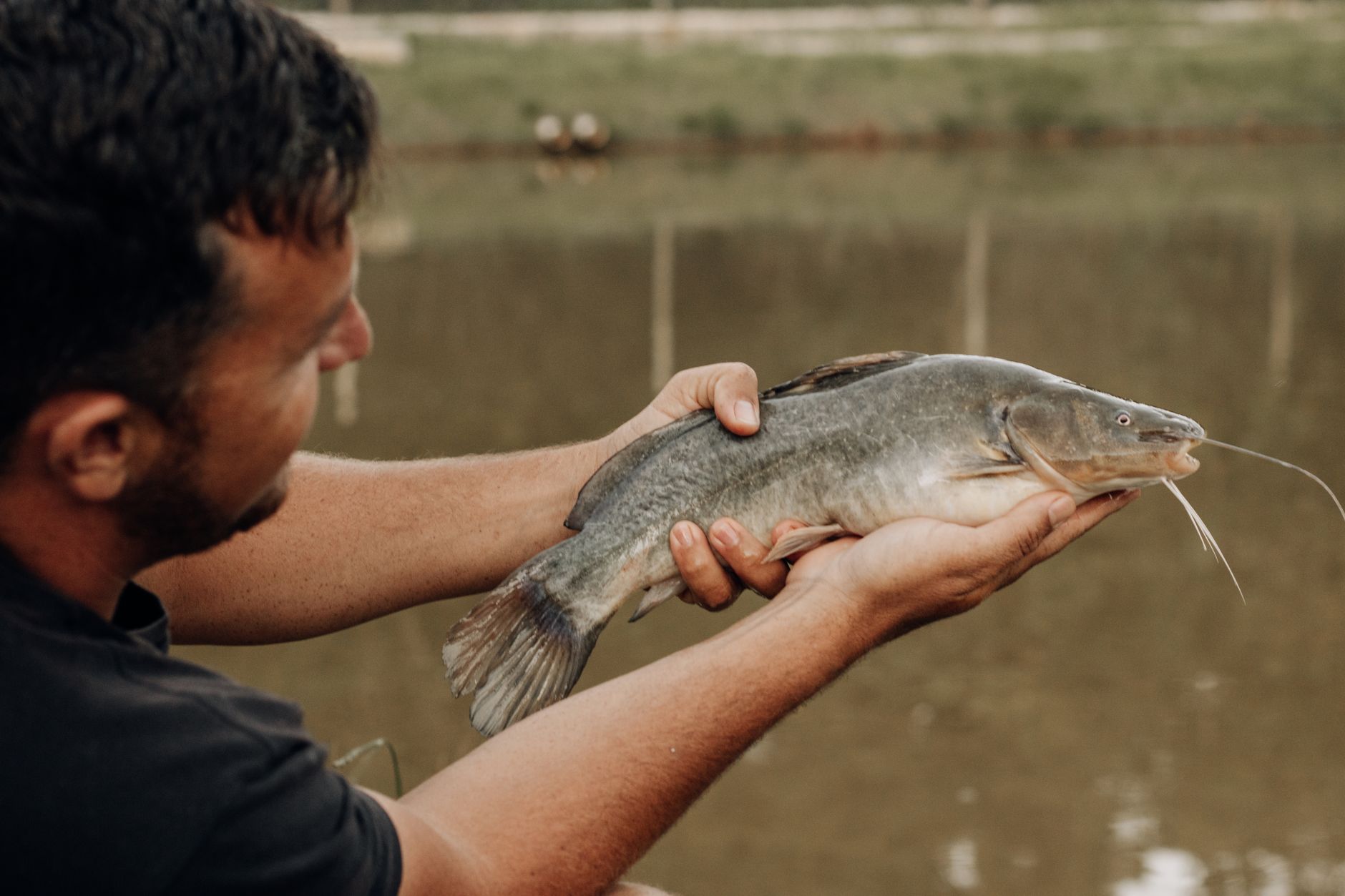
Photo by juliane Monari on Pexels
Are catfish good to eat?
Catfish are widely eaten and are valued for their mild flavor and firm, pale flesh. Farm-raised catfish are commonly sold as fillets, while wild-caught fish may be prepared whole or cut into steaks and fillets. Popular cooking methods include frying, baking, grilling, and stewing.
Food safety depends on proper handling and cooking. Fish should be kept cold after capture, protected from cross-contamination, and cooked until the flesh is opaque and separates easily. Local fishing advisories should be followed because pollutants such as mercury or industrial chemicals can accumulate in fish from particular waters.
Species and source matter. A farm-raised catfish from a regulated food supply is not the same situation as a large wild fish caught in a river with a consumption warning. Pregnant people, young children, and anyone who eats fish frequently may need to pay especially close attention to local guidance.
What does “catfishing” mean online?
Online catfishing is the act of using a false identity or misleading profile to build a relationship with another person. The catfisher may use someone else’s photographs, invent a name and background, or misrepresent age, location, job, relationship status, or intentions.
The deception often develops through social media, dating applications, gaming communities, or messaging platforms. A catfisher may avoid video calls, offer elaborate excuses for not meeting, and create a strong emotional connection before asking for money, gift cards, account access, intimate photographs, or other favors.
Not every private person online is a catfish. Some people reasonably protect their privacy, use a nickname, or prefer not to share personal details quickly. The warning sign is a pattern of contradictions, pressure, secrecy, and requests that do not fit a normal new friendship or relationship.
How can someone spot an online catfish?
A single unusual detail does not prove deception, but several warning signs together deserve attention. Common signs include:
- The person refuses repeated, reasonable requests for a live video conversation.
- Their photographs appear polished but their story contains inconsistent details.
- They claim to live nearby but always have a reason they cannot meet safely in public.
- The relationship becomes intense unusually quickly.
- They ask for money, cryptocurrency, gift cards, banking details, or help receiving a payment.
- They describe an emergency that requires immediate secrecy.
- Their profile has little history, copied wording, or photographs that appear elsewhere online.
Reverse-image search can help identify photographs used on multiple profiles, although it is not conclusive. A person may use ordinary photographs that do not appear in search results, and a real person’s images may also be stolen by someone else.
What should someone do if they suspect catfishing?
Stop sending money and personal information first. Save messages, usernames, email addresses, payment records, and profile links before blocking the account, because those details may help a platform, bank, or law-enforcement agency review what happened.
Contact the payment provider quickly if money has been sent. A bank, card company, wire service, or cryptocurrency platform may have limited recovery options, especially when the victim reports the transaction promptly. Passwords should be changed if account details were shared, and two-factor authentication should be turned on.
People who have been deceived often feel embarrassed, but shame benefits the scammer. The practical response is to document the contact, protect accounts, tell a trusted person, and report the profile through the relevant platform and appropriate consumer-protection authority.

Photo by RDNE Stock project on Pexels
Frequently Asked Questions
Is a catfish a fish or a person?
It can mean either one. A catfish is a real group of fish with whisker-like barbels, while “catfishing” describes online deception through a false identity. Context usually makes the intended meaning clear.
Do all catfish have whiskers?
Catfish have barbels, which are sensory structures commonly compared with whiskers. Their number, length, and placement vary, and some species have barbels that are so short they are difficult to notice.
Can catfish hurt people?
Yes. Many catfish have sharp fin spines that can puncture skin, and some species have venom associated with those spines. People should avoid grabbing a catfish around the dorsal or pectoral fins and should clean any puncture wound promptly.
Are catfish bottom feeders?
Many catfish search near the bottom, but the label does not describe every species. Some hunt live fish in open water, some graze on plants or algae, and others feed among submerged vegetation or along riverbanks.
Is catfish healthy to eat?
Catfish can be a nutritious source of protein, but safety depends on the fish’s source and preparation. Follow local consumption advisories, keep fish cold, prevent cross-contamination, and cook it thoroughly.
Why do people call online scammers catfish?
The term became popular because a false online identity lures someone into an imagined relationship, much as bait attracts a fish. It now commonly refers to deceptive profiles used for romance scams, financial fraud, harassment, or emotional manipulation.
When the word appears on a menu, fishing forum, or aquarium label, it refers to the animal; when it appears in a dating or social-media conversation, it usually refers to identity deception. That small context clue prevents most confusion.

Mim Creation
Writer at Helmet Today, covering helmet reviews, fit and riding safety.