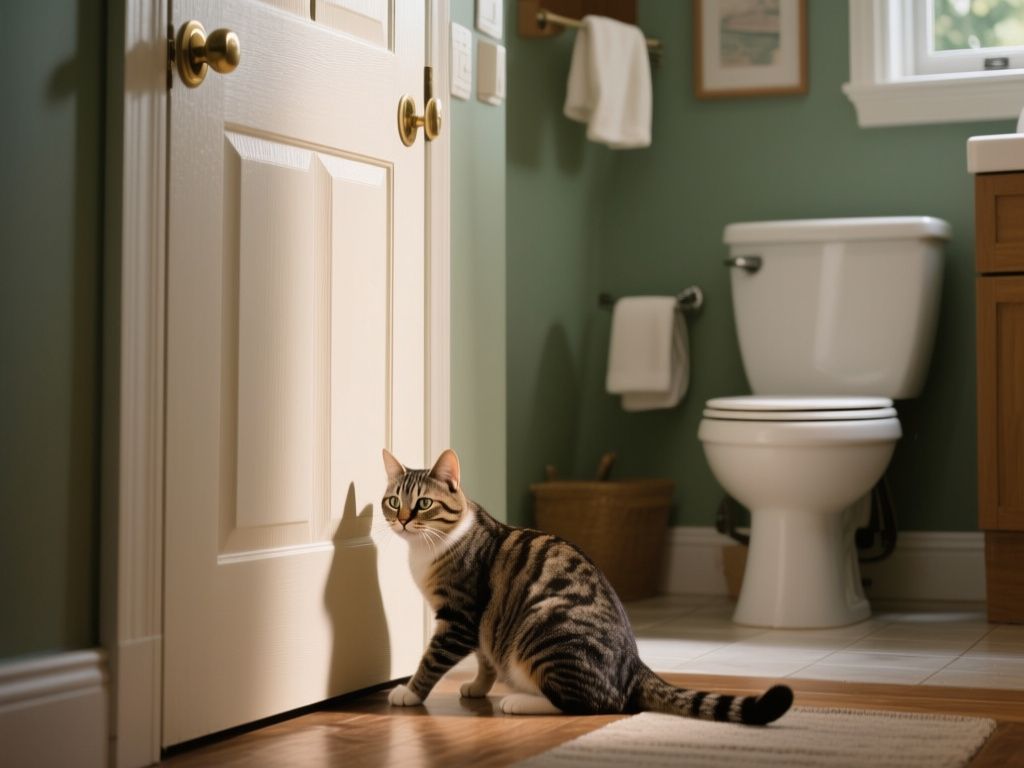
Your cat guards the bathroom door because it’s responding to a mix of instinct, routine, and social cues. The bathroom can feel “occupied” or exposed, and many cats prefer control over who enters and what changes in their environment. Sometimes it’s also overstimulation or a learned habit.
Why does a cat guard the bathroom door?
Most bathroom-door “guarding” comes down to a cat trying to manage risk and predictability. Cats are small prey animals, and the bathroom can feel like a vulnerable place: closed door, unfamiliar sounds (running water, flushing), and your body position suddenly changing (standing, bending, closing cabinets). When your cat positions themselves near the door, they’re basically saying, “I know what’s happening, and I can monitor it.”
There’s also a social layer. Many cats bond strongly with their people and interpret you as part of their territory. If you typically spend a few minutes in the same spot, your cat may associate that moment with “their human is away from the group,” and they choose to stay close to maintain connection.
Finally, cats learn patterns. If your cat gets attention, treats, or reassurance when they hang around the bathroom door, the behavior can stick—especially if they’re rewarded accidentally by you talking to them, petting them, or opening the door more often.
What is behind the behavior: instinct, routine, or anxiety?
It helps to think of guarding as a behavior with multiple possible “sources.” In real homes, it’s often more than one at the same time.
Instinct: monitoring a “potential threat”
Cats don’t experience bathrooms the way humans do. For them, the bathroom is a closed room with strange noises and unusual smells (cleaning products, steam, toilet flush). A cat may station themselves near the door because they want a clear line of sight and the ability to approach or retreat quickly.
Routine: your bathroom trip is a predictable event
If your cat follows you to the bathroom every day, they’re learning the sequence. Many cats prefer predictable outcomes. Once they know, “Door closes, water starts, then human returns,” guarding can become part of the daily script. This is especially likely if your cat is calm and playful while stationed at the door.
Social attachment: “I’m with you”
Some cats are affectionate “shadowers.” They may sleep near you, follow you from room to room, or keep close while you do normal tasks. Guarding can simply be their version of staying in contact. If your cat leans against you afterward or rubs your legs when you exit, attachment is a strong clue.
Anxiety or overstimulation: “Something feels off”
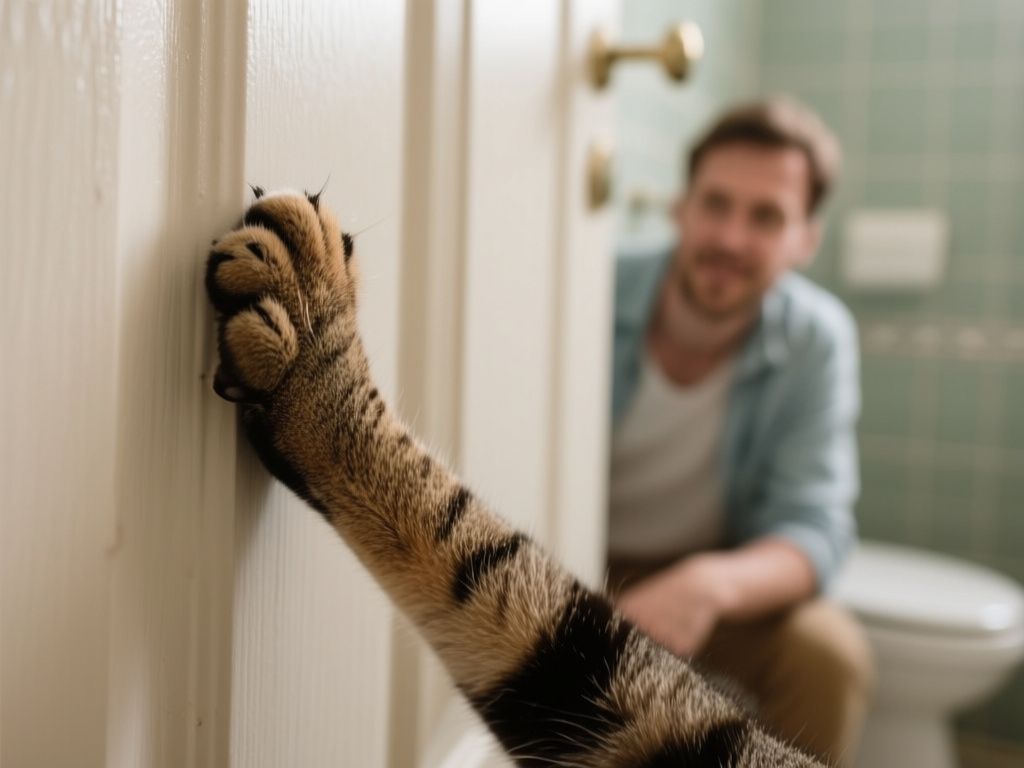
Guarding can also be a response to stress. Signs that it’s leaning toward anxiety include: growling or hissing when you close the door, repeatedly pawing or scratching aggressively, escalating crying, or becoming unusually tense around water or the toilet flush. If your cat seems frantic rather than calm, it’s worth paying closer attention.
How does a cat “protect” the bathroom door?
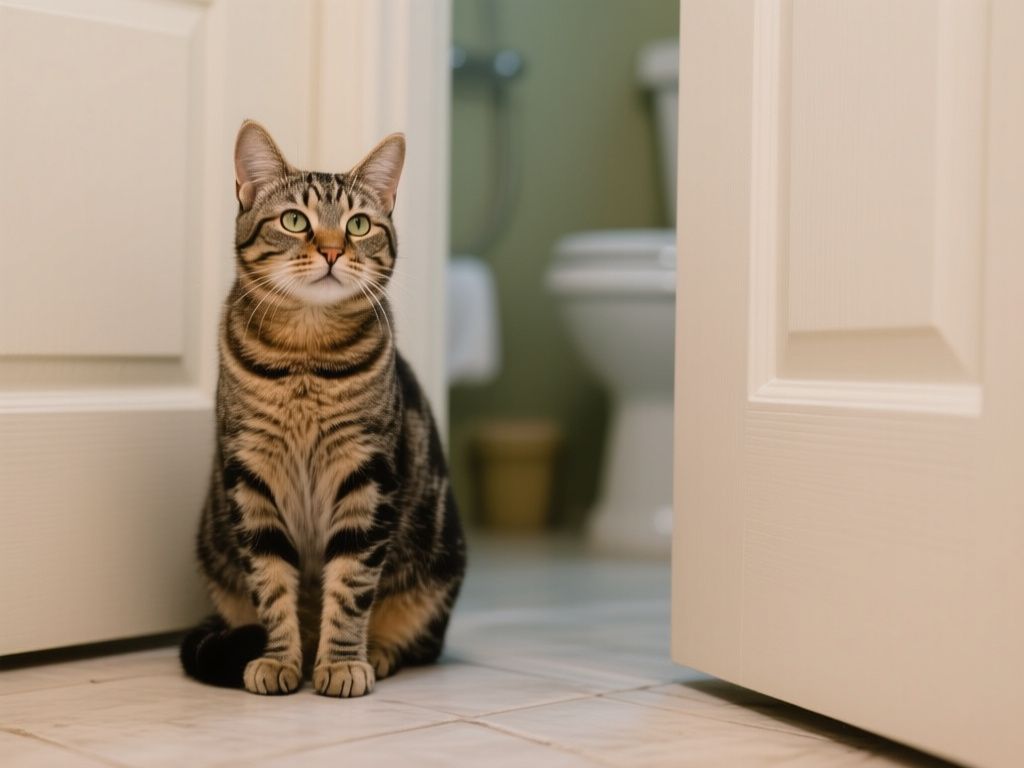
When people say “protect,” it can sound dramatic. What’s really happening is that your cat is controlling access and monitoring changes. Doorways are key spaces for cats: they create a boundary. If your cat sits directly in the doorway, they’re effectively managing who comes and goes.
Guarding can look like several specific actions:
- Sitting or lying near the handle, blocking your exit route or creating a “checkpoint.”
- Watching you closely with still posture and forward ears, as if tracking every movement.
- Meowing or pawing when you close the door, indicating a desire for access or reassurance.
- Sleeping nearby during bathroom time, which is often routine/comfort rather than stress.
These actions are normal for many cats. The question is whether your cat’s guarding is relaxed and consistent, or intense and escalating.
Could it be learned behavior?
Yes, very often. Cats are excellent at noticing cause-and-effect. Here are common “accidental rewards” that can teach a cat to guard:
- Attention: You react (“Aww, you’re so cute”) and pet them when they sit at the door.
- Door opening: You let them in because you feel bad for them or because they scratch.
- Playtime timing: You might play after you get out, and your cat learns that door-watching happens right before fun.
- Extra access: The bathroom sometimes has interesting things (toilet water for drinking, running water sounds, warm floor tiles), and your cat wants that access.
If the behavior started around the time you changed routines—new apartment, new bathroom cleaning product, different work schedule—it can also become a response to those changes.
Is it normal, or should you worry?
Most door guarding is normal cat behavior. It becomes a “should we intervene?” issue when it comes with distress or safety concerns. Think about the overall pattern.
Usually normal signs
- Your cat calmly watches or naps near the door.
- They don’t seem panicked when you close the door.
- They move away when you call them or offer an alternate spot.
- They act affectionate afterward.
More concerning signs
- Repeated intense scratching, biting at the door, or frantic running.
- Frequent vocalizing that seems distress-related rather than a normal “hey” meow.
- New guarding behavior that appears alongside other stress signs (hiding, appetite changes, litter box issues).
- Sudden fear of the bathroom area or of water.
If there’s sudden change, or if you suspect fear or health issues, it’s worth checking with a veterinarian. Stress can affect appetite and litter habits, and sometimes the “trigger” (bathroom sounds or a specific smell) can overlap with a medical issue you haven’t noticed.
What can you do to reduce the behavior?
You usually don’t need to “stop” door guarding so much as give your cat an alternative job for that time and reduce the reinforcement loop. The goal is to make bathroom time predictable and not feel like a crisis.
Step 1: Provide a nearby, safe alternative
Try placing a bed or blanket in a comfortable spot near the bathroom, or slightly down the hallway where your cat can still see you when the door is closed. Many cats relax when they can monitor without blocking.
Step 2: Reward calm, not pressure
Wait for a calm moment (sitting, lying down, relaxed body language). Then offer a small treat or gentle petting through the crack of the door (if safe) or as soon as you exit. If your cat only gets attention when they paw or cry, the behavior will tend to grow.
Step 3: Practice short door-closures
Do small experiments. For example: close the door for 5–10 seconds while your cat is calm, then open it and reward. Over days, increase the time in small steps. Cats learn faster with repetition and short “wins” than with one long, stressful attempt.
Step 4: Make the bathroom environment less surprising
If the noise is the trigger, consider adjusting what you can: run water less loudly if possible, close the lid before flushing to reduce splashing sounds, and use unscented or familiar cleaners. Cats strongly react to smell; switching products suddenly can matter.
Step 5: Don’t let them “win” by scratching
If scratching reliably gets the door opened, the cat learns that effort works. That doesn’t mean you ignore them forever—it means you aim to respond to calm behavior and avoid rewarding the most intense form of the behavior.
Step 6: Enrich their “alone-time”
Some cats guard because they’re bored or understimulated during your bathroom routine. A puzzle feeder, a lick mat, or a short play session before your bathroom trip can reduce the urge to “monitor everything.”
Are there cases where it could be medical or behavioral?
It can be. Cats can become fixated on routines when they’re stressed, in pain, or dealing with discomfort. If your cat guards more than usual, seems restless, or shows other symptoms, it’s worth a professional look.
- Feline cognitive issues (in older cats): disorientation can cause increased following and anxiety.
- Pain: if your cat associates the bathroom area with a painful experience, they may react strongly.
- Urinary or litter discomfort: changes in bathroom-related behavior can sometimes overlap with medical issues.
In any of these situations, solving the guarding alone may not fully work—addressing the underlying health or anxiety driver matters.
When you should get help
If your cat’s door guarding escalates, becomes destructive, or includes clear signs of distress, don’t feel like you have to handle it alone. A veterinarian can rule out medical causes, and a qualified animal behavior professional (or a behavior-focused trainer) can help tailor a plan to your cat’s temperament and home setup.
Frequently Asked Questions
Why does my cat sit outside the bathroom but doesn’t seem scared?
That pattern often points to routine and attachment. If your cat is relaxed—ears neutral, body loose, no intense scratching—door guarding can simply be their way of staying close and monitoring changes.
Is my cat guarding the door because they want to go to the bathroom?
Sometimes, but usually it’s about access and attention rather than the litter box itself. If your cat wants to enter, they may also be curious about water sounds or the bathroom environment. Watch whether they actually approach the litter box area or just stick to the doorway.
Should I let my cat into the bathroom?
It depends on what happens when they’re inside. If they’re calm and won’t get into hazards (toilet chemicals, loose items, slipping), letting them in can be fine. If they scratch or become agitated, you’ll likely get better results by providing an alternative spot and rewarding calm behavior outside.
Why does my cat meow and scratch when I close the door?
That often indicates distress, learned reinforcement, or both. Your cat may be upset about losing access to you, or they may have learned that scratching leads to the door opening. Short, calm practice sessions and rewarding quiet behavior usually help.
Can running water make my cat behave differently?
Yes. Cats may be startled or intrigued by water and toilet flushing sounds. If the guarding spikes right when the faucet turns on, the noise or vibration could be the trigger. Adjusting water volume and using familiar scents can reduce surprise.
How long does it take to change this behavior?
Many cats improve within 1–3 weeks when the plan is consistent, especially with short door-closure practice and alternative calm spots. If the behavior is tied to anxiety or a medical issue, progress may take longer and require professional guidance.
If your cat guards the bathroom door, start by treating it like communication: observe whether they’re calm or stressed, then give them a predictable routine and a safer alternative place to “watch” while you handle your business.

Mim Creation
Writer at Helmet Today, covering helmet reviews, fit and riding safety.