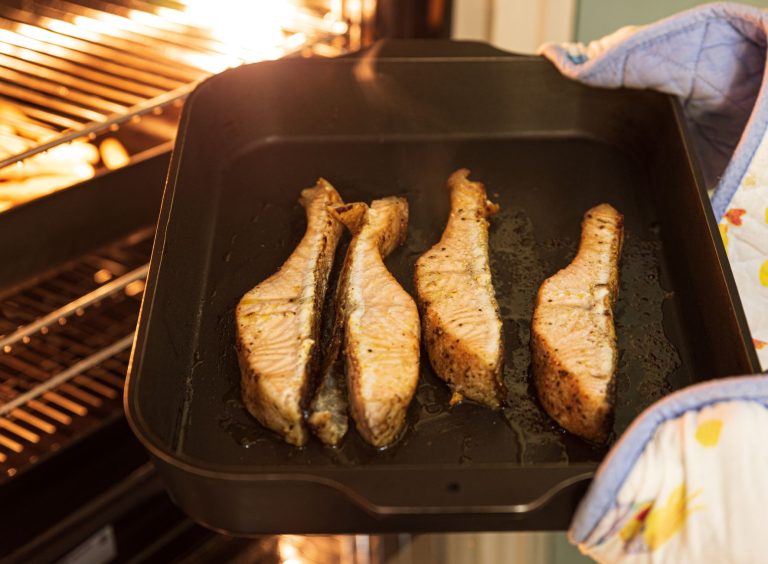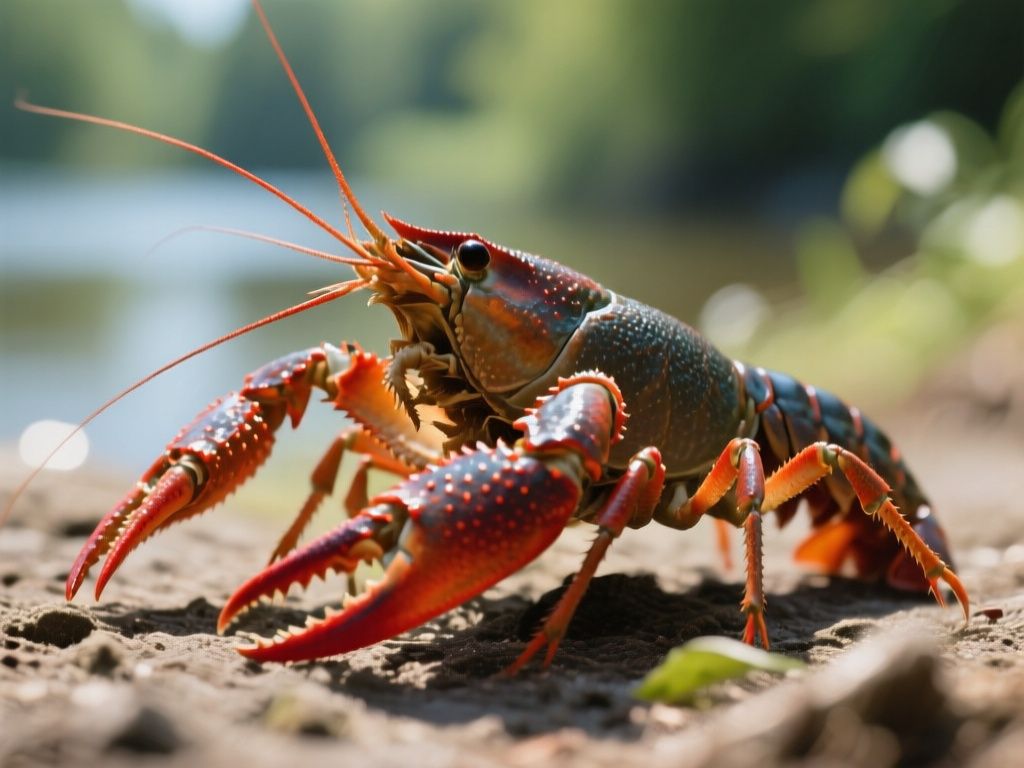
A crawdad is a freshwater crustacean that looks like a small lobster. It has a hard exoskeleton, two front claws, jointed legs, and a segmented tail. “Crawdad,” “crawfish,” and “crayfish” usually mean the same animal, although regional names differ across the United States and other English-speaking areas.
What does a crawdad look like?
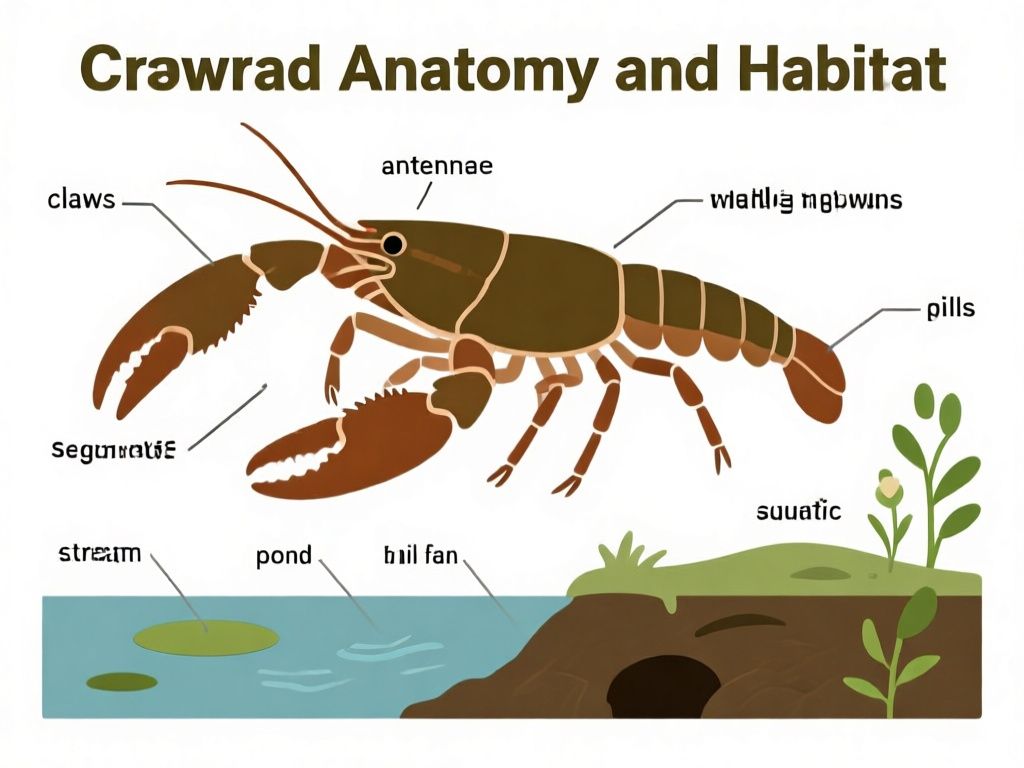
A crawdad has a compact body protected by a hard outer shell called an exoskeleton. Its anatomy is built for life on the bottom of ponds, streams, wetlands, and other freshwater environments.
- Claws: The front pair of legs ends in pincers, which help with feeding, digging, defense, and handling objects.
- Walking legs: Several smaller legs move the animal across mud, sand, gravel, and underwater plants.
- Segmented abdomen: The long, flexible tail is divided into sections and ends in a broad fan.
- Antennae: Long feelers help detect touch, movement, and chemicals in the water.
- Eyes: The eyes sit on movable stalks, giving the crawdad a wide field of view.
- Gills: Feathery gills allow it to take oxygen from water, even though the animal resembles a miniature lobster.
Most crawdads measure roughly 2 to 6 inches long, depending on the species and its environment. Some stay smaller, while large individuals of certain species can grow beyond that range. Color also varies: brown, olive, gray, red, blue, and nearly black are all possible.
The shell is not permanent armor. A growing crawdad must periodically shed its old exoskeleton in a process called molting. The new shell underneath is soft at first, leaving the animal especially vulnerable to predators until the shell hardens.
Are crawdads the same as crawfish and crayfish?
Yes, the three names generally refer to freshwater decapods, meaning crustaceans with ten walking legs. “Crayfish” is common in scientific and much of general English, while “crawfish” and “crawdad” are strongly shaped by regional speech.
| Name | Where it is commonly heard | Meaning |
|---|---|---|
| Crayfish | Many parts of the United States, Canada, Australia, and the United Kingdom | A general name for freshwater species |
| Crawfish | Louisiana, the Gulf Coast, and other parts of the southern United States | The same type of animal; also widely used for food |
| Crawdad | Much of the western and central United States | A regional name for the same type of freshwater crustacean |
The word “crawdad” is not a separate scientific category. A person in Louisiana may say “crawfish,” while someone in Colorado, Kansas, or parts of the Midwest may say “crawdad.” Both can be talking about a very similar animal.
Where do crawdads live?
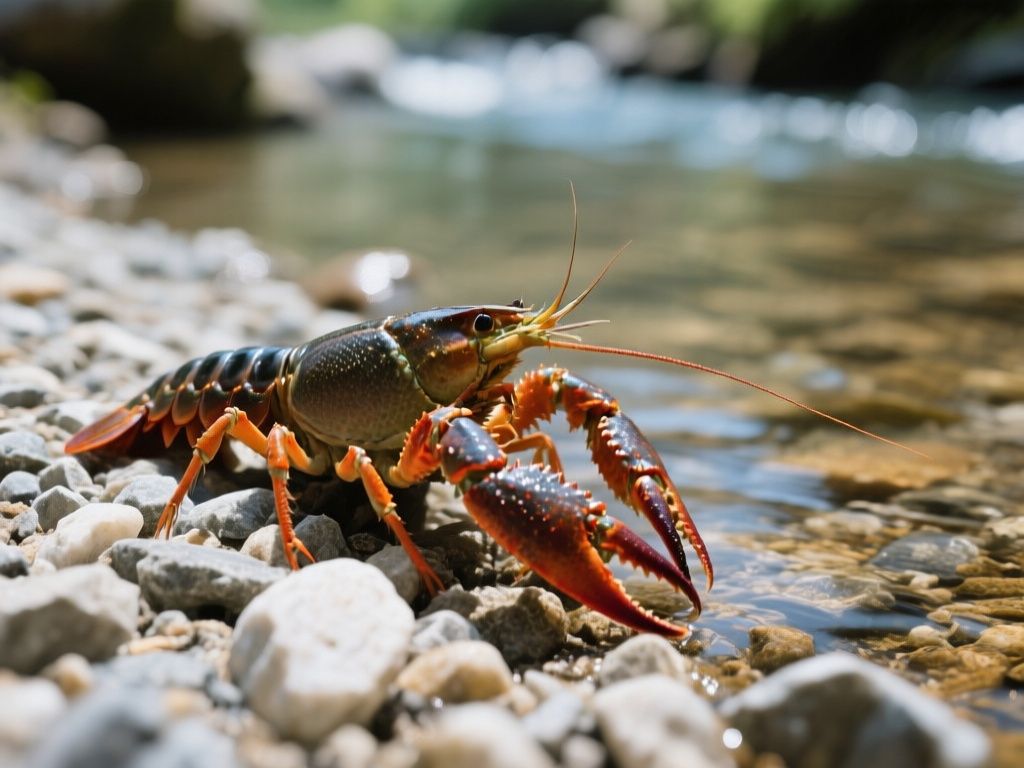
Crawdads live in freshwater habitats such as creeks, rivers, lakes, ponds, marshes, ditches, and temporary pools. Different species prefer different conditions, but most need water, shelter, food, and places to hide from fish, birds, turtles, snakes, and larger mammals.
Many crawdads spend most of their time on the bottom, where they crawl among rocks, fallen leaves, submerged wood, and aquatic plants. They are not strong long-distance swimmers, but a quick backward flick of the tail can propel one away from danger.
Some species dig burrows that reach the water table. These burrows can look like small mud chimneys or wet holes in the ground, especially near ponds, wet meadows, and poorly drained yards. A burrowing species may spend part of its life underground rather than sitting in open water.
Water quality affects crawdads because they breathe through gills. Pollution, very low oxygen, sudden changes in temperature, and the loss of streamside vegetation can reduce suitable habitat. A healthy crawdad population often indicates that a waterway still provides food, cover, and reasonably livable conditions, although crawdads alone cannot prove that water is safe to drink or swim in.
What do crawdads eat?
Crawdads are opportunistic omnivores, meaning they eat both plant and animal material and take advantage of whatever food is available. Their diet commonly includes decaying leaves, algae, aquatic plants, insect larvae, worms, snails, small fish, and animal remains.
They are also scavengers. A crawdad may pick at a dead fish or other animal, but that behavior does not make it exclusively a predator. Much of its diet can consist of plant matter and organic debris collected from the stream or pond bottom.
Feeding usually happens at night or during low-light periods, when many crawdads are less exposed to predators. The claws move food toward the mouth, while smaller mouthparts tear, sort, and handle bits of material.
This feeding behavior gives crawdads an important role in freshwater food webs. By shredding leaves and consuming organic matter, they help move nutrients through the ecosystem. They also become food for bass, catfish, perch, herons, raccoons, otters, turtles, and other animals.
How do crawdads reproduce?
Crawdads reproduce by mating, after which the female carries fertilized eggs beneath her abdomen. The eggs attach to swimmerets, which are small appendages under the tail that also help circulate water around the developing young.
The female may guard the eggs until they hatch. Newly hatched young often remain attached to her for a period of time, returning to her body when threatened. They look like tiny versions of adults and gradually grow through repeated molts.
Growth depends on species, temperature, food supply, and water conditions. A young crawdad must molt several times before reaching adult size. During each molt, it temporarily loses the protection of a hard shell, so hiding places are especially valuable.
How do crawdads protect themselves?
A crawdad relies on several defenses rather than one single strategy. Its claws can pinch a predator, although they are usually more useful for threatening, grasping, and moving food than for defeating a large attacker.
- Backward escape: A rapid tail flip sends the crawdad backward through the water.
- Camouflage: Earthy colors help it blend with mud, leaves, stones, and woody debris.
- Hiding: Crevices, plant roots, burrows, and spaces beneath rocks provide cover.
- Threat displays: Raising the claws can make the animal appear larger and less inviting to attack.
- Autotomy: A crawdad may shed a leg or claw in extreme circumstances. The missing appendage can regrow over later molts, though the replacement may take time to reach full size.
Handling a crawdad from behind the claws reduces the chance of a pinch. A person should avoid squeezing the body or holding the animal by its antennae, legs, or tail.
Can people eat crawdads?
Yes, crawdads are eaten in many places, especially in the southern United States. They may be boiled with spices, added to soups and stews, mixed into rice dishes, or used in dishes such as crawfish étouffée and crawfish pie.
The edible meat is found mainly in the tail, although some culinary traditions also use meat from the claws or head area. The amount of meat is small compared with the animal’s shell, so preparing crawdads usually involves handling many individual animals.
Wild-caught crawdads should come from approved waters and follow local fishing regulations. Waterways can contain harmful pollutants, and some areas issue consumption advisories. Cooking does not reliably remove every contaminant, so checking local health and wildlife guidance matters.
Raw or undercooked crawdads can carry parasites and disease-causing organisms. They should be cooked thoroughly, kept cold before cooking, and handled separately from ready-to-eat foods. People with shellfish allergies should avoid them or ask a medical professional for advice.
Are crawdads safe to touch?
A healthy crawdad is generally safe to observe and briefly handle, but its claws can pinch and its shell can have sharp edges. Wet hands are gentler on the animal than dry hands, and a crawdad should be returned to the same kind of habitat where it was found.
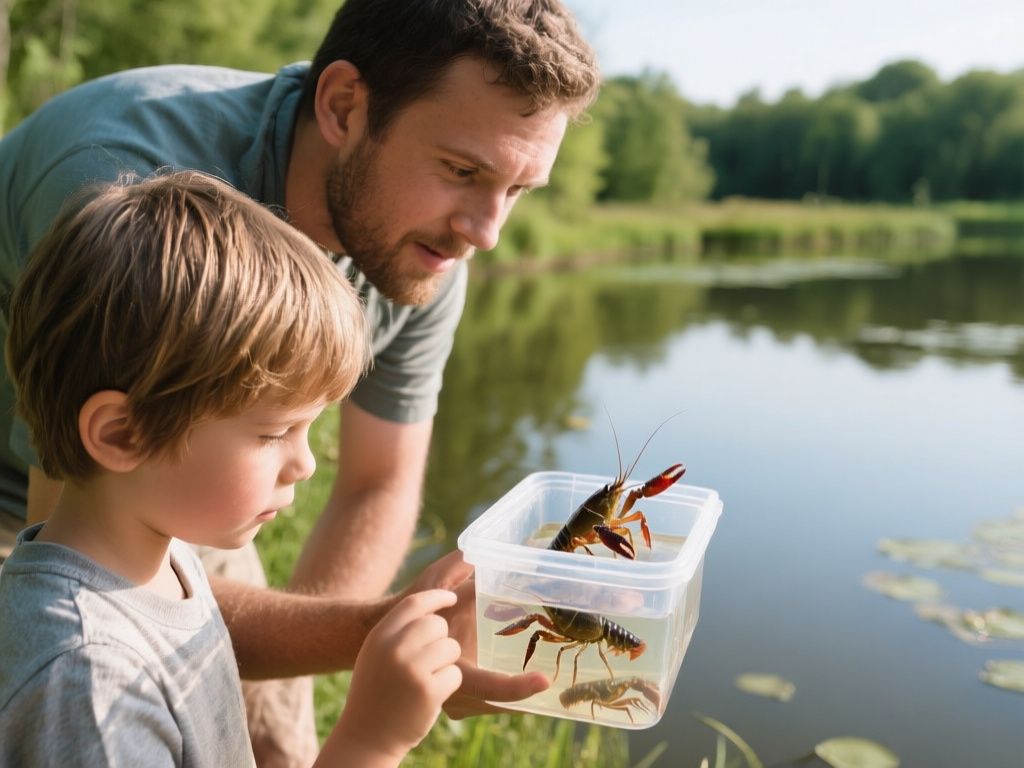
Children should handle crawdads with adult supervision. The safest approach is often to watch one in a shallow container for a short time, keep it out of direct sunlight, and release it promptly. Never release a crawdad into a different pond, stream, or state, because moving animals can spread diseases or introduce a species to a habitat where it does not belong.
Are crawdads harmful or invasive?
Most crawdads are ordinary native members of freshwater ecosystems, but some species have been moved beyond their natural range. An introduced crawdad can compete with native species, eat amphibian eggs, damage aquatic plants, spread disease, or alter streambanks through burrowing.
The red swamp crawfish, for example, has been introduced in some regions outside its original range. Its effects depend on local conditions, predators, competing species, and how widely it spreads. A crawdad’s presence does not automatically mean a problem exists; the concern is usually an introduced population that changes the ecosystem.
People should not dump unwanted bait, aquarium animals, or live food crawdads into local waterways. Local wildlife agencies can explain legal collection limits and provide instructions for reporting unusual or potentially invasive animals.
How can someone find crawdads?
Crawdads are easiest to spot in shallow water, especially around rocks, submerged branches, leaf piles, and streambank holes. Looking after dark with a flashlight can help because many species become more active at night.
A simple observation method is to lift a small rock carefully from the downstream side and look underneath before replacing it. Crawdads often shelter under cover, but the rock should be returned gently so the habitat remains intact.
In places where collection is legal, people may use a small net, hand collection, or regulated traps. Rules can limit seasons, trap types, daily numbers, minimum sizes, and the use of bait. Those rules vary by location, so local regulations should be checked before collecting.
Frequently Asked Questions
What is the difference between a crawdad and a lobster?
A crawdad is mainly a freshwater crustacean, while most familiar lobsters live in saltwater. They share a similar body plan, including claws, a hard shell, and a segmented tail, but they belong to different groups and are adapted to different environments.
Can crawdads live on land?
Some crawdad species can survive out of water for a while if their gills stay moist, and burrowing species may spend substantial time underground. They cannot remain healthy indefinitely in dry air because their gills need moisture to extract oxygen.
Do crawdads pinch?
Yes, a crawdad can pinch with its claws, especially when grabbed or threatened. Holding it gently from behind the claws and supporting the body lowers the risk of injury.
What do crawdads eat in a pond?
They eat a mix of algae, aquatic plants, decaying leaves, insects, worms, snails, small aquatic animals, and carrion. Their diet changes with the species, season, and food available in the pond.
Can crawdads breathe underwater?
Yes, crawdads breathe underwater with gills located near the bases of their legs. The gills extract dissolved oxygen from water, which is why polluted or oxygen-poor water can be dangerous for them.
Should a found crawdad be kept as a pet?
A crawdad can be interesting to observe temporarily, but long-term care requires a secure, filtered aquarium, clean water, hiding places, suitable food, and a species that is legal to keep. A wild crawdad should not be released into a new waterway, and local rules should be checked before taking one home.
The simplest way to remember the term is this: a crawdad is a small freshwater relative of the lobster, known by different regional names and valued as both a wildlife species and a food animal.

Mim Creation
Writer at Helmet Today, covering helmet reviews, fit and riding safety.