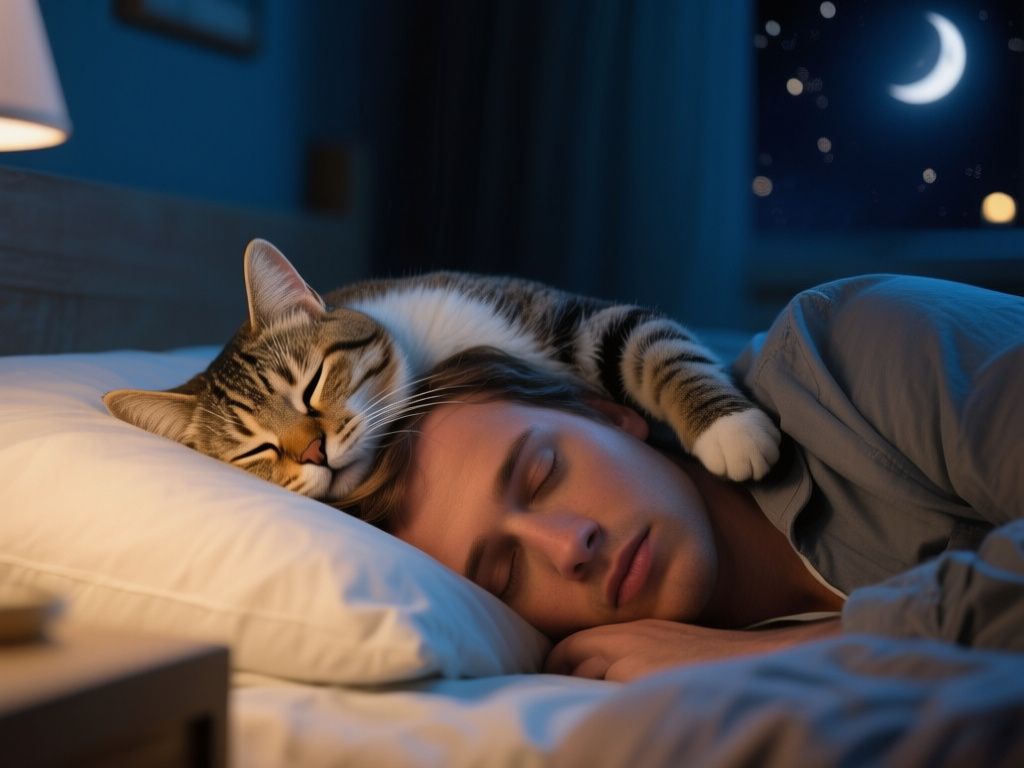
If your cat sleeps on your head at night, it’s usually about comfort, warmth, and attachment—not an “ominous” sign. Cats often choose high, safe, familiar-smelling spots because they feel secure. Your head also offers steady body heat and may help your cat feel closer to you.
Why does my cat choose my head instead of the bed?
Cats don’t pick sleeping spots the way people do. They’re reading the room through scent, heat, and security cues. Your head is often one of the warmest and most consistent places on your body, especially when you’re lying still under blankets. Many cats also prefer being higher up, and a pillow or your forehead gives them a good vantage point to monitor the household.
Your cat may also be drawn to your smell. During the day, you touch everything, then you return to the same home patterns. Your cat learns your “personal scent” and associates it with safety. When a cat settles on your head, it can be a way of saying, “This is my person, and I’m close to them.”
Is it about affection, or is my cat trying to control me?
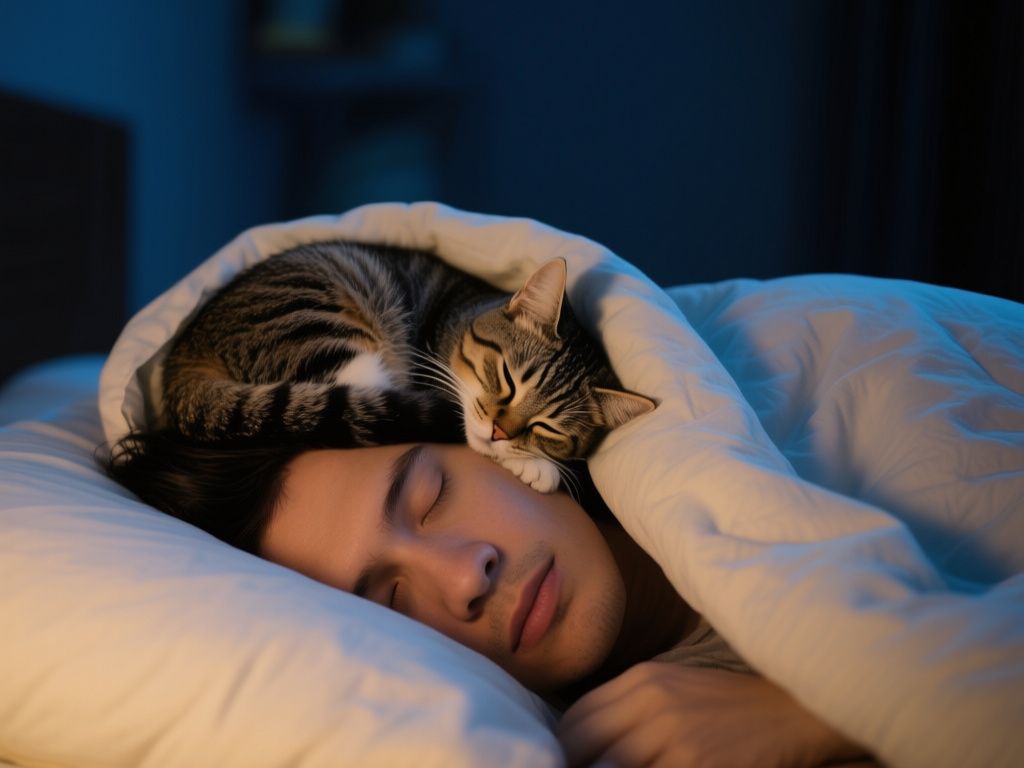
For most cats, it’s affection and bonding. Sleeping in close contact is a trust behavior. Cats generally don’t choose vulnerable positions around people they don’t feel safe with, and head-sleeping is extra intimate because your face is nearby and you’re not wearing a “barrier” like a blanket wall between you.
That said, some behavior gets misread as “control.” Cats don’t usually think in human power dynamics. Instead, they act on preferences: warmth, familiar scents, and a stable routine. If your cat is otherwise calm and affectionate during the day—purring, following you, kneading, or sleeping near you—head-sleeping typically fits the same comfort-and-bonding bucket.
It can also be a nighttime routine habit. If you’ve ever let the cat curl up on your pillow even once, that becomes a pattern both of you learn. Over time, the cat may expect that spot the way you expect your own side of the bed.
How does warmth and comfort work for cats?
Cats are heat-seekers. They look for surfaces that are warm, predictable, and not drafty. Your head generates warmth and you typically keep it covered with a pillow and blankets, which reduces airflow and helps the area stay cozy. Even if your room is cool, you’re essentially offering a small, reliable “heat source.”
Many cats also like soft textures. Pillows are cushy, and the contours of a human head and hair can be comfortable for a cat’s posture. Some cats nestle in around the ear or forehead because that position helps them feel tucked in, similar to how they’d burrow into a blanket or soft bedding.
One practical clue: if your cat does this only when you’re in bed (and not, say, when you’re sitting upright), warmth and consistent contact are probably the main drivers.
Do cats sleep on heads because they’re anxious?
Sometimes, but it depends on the whole picture. Head-sleeping can be a calming choice when a cat feels secure with you. However, if your cat seems restless at other times—vocalizing, pacing, or hiding—or if this behavior suddenly starts after a change in the home, anxiety or stress could be involved.
Common “something changed” triggers include moving to a new home, getting a new pet, changes in work schedules, or even rearranging furniture. Cats are routine-loving. A new bedtime routine can also shift where they choose to sleep. If your cat starts sleeping on your head after you’ve been gone more than usual during the day, it may be seeking extra reassurance at night.
If you suspect anxiety, look for additional signs: changes in appetite, litter box issues, overgrooming, or aggression. In those cases, head-sleeping is only one symptom, not the entire story.
Why does my cat knead or purr when it sleeps on my head?
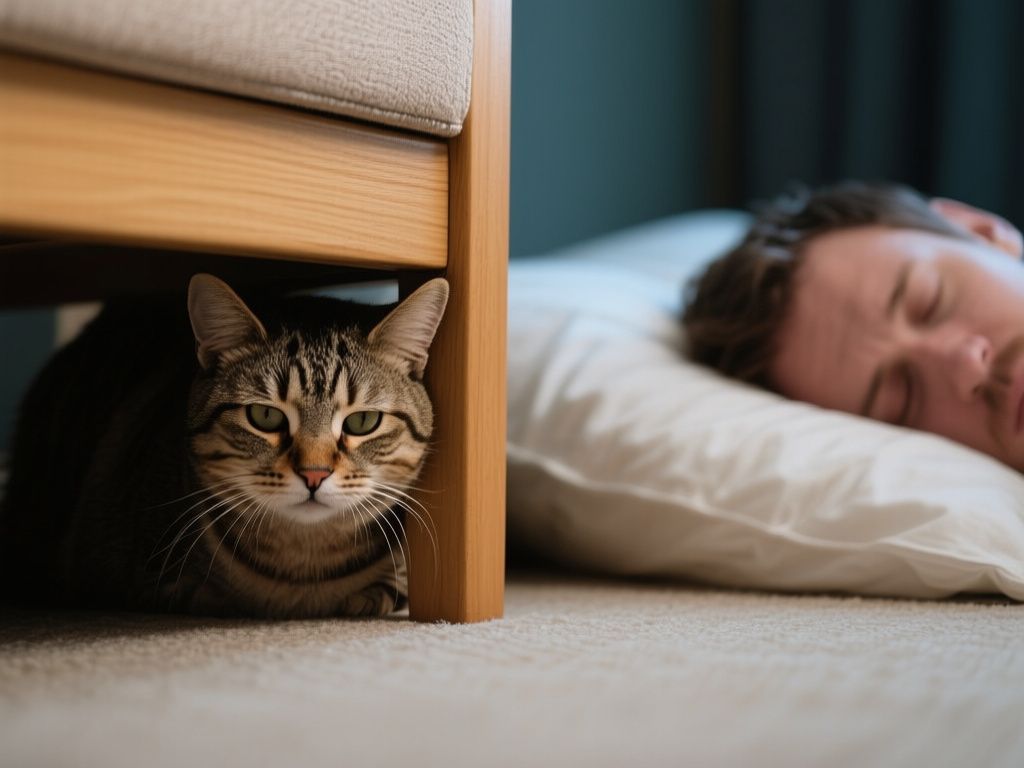
Kneading (pushing paws in and out on a soft surface) often shows comfort and contentment. Many cats knead when they’re about to settle in for a nap, because the motion can feel like “safe nesting,” especially if they were weaned with a warm, nurturing environment. When kneading happens while the cat is on your head or pillow, it’s usually a sign that your cat feels relaxed.
Purring adds another clue. Cats purr when they’re happy, but they can also purr when they’re stressed or in pain. If your cat is purring while making itself comfortable—slow blinking, relaxed body, loose tail—it’s typically a good sign. If the purr comes with other discomfort signs, like limping, hiding, or sudden sensitivity to touch, the context matters.
Could my cat be trying to “protect” me?
It’s possible, though the behavior is more about vigilance than superhero instincts. Cats are naturally alert at night. If your cat sleeps near your face, it may be positioned to hear and notice subtle movements—your breathing changes, you shifting in bed, a door opening, or a sound outside.
From a cat’s point of view, being close to the “activity center” of the home helps it stay aware. Your head is one of the most active points because you’re moving slightly when you breathe, and your hair and blankets create texture and scent cues. It can look like protection, but it’s often practical: “I’m near the source of familiar sounds.”
Why do cats target the pillow and head specifically?
Your pillow isn’t just a soft surface—it’s part of your personal scent environment. Cats often rub their faces or bodies on objects to claim them as familiar. Your head and pillow become a strong “home base” because you use them nightly. Over time, your cat may treat that spot like a safe den.
Also, your head is usually still. A cat doesn’t just want comfort; it wants predictability. Many cats avoid sleeping on moving, unstable surfaces. As you settle down, your head becomes stable, and the cat can relax into sleep.
What if it hurts or annoys you? How can you handle it kindly?
You don’t need to “win” against your cat. Gentle boundaries work best. If your cat’s weight or claws bother you, try offering an alternative that matches what your cat likes about your head: warmth, height, and softness.
Here are practical options:
- Provide a warm, elevated bed: A cat perch near your bed or a high-backed cat bed lets them feel “above” you.
- Use a familiar scent transfer: Sleep with a blanket your cat likes near their bed, so it smells like you.
- Add a heat source safely: A heated cat bed designed for pets (with automatic shutoff) can reduce the urge to seek your body heat.
- Make the pillow less tempting: If you can, use a different pillow covering at night, or keep the cat off that pillow only once with consistent cues.
- Redirect during the evening: When your cat settles on your head, calmly place it on its own bed and reward it with treats or gentle petting when it stays.
If your cat keeps returning after you redirect, it may be asking for closeness rather than disobedience. In that case, meeting halfway—like placing the cat on your chest or shoulder instead—can preserve bonding while protecting your sleep.
When should you be concerned?
Most head-sleeping is normal and affectionate. Still, there are times to check in with a veterinarian or at least monitor closely.
- Sudden change: Your cat starts sleeping on your head for the first time, especially with other behavior changes.
- Pain signs: Excessive vocalizing, avoiding certain touch areas, limping, or unusual sensitivity.
- Worsening nighttime behavior: Frequent yowling, pacing, or restless agitation that doesn’t settle.
- Health changes: Decreased appetite, weight loss, vomiting, or litter box problems.
Also consider age and mobility. Older cats may seek warmth and support more intensely, and they may prefer your head area because it’s a familiar, stable spot that feels good on joints.
How can you encourage better nighttime sleeping for both of you?
A good night for you often starts earlier for your cat. Cats sleep in segments, but you can influence their energy balance. If your cat is under-stimulated in the evening, it may seek you for comfort—sometimes including head contact. A short play session before bedtime can help.
Try this routine for a week:
- Spend 10–15 minutes playing with wand toys or interactive feeders about 1–2 hours before bed.
- Offer food or a puzzle feeder a bit closer to bedtime.
- After lights-out, keep interactions calm and consistent—no “surprise” play at midnight.
- Place your cat’s favorite bed or perch near you so it still feels included.
If the behavior is mostly comfort-based, you’ll often see improvements once the cat feels both secure and tired enough to settle in its own spot.
Frequently Asked Questions
Is it normal for a cat to sleep on your head?
Yes. Many cats choose a person’s head or pillow because it’s warm, familiar-smelling, and feels safe. As long as your cat is otherwise healthy and relaxed, this is typically a normal bonding behavior.
Does head-sleeping mean my cat loves me?
It’s a strong sign of comfort and trust. Cats show affection in different ways, and sleeping in close contact is one of the most reliable indicators that your cat feels secure around you.
Why does my cat wake me by moving around my face?
Cats may adjust positions to get comfortable, especially if they’re kneading or settling into deeper sleep. If your cat is frequently disturbed or overly energetic at night, adding an earlier play routine and a consistent feeding schedule can help.
Can my cat sleep on my head if it has fleas or allergies?
It’s possible, but you should prioritize health first. If your cat is itchy (frequent scratching, hair loss) or you notice flea dirt, treat the cat and home appropriately and talk to a veterinarian.
What’s the best way to stop it without upsetting my cat?
Offer an alternative that matches what your cat wants: warmth, softness, and closeness. Redirect gently to a cat bed near you, reward staying there, and keep your nighttime routine calm and predictable.
When should I contact a vet?
If the behavior is sudden and comes with signs like hiding, pain, appetite changes, litter box problems, or persistent restlessness, contact a veterinarian. Those signs can indicate discomfort that’s making your cat seek you for reassurance.
Bottom line
When your cat sleeps on your head, it’s usually choosing comfort, warmth, and closeness in a way that makes sense to a cat. If you want to change it, focus on meeting the same needs—safe scent, cozy heat, and a nearby “spot”—instead of trying to simply push your cat away.

Mim Creation
Writer at Helmet Today, covering helmet reviews, fit and riding safety.