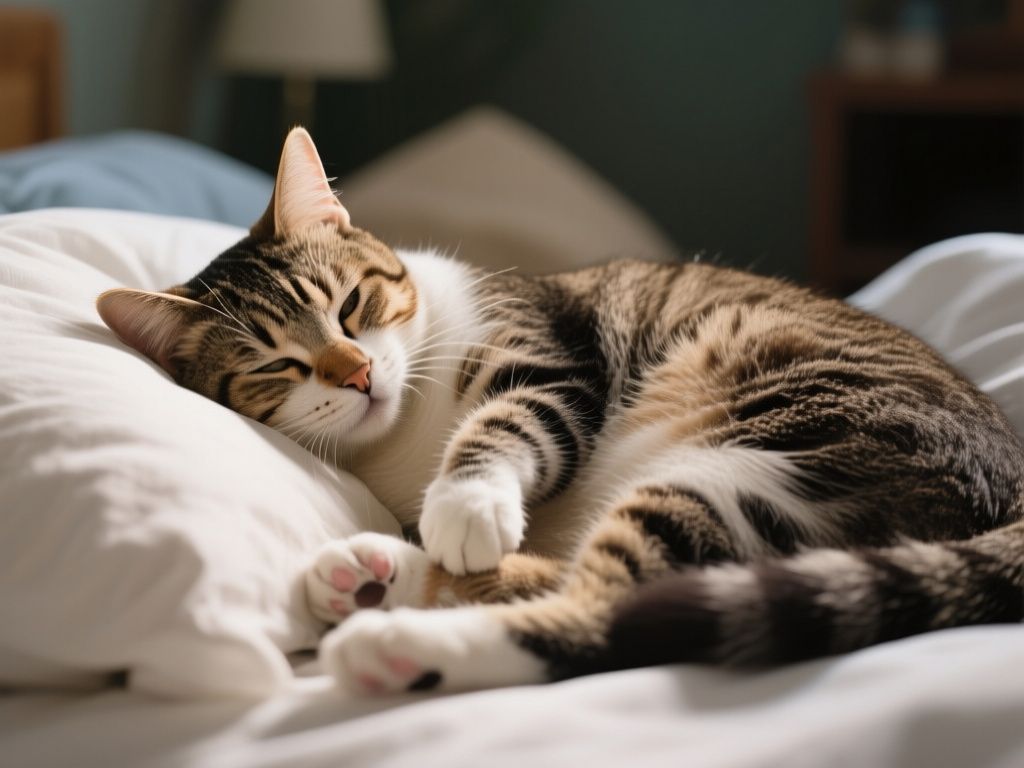
Cat kneading before sleep is usually a friendly, comfort behavior. Cats “make bread” by pressing their paws rhythmically because it’s calming, it marks you with scent from glands in their paws, and it can mimic the nursing motions they learned as kittens.
Why does my cat knead before sleeping on me?
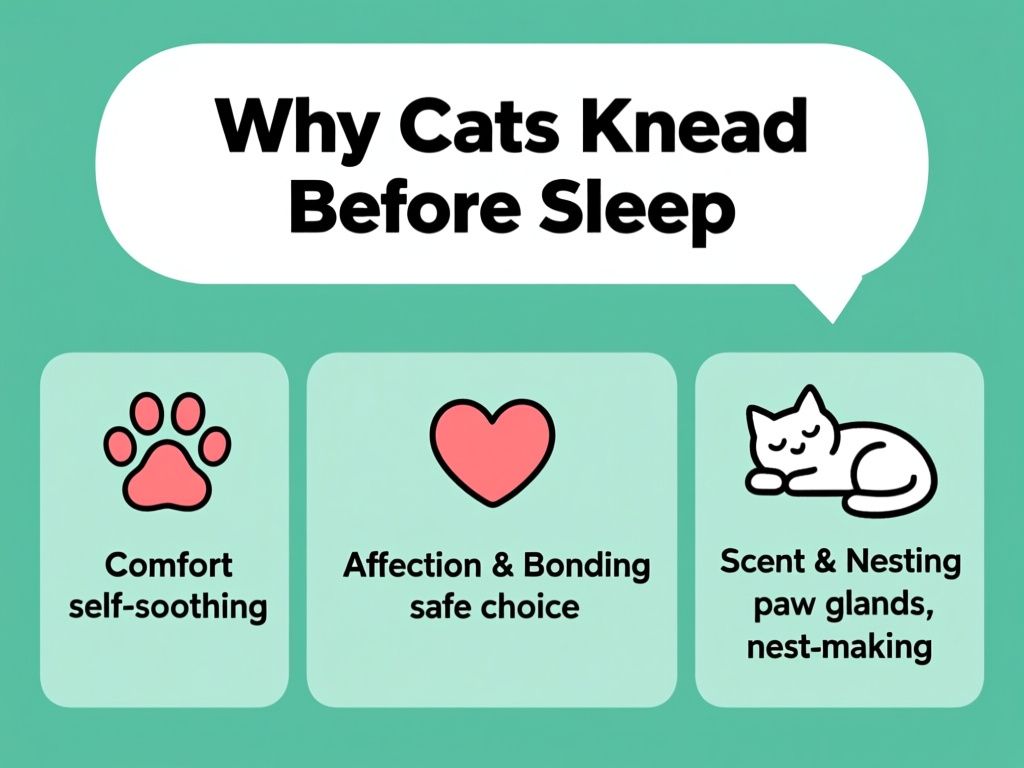
Kneading is one of those cat behaviors that feels personal—because for many cats, it is. When your cat kneads on you before settling down, they’re often doing three things at once: self-soothing, bonding, and claiming comfort space.
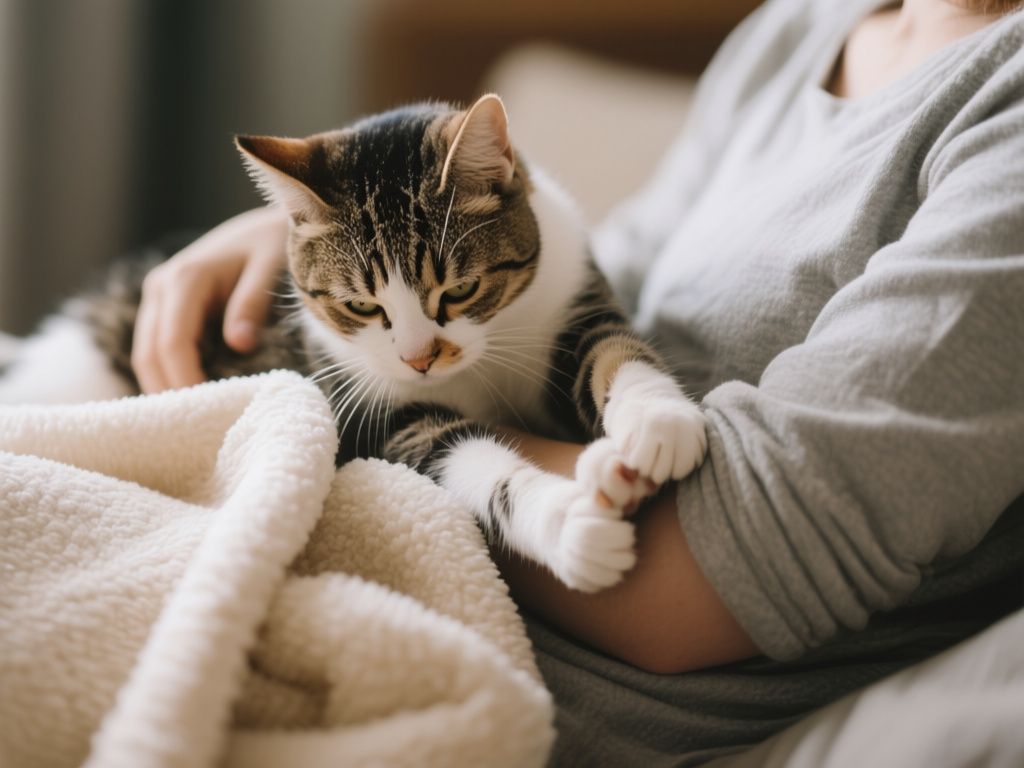
First, kneading can be a comfort routine. Kittens knead their mother while nursing to help stimulate milk flow, and many cats carry that “cozy pattern” into adulthood. So when your cat kneads on your lap or chest, they may be shifting into sleep mode the way a person might settle into their favorite blanket.
Second, kneading is scent and ownership. Cats have scent glands in their paw pads. Each press can leave a faint scent, which helps your cat recognize “this is mine” and also tells other cats (and you) that you’re part of their safe territory.
Third, it can be part of making a nest. In the wild, cats often paw at soft surfaces to create a comfortable spot. Even if your living room couch is already soft, your cat may still follow that instinct.
How does kneading work in cats’ minds?
Think of kneading as a mix of memory and communication. The motions are physical and rhythmic, but the meaning can be emotional.
When a cat kneads, they typically alternate paws while keeping their body relaxed. Many cats also purr, slow blink, or drool lightly. Those extra cues matter because they tell you the kneading is likely a “good vibes” behavior rather than a stress signal.
It also helps to notice what happens right after kneading. If your cat then curls up and sleeps, that’s a strong sign the kneading helped them get comfortable and confident. If kneading is paired with agitation—hiding, growling, frantic pacing—then something else may be going on.
Is kneading a sign of affection?
Very often, yes. Kneading is commonly seen in cats who feel safe with you. It’s especially common when you’re a favorite resting place—like your lap, your stomach while you read, or the blanket you always use in the evening.
Some cats knead only when you’re calm and available, like when you’re sitting on the couch. Others knead the same spot every day, which supports the idea that they’ve learned “this is my comfort place” and want to repeat the ritual.
That said, affection and comfort aren’t the only explanations. A cat can knead for other reasons too, and context is the key.
Does kneading mean my cat is trying to wake me, or is it just random?
For most cats, it’s not meant as a “wake up” tactic. Kneading is usually part of transitioning into rest, not a signal to interrupt you.
However, cats are practical creatures. If your cat kneads and you move your legs or shift the blanket, your cat may keep kneading until the surface is comfortable again. In other words, it’s less “random” and more “my spot isn’t perfect yet.”
If your cat kneads and then looks around, meows repeatedly, or tries to lead you somewhere, consider whether they might be asking for something specific—food, attention, or access to a preferred resting area.
Can kneading be a normal behavior even if it hurts?
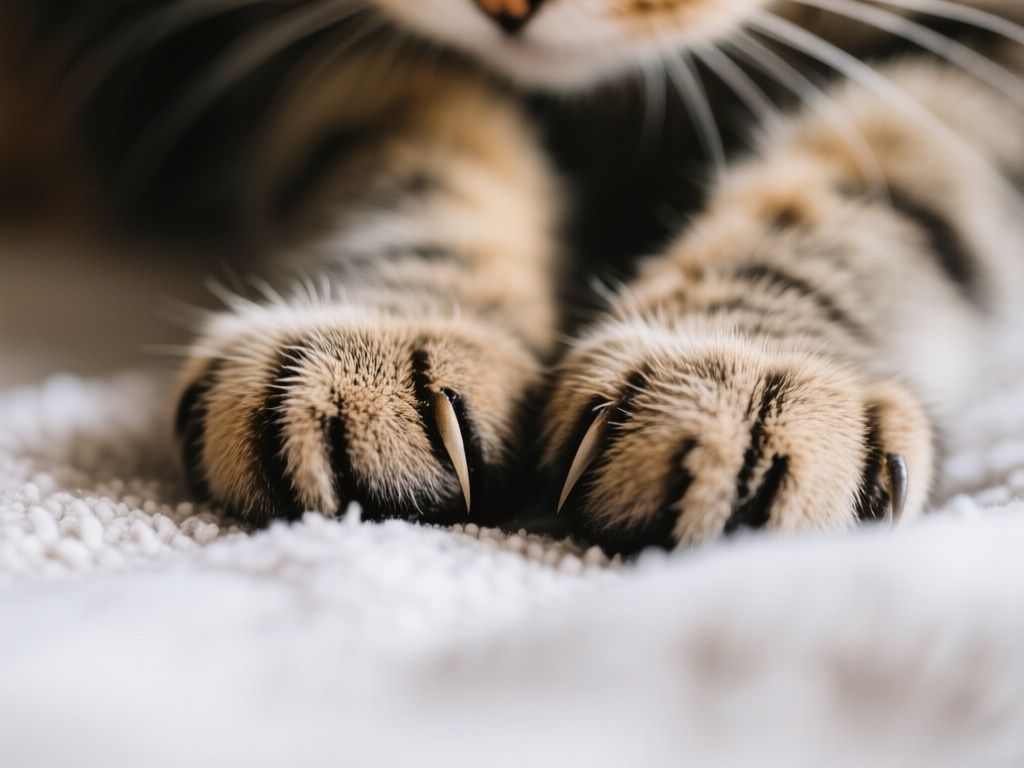
Yes. Many cats knead with claws slightly engaged, especially on soft humans who don’t have traction like a scratching post. That doesn’t automatically mean your cat intends to hurt you—it often just means their body mechanics are doing what they learned as kittens and what their instincts expect from a soft surface.
If the kneading is too painful, the most effective fix is usually environmental and practical:
- Offer a “kneading alternative”: A thick, washable blanket on your lap or a soft pillow can reduce the pressure on your skin while still giving your cat the cozy texture.
- Trim nails regularly: Short nails reduce punctures without removing the behavior.
- Watch for “clawing escalation”: Some cats start kneading gently and then press harder if the surface moves. Stabilizing your lap can help.
- Use gentle redirection: If claws are coming out, calmly place a blanket between your skin and your cat rather than pulling away, which can turn the moment into a chase.
Many people try “threatening” the behavior with punishment, but that often backfires. If you make your lap scary, your cat may stop coming to you—even if kneading is their comfort ritual.
What other reasons could explain kneading before sleep?
Most kneading before bedtime is normal, but here are a few other possibilities that can show up depending on the cat and the household.
1) Nesting instincts
Some cats knead as they look for the exact right spot. You may notice they do it right before they curl up, then change positions a few times. This is similar to how cats in the wild might scratch and press to settle into a safe resting area.
2) Stress or uncertainty
Kneading can also be a self-soothing behavior. If a cat is nervous—during a storm, after a move, when a new pet arrives—they may knead more frequently. Look for other stress signs like hiding, tail thrashing, dilated pupils, or repeated hiding then re-approaching.
If kneading comes with strong anxiety symptoms, the best question isn’t “why knead?” but “why feel unsafe?” In those cases, you may need to adjust resources (more hiding spots, vertical space, slower introductions) or talk with a veterinarian if stress seems persistent.
3) Medical discomfort (rare, but worth mentioning)
Occasionally, changes in kneading behavior can be tied to discomfort—especially if your cat suddenly starts kneading more than usual, seems restless, or shows signs of pain. For example, older cats with arthritis may have different resting routines, and some cats may seek pressure for comfort.
If kneading is paired with limping, excessive vocalization, inappropriate urination, or you notice your cat avoiding certain positions, it’s reasonable to schedule a vet check. Kneading alone usually isn’t a medical red flag, but a pattern change can be.
When should I worry, and what should I do?
Most kneading is harmless and even sweet. Still, it’s smart to know the “watch list.”
Consider contacting a veterinarian (or at least monitoring closely) if you see any of the following:
- Sudden increase in kneading combined with agitation or restlessness
- Pain cues like yelping, guarding, limping, or refusing to be touched
- Skin irritation from clawing (open wounds or repeated scratches)
- Other behavior changes such as hiding more, loss of appetite, or unusual litter box habits
If kneading is the only change and your cat otherwise seems happy—purring, relaxing, then sleeping—there’s likely nothing wrong. In that case, the best “action” is to make the moment comfortable for both of you.
How can I encourage kneading without the pain?
You don’t need to stop kneading for it to be safe or meaningful. The goal is to keep the ritual, minus the ouch factor.
- Practice calm nail trimming: If you’re unsure how, ask your veterinarian or a professional groomer to show you what “safe” looks like for your cat’s nail length.
- Create a lap-level comfort zone: A folded towel or thick pet blanket on your lap can act like a “buffer.” Your cat may still knead, but it won’t target your skin.
- Give your cat a “nesting surface”: Some cats prefer a particular rug or bed. If you place a cat bed nearby, many will choose that for nesting while still kneading on you occasionally.
- Reinforce the right spot: If your cat kneads your lap only when you’re watching TV, use that same lap setup whenever possible so the association stays positive.
- Don’t punish the behavior: Kneading is usually a sign of comfort. Removing comfort can reduce trust, which matters more than short-term protection.
Frequently Asked Questions
Is kneading always a sign my cat likes me?
Often, yes. Kneading that happens when your cat is relaxed—while purring or settling into sleep—usually indicates comfort and bonding. That said, cats can also knead to self-soothe when anxious, so it’s wise to watch their overall body language.
Why does my cat purr and sometimes drool while kneading?
Purring is commonly tied to contentment, and drool can happen when a cat is deeply relaxed. Some cats drool during comfort behaviors because their nervous system and muscles relax in a similar pattern. If drooling is new or excessive, though, it’s worth discussing with a veterinarian.
Should I let my cat knead with claws out?
It depends on how it’s affecting you and your cat. If the claws are causing scratches or pain, trim nails and use a blanket buffer. You generally don’t want to force your cat away mid-knead, because kneading is often a soothing ritual.
Why does my cat knead on blankets but not on the couch?
Texture matters. Many cats knead softer, safer-feeling surfaces, and they may choose blankets because they mimic the nursing environment’s “give.” Your cat might also associate certain spots with calm, predictable routines like bedtime.
Can I stop kneading by changing something?
You can often reduce painful kneading by changing the surface and nail comfort level, not by discouraging the behavior. Offering a thick blanket, a favorite cat bed, or a stable lap surface lets your cat keep the ritual while making it easier on your skin.
When should I take kneading seriously as a health concern?
If kneading is sudden, extreme, or paired with pain signs like limping, yelping, or guarding, schedule a veterinary visit. Also pay attention if your cat’s sleeping patterns or litter box habits change alongside the new behavior.
If your cat kneads, purrs, and then settles down, you can treat it like a small love ritual: you’re the warm, safe “nest.” Make the surface comfortable and trim nails if needed, and you’ll both get the best of it—cat comfort and human peace.

Mim Creation
Writer at Helmet Today, covering helmet reviews, fit and riding safety.