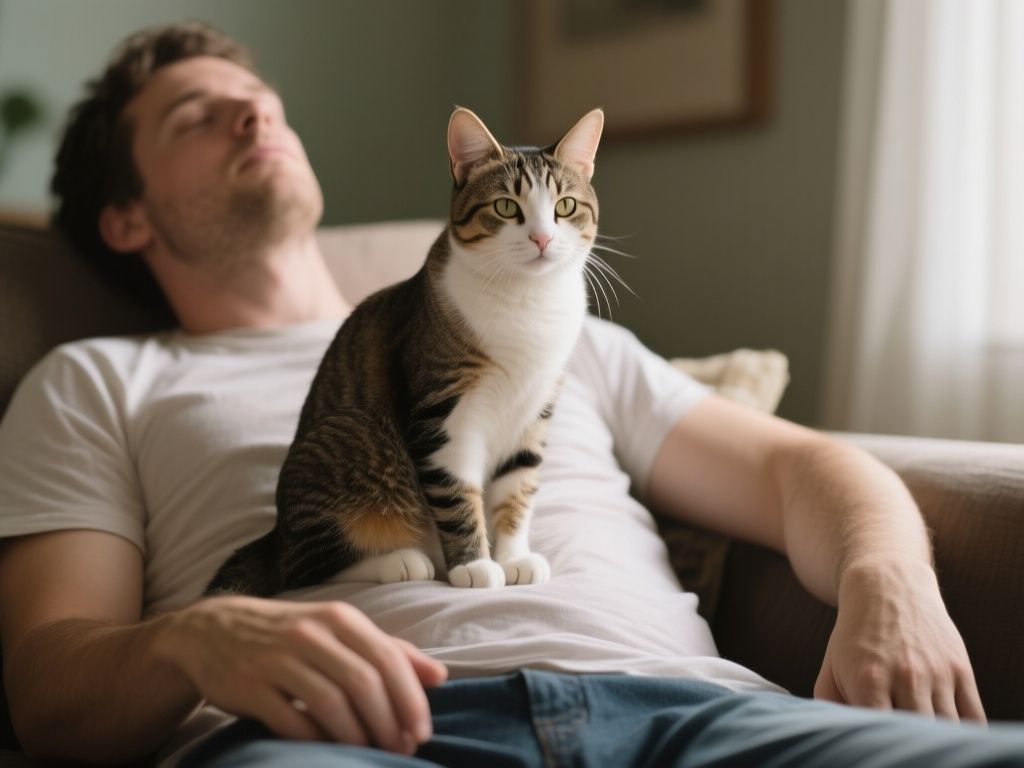
Your cat may sit on your chest because it feels warm, secure, and close to your “heartbeat” rhythm. Your lap can feel too exposed, too narrow, or too easily disturbed. Chest-sitting often signals comfort, bonding, and a desire for warmth—while lap behavior depends on boundaries, scent, and your cat’s mood.
Why does my cat sit on my chest but not lap?
Most cats don’t choose body locations randomly. Chest-sitting usually combines warmth, scent, and a reliable sense of safety. Your chest is also a steady, predictable spot: your breathing and heartbeat create gentle, familiar vibrations that many cats find soothing. Laps, on the other hand, can be unpredictable—your leg movements, the pressure of your weight, and how close you are to “paws-on-you” make some cats less comfortable.
One common pattern is this: your cat will tolerate or even prefer the chest because it’s stable and warm, but may avoid your lap because it requires more commitment. On your lap, a cat is often more “trapped” by your shifting legs, blanket folds, or the fact that you’re actively using your hands. Cats that like control and clean escape routes sometimes pick the chest instead.
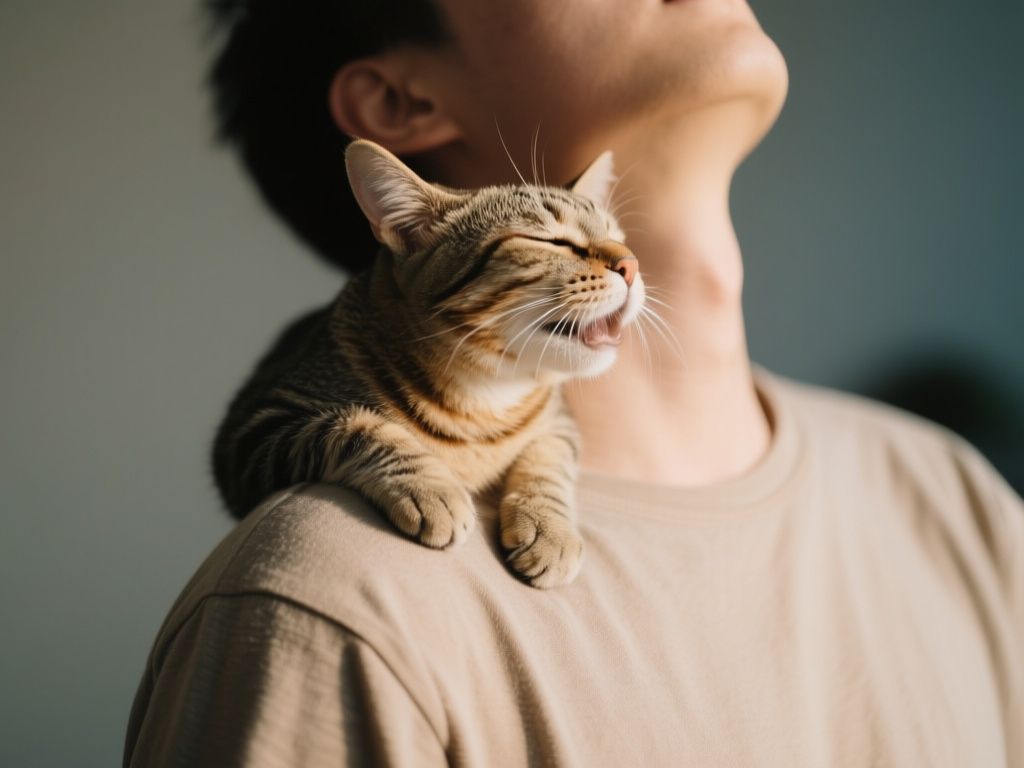
How does chest-sitting feel to a cat?
Your chest offers a bundle of benefits that fit what many cats naturally seek: heat, security, and communication cues. Even if your cat can’t understand “I’m your human,” it can interpret comfort signals very well.
Warmth and airflow
Body heat collects on your torso, and your chest area tends to stay consistently warm. Laps can be warm too, but they’re often warmer only when you’re sitting still. If you shift, stand, or adjust your position, your lap can become intermittently warm or uncomfortable. Cats can be picky about consistency.
Heartbeat and breathing rhythm
Many cats enjoy the sensation of your breathing and heartbeat. Those subtle vibrations help them feel “in sync,” the same way kittens often nestle near their mother’s body. If your cat sleeps on you or leans into your chest, it’s likely responding to that steady rhythm.
Scent and familiarity
Your chest is close to where your scent is most concentrated—your skin, sweat, and natural oils. Cats have scent glands and rubbing behavior that communicates “this is mine” or “this feels safe.” If your cat repeatedly chooses the chest, it may be marking you and using that area as a familiar rest spot.
Easy access to escape routes
On a chest, many cats still have a relatively straightforward path to step off. On your lap, their body may end up pinned between your thighs, blanket edges, or your moving arms. Cats are built to jump and pivot quickly; if they feel they can’t move as smoothly, they may avoid your lap even if they like you.
Why do cats avoid laps sometimes?
Laps are not “automatically comforting” for all cats. They can be a high-stimulation zone: you move, talk, hold objects, and your legs change position. Some cats also dislike the sensation of being enclosed or restrained.
Laps can feel too exposed
Your lap often positions a cat lower to the ground and makes its underside more vulnerable. If your cat prefers to keep a view of the room, it may choose your chest (higher and more stable) rather than your lap (more easily blocked by your body or objects).
Your lap may be unpredictable
Even if you’re gentle, your body shifts. A cat that sits on your lap must adjust its weight when your legs move or when you get comfortable in a new position. If your cat has ever been startled by a sudden movement—like you stretching or standing up quickly—it may learn to avoid the lap during those times.
Some cats don’t like “hands-on” posture
Humans tend to interact with cats on their lap by petting, cuddling, or moving them. A cat that wants closeness without pressure may prefer your chest because it can stay in place while you naturally rest. If you notice you pet the cat more on your lap than on your chest, that could be part of the difference.
Medical comfort matters
Sometimes the “not lap” preference links to comfort. If a cat has arthritis, stiffness, or sensitivity in the hips or belly, certain positions may feel worse. Your chest might offer a more supportive perch, while your lap could require more awkward leg bending. If you also notice changes in jumping, grooming, or litter box use, it’s worth asking a veterinarian about pain or mobility.
Is it bonding—or just warmth?
Chest-sitting is usually about comfort and connection, but the exact meaning depends on your cat’s body language. Cats show affection in different “dial settings.” Some are all-in cuddle cats; others prefer a sit that lets them keep control.
- If your cat kneads your blanket, purrs, or relaxes its posture on your chest, it’s strongly positive comfort.
- If your cat blinks slowly, gently leans in, or leaves and returns willingly, it’s likely social bonding.
- If your cat sits on your chest but watches everything with tense body or flicking tail, it may be seeking warmth while still feeling guarded.
In contrast, a cat that avoids your lap might still be affectionate—just not in that particular position. Many cats love their people but choose where closeness feels safe.
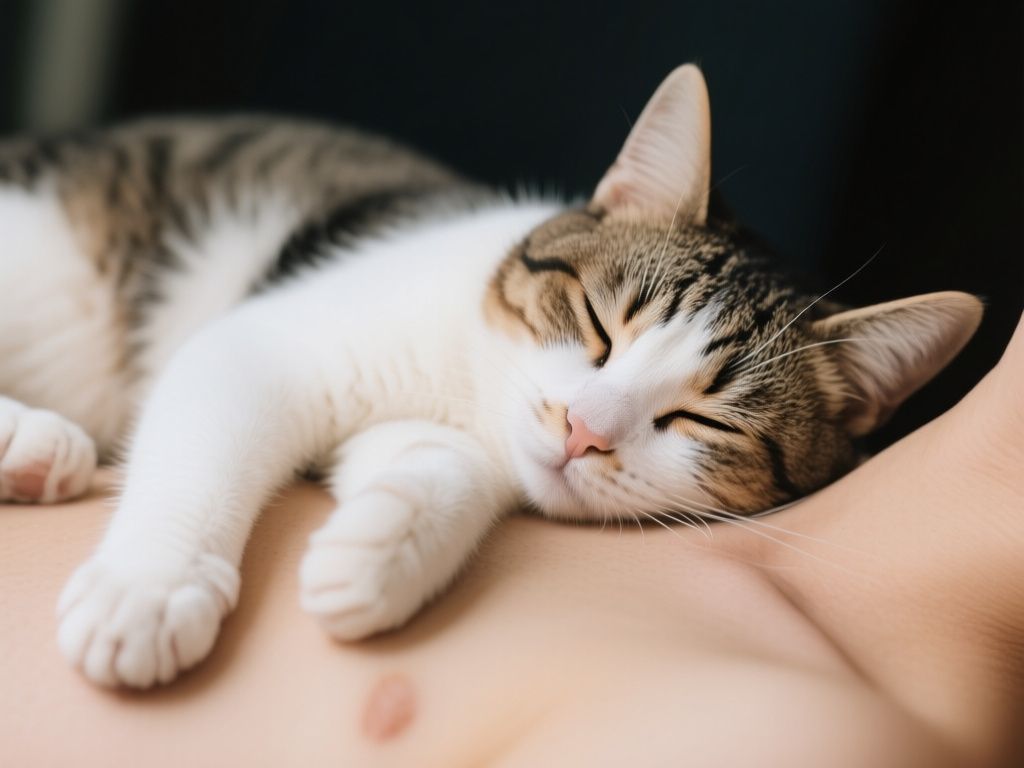
Common scenarios that explain this pattern
Here are several very normal situations that often lead to “chest, yes; lap, no.” You can match them to what you’ve seen at home.
You sit differently in your lap vs your chest
When you’re in a chair, your chest is upright and stable. When you’re on a couch or bed, your lap might be used for reading, eating, or holding a phone. Your hands and legs move more than you realize. Cats respond to the predictability.
Your cat prefers vertical height
Some cats feel safer being higher. A chest perch is higher and often closer to your face level, so your cat can monitor the room. Laps can be lower and more blocked by blankets or your arms.
Your cat has learned a “routine” on your chest
If, over time, your cat has settled on your chest during calm moments (watching TV, after a meal, before bedtime), it may treat that area as a known safe zone. Learning matters more than we give it credit for.
Your lap might trap scent or feel different
Different fabrics and positions change how scents and textures feel. Some cats dislike certain blankets or the sensation of fabrics on their belly. If you use a lap blanket often, your cat might have preferences you haven’t noticed.
Temperament differences
Personality is huge. Some cats are “perch-and-watch” affection types. They’ll seek closeness where they can remain in control. Your chest gives that without requiring them to be cradled by your legs.
What can you do to help your cat feel comfortable on your lap?
You don’t need to force lap cuddles. The goal is to make your lap a place your cat chooses. Small, low-pressure changes can help.
- Start with short sessions. Sit still with your hands relaxed, and invite your cat to approach without picking them up.
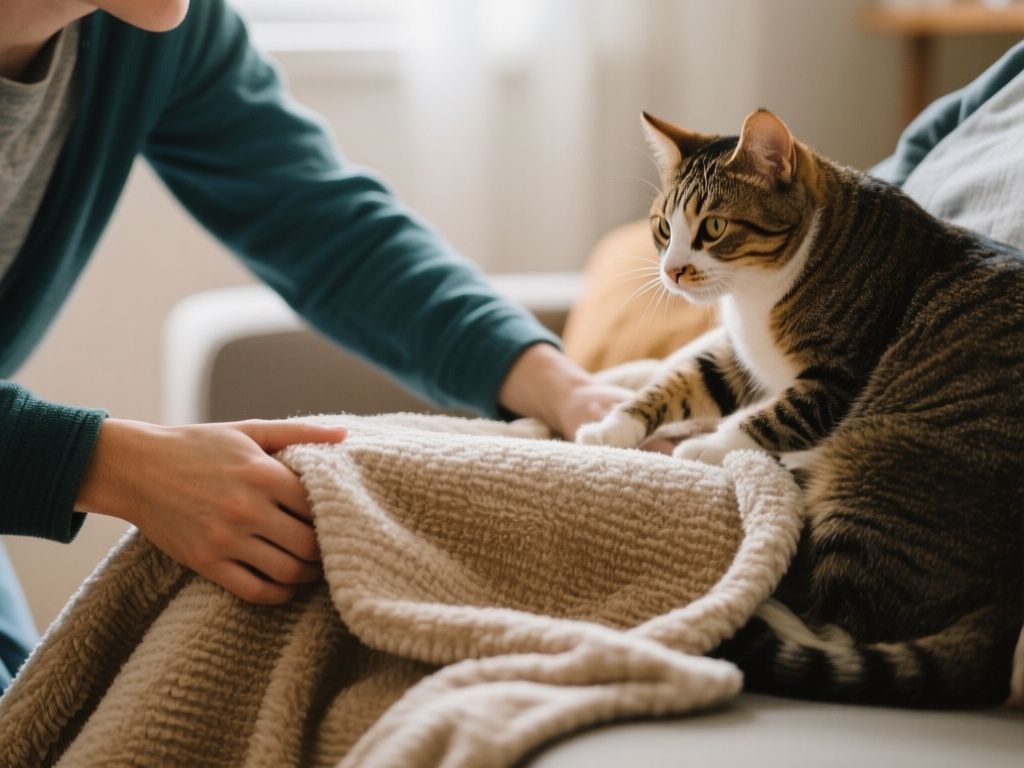
- Use a familiar blanket. If your cat likes the blanket or towel they knead on your chest, try placing that same fabric on your lap.
- Lower the “commitment.” Put your lap on the side or slightly raised with a pillow so the cat can step on and off easily.
- Watch body language. If the tail is tense, ears are pinned back, or your cat stiffens when you move, stop and try again later.
- Reward choice. If your cat chooses your lap for even a few seconds, offer gentle praise and stop petting once your cat seems content (ending on a positive note matters).
If your cat only sits on your chest when they want affection, that may be their preferred “language.” Respecting it often builds trust faster than trying to change the position.
When should you worry?
Most chest-sitting is normal, but certain signs suggest you should check in with a veterinarian or a behavior professional. Cats can be cryptic, so look for patterns.
- Your cat seems uncomfortable, cries, or avoids jumping while still trying to perch on your chest.
- Body stiffness, limping, changes in grooming, or reduced activity show up alongside the new behavior.
- Your cat suddenly becomes clingy and refuses to be away from you, especially with hiding or appetite changes.
- There’s aggression or fear associated with touching—like biting when you attempt to pet on your lap.
If any of those fit, it’s reasonable to schedule a vet visit to rule out pain. If health seems fine but behavior is stressful, a vet behaviorist (or an experienced trainer) can help you interpret cues and adjust the environment.
Frequently Asked Questions
Does my cat sitting on my chest mean my cat trusts me?
Usually, yes. A cat that chooses to rest on your chest is choosing closeness in a spot that’s warm and predictable. Trust is often shown through relaxed posture, slow blinking, kneading, or purring.
Why won’t my cat sit on my lap even when I offer treats?
Treats can work for motivation, but they don’t automatically remove discomfort or uncertainty. Your lap might feel unstable, too exposed, or too close to your movements. Try changing fabric, posture, and timing (for example, during calm evenings when you’re still).
Is my cat trying to control me or “claim” my space?
Cats do mark things they like through scent and rubbing. Chest-sitting can be a form of “this is familiar” rather than control. If your cat allows you to move gently and doesn’t show tension, it’s more likely bonding than dominance.
Can chest-sitting be a sign of anxiety?
It can be. Some cats seek contact when they feel uncertain, but the overall context matters. If chest-sitting comes with hiding, tail flicking, frequent vocalizing, appetite changes, or sudden clinginess, it’s worth checking for stressors or health issues.
What if my cat only sits on my chest when I’m lying down?
That usually points to comfort: warmth, a stable surface, and easy access to escape. Lying down can also reduce your leg movement, making your lap more predictable—if the lap is less predictable when you’re upright, your cat may avoid it.
Should I pick up my cat if they don’t sit on my lap?
It’s safer to let your cat choose. Picking them up can feel controlling, especially if your cat already avoids lap contact. Encourage by offering a comfortable blanket and staying calm, then reward their choice when they approach on their own.
If you want one practical takeaway: watch your cat’s body language on your chest—relaxed means “good comfort,” while tense means “warm but cautious.” Then adjust your lap setup (stability, fabric, and movement) to match what your cat already finds safe.

Mim Creation
Writer at Helmet Today, covering helmet reviews, fit and riding safety.