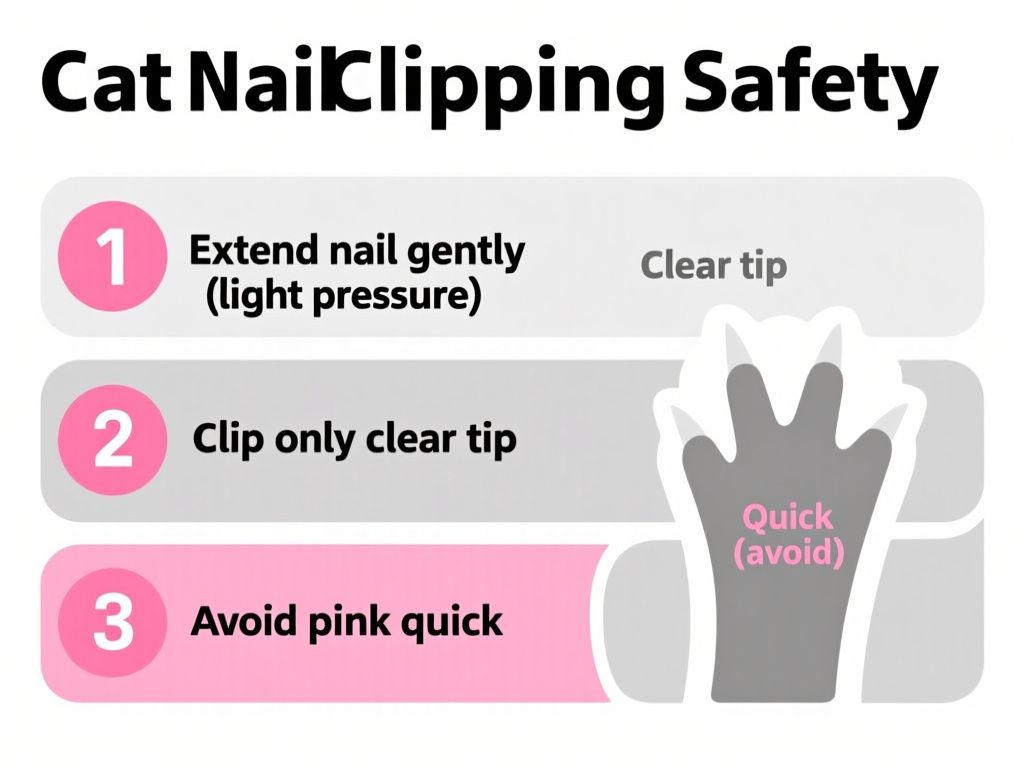
To use cat nail clippers, first choose the right clipper, then get your cat calm and gently secure a paw. Apply light pressure to extend the nail, clip only the clear hooked tip (avoiding the pink quick), and reward right away. Repeat for a few nails at a time, keeping sessions short and stress-free.
What are cat nail clippers, and why do cats need nail trims?
Cat nail clippers are tools designed to cut the sharp, outer tip of a cat’s claws. The goal isn’t to “shave” the claw down—it’s to remove the very point that snags furniture, carpets, and skin, while keeping the living tissue inside the nail (the quick) safe.
Trimming helps in practical ways. Overgrown nails can catch on blankets or fabric and tear, which is painful. Long nails also make litter box digging less comfortable and can increase accidental scratches during play or cuddling. In multi-cat homes, regular trimming can reduce the damage from occasional scuffles.
One quick clarification: cats naturally shed nail outer layers through scratching. Trimming is still useful, especially if your cat doesn’t scratch enough, doesn’t use a sturdy scratching post, or has nails that grow faster than they wear down.
Which type of cat nail clippers should you use?
The “best” clipper depends on your cat’s nail size, your comfort level, and the grip you can maintain while clipping. The two most common styles are scissor-style and guillotine-style, plus a few less common options.
Scissor-style clippers
These look like small scissors with a cutting blade. Many people like them because you can see the nail tip better and feel more control. They’re especially helpful for beginners who are learning how close to the quick they can cut.
Guillotine-style clippers
These have a small hole where the nail goes, and a blade slices across when you squeeze. They can work well if you align the nail correctly every time, but some people find it harder to judge exactly where the cut will land.
What about grinders?
Some cat owners use nail grinders (like a small pet-safe electric file). Grinders can reduce the “sharp tip” problem without a single decisive cut, but they can be noisy and require patience to get your cat comfortable. If your cat startles at sounds, clippers may be the calmer option.
Quick checklist for choosing
- Blade sharpness matters: dull blades crush rather than cut, making the nail split or hurt.
- Choose a size that fits your cat’s nails. Small clippers for small cats; larger ones for larger claws.
- Pick a clipper you can squeeze without awkward hand strain. If your grip is tense, your cuts will be less steady.
How do you tell where to cut without hurting your cat?
The key safety rule is simple: clip only the clear, hooked tip of the nail. Inside the nail is the quick, which contains nerves and blood vessels. It often looks like a pinkish or darker area in lighter nails, and it’s harder to see in darker nails—so you’ll rely more on distance and nail shape.
In real life, the best approach for new trimmers is conservative. Start by clipping a tiny amount—just the sharp point. You can gradually trim more over repeated sessions.
What if you accidentally cut the quick?
If the quick gets nicked, the nail may bleed and your cat may pull away. Offer gentle pressure with clean gauze or a styptic powder product made for pets. Then stop and give your cat a breather. It’s not the end of trimming forever; it’s a signal to adjust your technique and clip smaller amounts next time.
Keep these items nearby
- Cat nail clippers (or a grinder if that’s your method)
- A towel or non-slip mat to stabilize your cat
- Small treats for immediate rewards
- Styptic powder or cornstarch in case of minor bleeding
- Optional: flashlight to better see the quick in lighter nails
How do you prepare before clipping?
Preparation is where most success comes from. If you rush, your cat will sense it, get tense, and you’ll be more likely to clip too far. Treat trimming like a short, predictable routine.
Pick the right time
Choose a moment when your cat is calm—after a meal or during a relaxed rest. Avoid trimming when your cat is playing wildly, vocalizing, or clearly stressed. Even the most gentle technique won’t feel gentle if the timing is wrong.
Get your cat used to the process first
Before you ever clip, practice handling. Touch a paw, lightly press to extend the nail, and then release and reward. Repeat a few times over several days. This helps your cat learn that paw handling isn’t followed by an immediate surprise cut.
Set up the environment
Good setups reduce slipping and scrambling. Sit where your elbows can stay supported. Use a towel if your cat tends to squirm. Some people prefer having two people—one steadies the cat and the other clips—but it’s also possible to do it solo with practice.
Step-by-step: How to use cat nail clippers
Follow this sequence the first few times. Once it feels routine, you’ll move more quickly, but the order still matters.
-
Start small: Choose one paw and one or two nails for the first session. Short wins build trust.
-
Secure comfortably: Gently hold the cat’s body so your cat can’t yank away. Avoid grabbing too tightly—your cat should feel supported, not trapped.
-
Extend the nail: Apply light pressure to the pad above the nail to make it extend. Don’t press hard; if the nail doesn’t extend easily, reposition your pressure.
-
Identify the clear tip: Look for the transparent hooked area. The quick is the inner part you want to avoid.
-
Clip in the correct direction: Aim to cut only the tip, creating a small, even trim. Most people cut a small “slice” rather than trying to remove a big chunk.
-
Reward immediately: Give a treat as soon as the nail is clipped, even if it’s only one nail. This teaches your cat that staying still leads to good things.
-
Move at your cat’s pace: If your cat becomes tense, stop and end the session on a calm note. You can try again later or on a different day.
How often should you trim a cat’s nails?
Most cats need trimming every few weeks, but the exact schedule depends on growth rate, activity level, and scratching behavior. If your cat uses scratching posts effectively and your nails don’t snag, trimming may be less frequent. If you hear clicking on hard floors, nails are often too long.
A practical approach is to check once per week. If you notice the tips getting sharp or long, schedule a trim. For many cats, a routine every 2–4 weeks works well, but some cats need longer gaps and others need more frequent minor trims.
What if your cat hates nail trims?
Lots of cats hate it at first. The good news is you can often improve the experience with small changes rather than forcing a full-session trim.
Try “micro-sessions”
Instead of trimming all nails in one sitting, do one nail per day (or one paw every other day). You’ll cut fewer nails overall per session, but your cat learns faster because the stress ends sooner.
Change the handling style
Some cats tolerate being held on a lap. Others do better standing or lying on their side on a non-slip surface. If your cat twists away during handling, switch positions. The goal is to keep your cat stable without creating fear.
Use good lighting and steadier timing
If you can’t see clearly, you’ll hesitate—and hesitation increases tension. Trim in brighter light, and avoid doing it late at night when visibility is poor.
Consider professional help
If your cat becomes overly aggressive, has mobility issues, or you repeatedly worry about cutting the quick, a vet or professional groomer can help you learn safe technique or do the trimming. That’s not “giving up”—it’s choosing safety for both of you.
Common mistakes to avoid
Even careful people make predictable mistakes when they’re learning. Avoid these and your success rate usually goes up quickly.
-
Clipping too far: The most common issue is cutting into the quick. When unsure, trim less.
-
Trimming in a rushed session: If you’re trying to finish before your cat gets restless, your aim may drift.
-
Using dull clippers: Dull blades crush and can cause splitting.
-
Skipping rewards: If treats only happen at the end, your cat won’t connect “still paw = good thing.” Reward right after each nail.
-
Forgetting paw sensitivity: Some cats need extra gradual training for front paws or a specific leg.
When to stop and get advice
Stop trimming and talk to a vet if you see signs that go beyond “they don’t like it.” These include persistent bleeding that doesn’t stop, swelling around the nail, discharge, obvious pain when touching the paw, or a nail that looks broken or deformed. Older cats can also have nail changes that make trimming trickier.
If your cat frequently bites or scratches during attempts, professional coaching is worth it. Fear-based aggression is harder to manage with force, and you don’t want either of you hurt.
Frequently Asked Questions
Can I use human nail clippers on my cat?
It’s usually not recommended. Human clippers are shaped for human nails and may not fit cat claws properly, increasing the risk of splitting or clipping too far. Pet-specific clippers are designed for claw shape and offer better control.
What part of the nail should I cut?
You should cut only the clear, outer tip that forms the sharp hook. The quick is the sensitive inner part—often pinkish or darker—so it’s the area you want to avoid. When in doubt, take a smaller cut.
How do I calm my cat before trimming?
Offer a few minutes of gentle attention first, then practice paw touching and light nail extension without clipping. Treat immediately after each successful, calm interaction. Keeping sessions very short helps your cat associate trimming with predictable, safe routine.
My cat’s nails are dark. How do I see the quick?
For dark nails, visibility is harder, so go extra conservative. Clip tiny amounts off the very tip and stop if you feel resistance or if your cat shows sudden discomfort. Over time, you’ll learn where the quick tends to begin for your cat.
What should I do if the nail starts bleeding?
Apply gentle pressure with clean gauze. If you have styptic powder made for pets, you can use a small amount to help clotting. Bleeding should stop quickly; if it doesn’t, or if your cat seems in severe pain, contact a vet.
How can I make trimming less stressful long-term?
Build trust through repetition: handle paws regularly (even on non-trim days), do micro-sessions, and reward after each nail. Pair trimming with your cat’s favorite treats and calm body language. Consistency matters more than length of the session.
If you remember just one thing, make it this: trim a little at a time, reward immediately, and never rush past the point where your cat is getting truly uncomfortable.

Mim Creation
Writer at Helmet Today, covering helmet reviews, fit and riding safety.