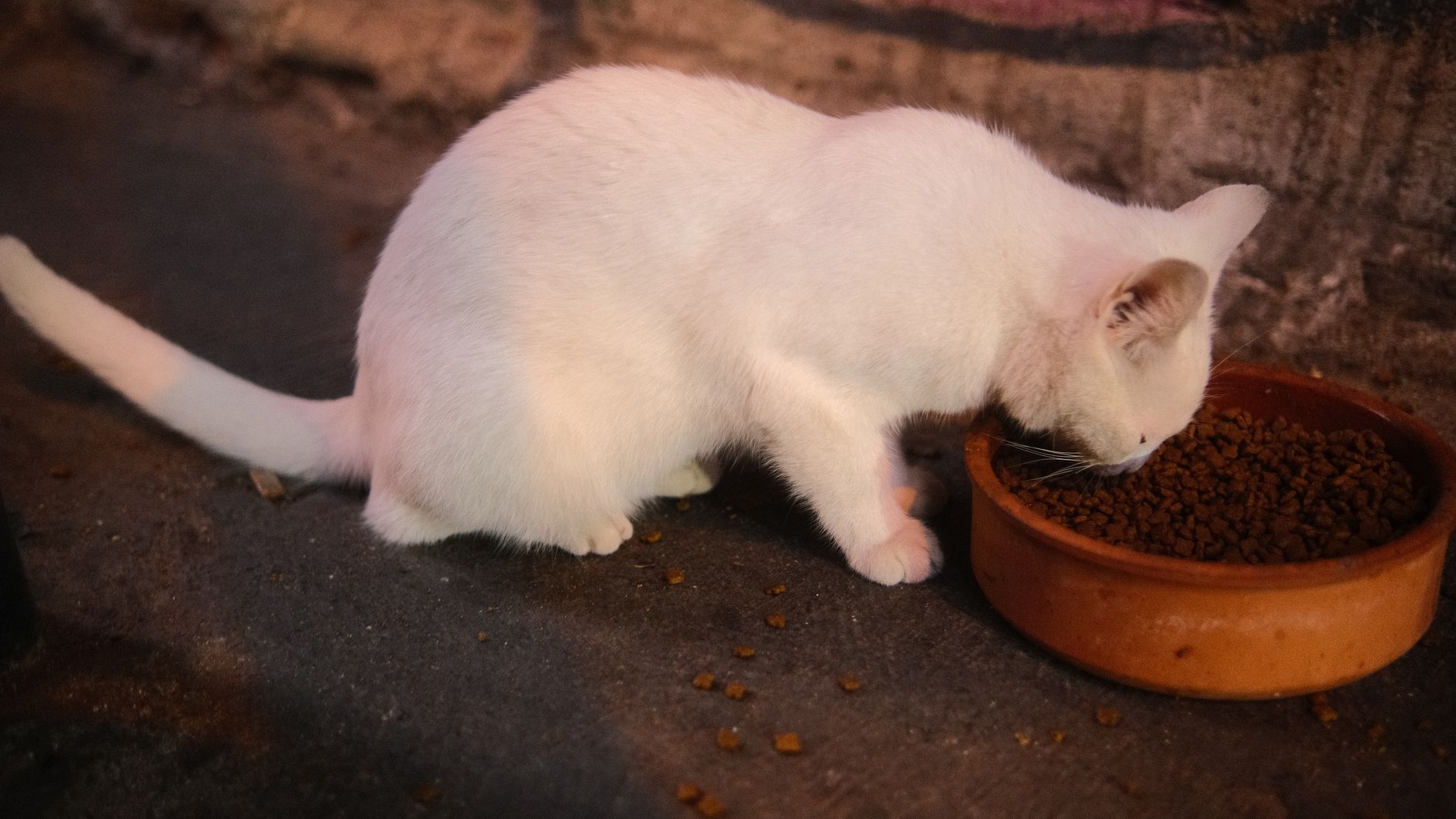
Most cats should not eat dog food. Dog food is formulated for dogs’ different nutrition needs—especially different levels of certain nutrients like taurine, an amino acid cats must get from their diet. Occasionally eating a small amount usually won’t cause immediate harm, but it’s not safe as a regular food.
Can cats eat dog food sometimes?
Yes, a small bite now and then usually won’t cause a dramatic problem. If a cat steals a few kibbles from a dog bowl, many cats will be fine. That said, “not immediately dangerous” is different from “nutritionally appropriate,” and the long-term picture is where the concern really shows up.
The main issue is that dog food and cat food are built around different species requirements. Cats are obligate carnivores, meaning they rely heavily on nutrients found in animal tissue and have limited ability to manufacture certain key compounds. When a diet is missing or under-supplying those nutrients, health problems can develop over time.
So, if your cat snatches a couple of pieces, you can likely treat it as a temporary mishap. If your cat is regularly eating dog food—or you’re considering switching them—you should plan on switching back to a cat-specific diet.
Why is dog food not a cat’s ideal diet?
Dog food is designed for dogs, and dogs’ nutritional requirements differ in meaningful ways from cats’. The most important difference is taurine, an amino acid that cats need for normal heart function, vision, digestion, and overall health.
Cat food formulations include taurine (or provide taurine precursors) at levels that match feline needs. Many dog foods either contain less taurine than cats require or don’t include it in a feline-appropriate way. When cats don’t get enough taurine, serious issues can develop. Heart disease is the headline concern, but vision and other systems can also be affected.
What’s the taurine issue, in plain terms?
Taurine is essential for cats, and their bodies use it in ways that make them more dependent on adequate dietary intake. Even if dog food contains taurine, the amount and balance of nutrients often aren’t what a cat needs. That’s why cat food labels are written to meet feline-specific nutrient profiles.
Are there other nutrient differences besides taurine?
Yes. Nutrient gaps can include:
- Protein and amino acid balance: Cats require specific amino acid profiles to support metabolism and muscle maintenance.
- Vitamin and mineral levels: Calcium, phosphorus, and certain vitamins are formulated differently.
- Fatty acid needs: While both cats and dogs need fats, cats often have specific requirements for fatty acids that support skin, coat, and energy.
Even when ingredients look similar—like “chicken” or “chicken meal”—the nutrition can be engineered very differently through formulation and testing.

Photo by Doğan Alpaslan Demir on Pexels
What happens if a cat eats dog food?
In the short term, many cats won’t show obvious symptoms. But some cats can develop stomach upset. Dog food can be richer or formulated differently, and a cat’s digestive system may respond with vomiting or diarrhea, especially if the cat isn’t used to that food.
Over time, the risk is more about missing feline-specific nutrition rather than an immediate poisoning scenario. With continued feeding, a cat’s body can’t “catch up” if nutrients like taurine are chronically low.
What symptoms should you watch for after a mix-up?
If your cat ate dog food accidentally, monitor for changes during the next 24–48 hours. Potential signs include:
- Vomiting or regurgitation
- Loose stool or diarrhea
- Lower appetite for a day or two
- Behavior changes (less playful, hiding)
If symptoms are severe, persist more than a day, or include repeated vomiting, it’s worth calling your veterinarian. For cats, dehydration can become a concern faster than many people expect.
How urgent is it?
Urgency depends on the amount eaten and your cat’s health. If it was a single small handful of dry kibble, most owners can watch at home. If a cat ate a large amount, especially wet dog food or a food that’s high in certain fats, it’s more reasonable to seek advice quickly. If you’re unsure, call an animal poison helpline or your vet—they can ask the right questions and give guidance based on your cat’s size and the product.
Can cats eat homemade “dog food” recipes?
This is where the caution increases. Homemade diets—whether meant for dogs or cats—can be risky if they aren’t nutritionally balanced for the species. Cat nutrition isn’t just “protein plus leftovers.” Cats need specific amino acids, and taurine is the big one. They also need carefully balanced vitamins and minerals.
If you’re tempted to share homemade dog food with your cat, the safest approach is to make (or buy) a diet specifically balanced for cats, or to work with a veterinarian or a veterinary nutritionist to formulate a complete plan.
What about treats and scraps?
Occasional dog treats are a grey area. Some dog treats are mostly meat or are close enough in composition that a tiny amount might not cause immediate issues. But “sometimes safe” still isn’t the same as “safe to make a habit,” and many treats can include extra ingredients—like onions, garlic, or certain sweeteners—that are dangerous to cats.
So, if you want to keep things simple: keep dog treats separate, and use cat treats for your cat. It reduces both nutritional mismatches and ingredient hazards.
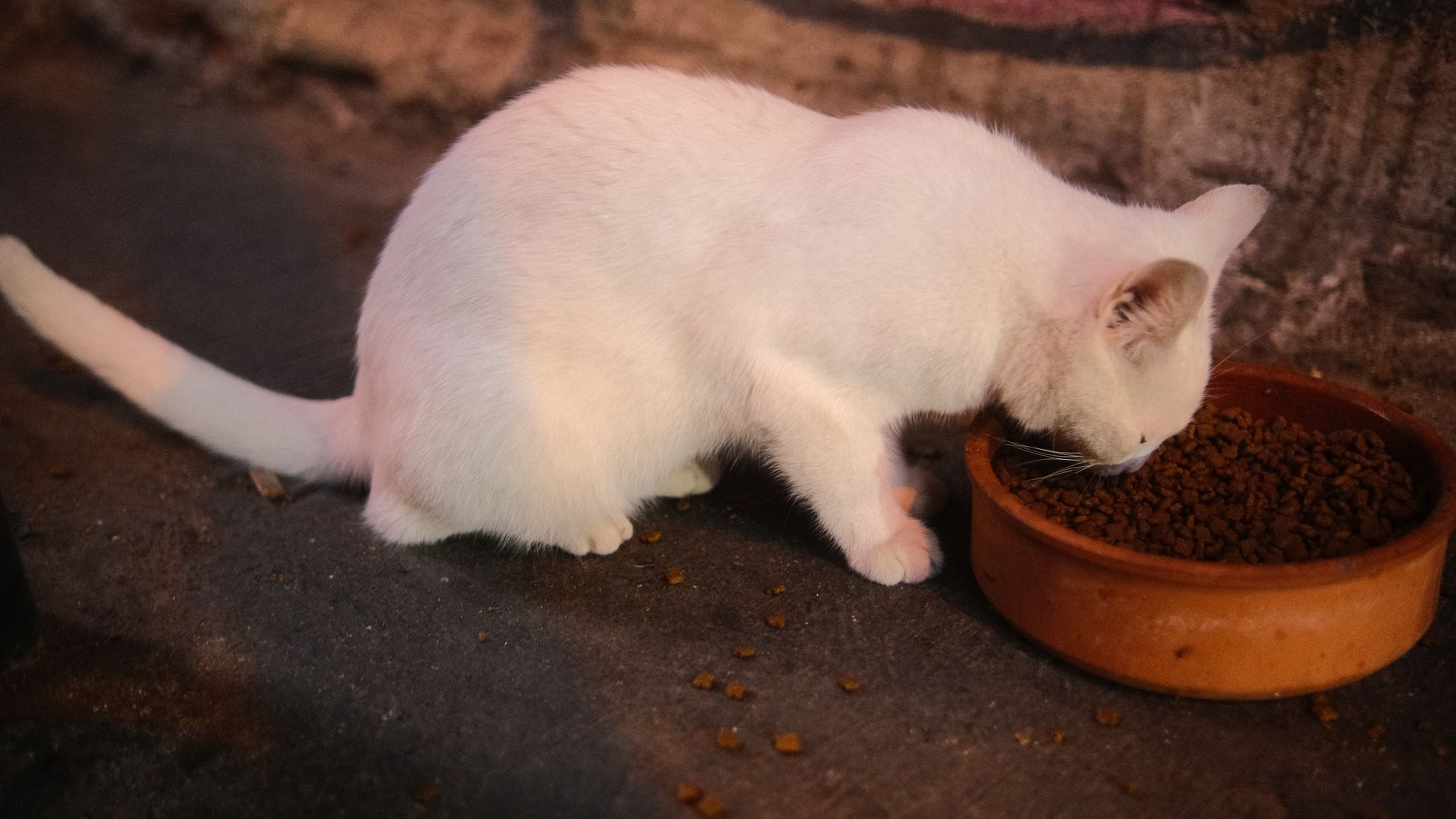
Photo by Eyüpcan Timur on Pexels
How do you keep cats from eating dog food?
If you have both animals, the most effective prevention is management. Cats are smart and persistent, and they’ll find a way if there’s an open bowl sitting unattended.
Here are practical options that work in real homes:
- Feed on separate schedules: Feed your dog first, then remove the bowl and feed your cat elsewhere.
- Use a barrier: A baby gate with a cat-friendly opening (or a cat room) can keep cats out of the dog’s feeding area.
- Place food at different elevations: Some cats are willing to jump onto counters or shelves to reach food, so this can backfire. But providing cat food on a stable, accessible surface can reduce scavenging.
- Microchip pet feeders: These are expensive, but they reliably separate access by scanning a chip. They’re the gold standard if multiple pets share a household.
- Monitor early: For the first couple of weeks when you change feeding routines, keep an eye out—cats learn patterns quickly.
A small change can make a big difference: removing the dog food promptly and giving your cat a predictable, satisfying meal reduces the “snatch and grab” behavior.
Is cat food always better than dog food?
For cats, yes. A cat food that’s labeled complete and balanced is formulated to meet feline requirements. That doesn’t mean every cat food is perfect for every cat—some cats need special diets due to kidney disease, weight issues, or allergies—but it does mean the baseline nutrition matches what cats require.
Dog food can still have uses in unusual situations, like feeding the dog properly while leaving the cat’s diet alone. It’s simply not the right primary diet for cats.
What should you do if your cat already ate some?
If your cat ate a small amount of dog food once, your best move is usually to stop the access and return to normal cat food. Then monitor your cat’s appetite, stool, and energy over the next day.
If your cat ate a larger quantity, is very young, is elderly, has pre-existing health conditions, or continues to show symptoms, contact your veterinarian. Provide the dog food brand and type (dry vs. wet; any special flavors), because ingredient profiles and fat content can differ widely.
Frequently Asked Questions
How much dog food is “too much” for a cat?
There isn’t a universal safe amount, because cats vary in size, age, and health. A couple of kibbles is usually a minor incident, while eating significant portions repeatedly increases risk—especially for taurine-related nutrient gaps. If you know your cat ate more than a snack, it’s wise to ask your vet for guidance.
Will taurine deficiency happen quickly?
Taurine deficiency risk depends on how much dog food was eaten and over how long. Nutrient problems are more commonly associated with ongoing, exclusive, or frequent dog food feeding. That’s why “one accident” is different from making dog food a regular habit.
Can cats eat dog food if it’s labeled “high protein”?
High protein doesn’t automatically make it cat-safe. Cats need specific amino acids in particular amounts, and taurine is the key example. Even a high-protein dog food can be missing or under-supplying feline-specific nutrient requirements.
What if my dog and cat share the same bowl?
Sharing bowls is a reliable way to get mixed nutrition over time. The safest plan is to feed them separately with routines you can enforce, like feeding at different times or using barriers or microchip feeders.
Are there signs that my cat is getting the wrong diet?
Early signs can be subtle: reduced appetite, changes in stool, weight changes, dull coat, or general low energy. Nutrient-related issues from an incorrect diet can also take time to show. If your cat has been eating dog food regularly, talk to your veterinarian even if they seem “okay.”
Can I switch my cat from dog food to cat food in one step?
Often you can, especially if your cat wasn’t on dog food for a long time. Still, abrupt diet changes can upset some cats’ stomachs. If your cat has been eating dog food frequently, consider transitioning gradually by mixing small amounts of cat food into the dog food over several days, with your vet’s input if your cat is sensitive.
Bottom line
Dog food isn’t a good choice for cats because it’s formulated for dogs’ nutritional needs, and cats require nutrients like taurine at feline-appropriate levels. If your cat steals a few pieces once, you can usually manage it by stopping access and monitoring—just don’t make dog food part of the routine. Separate feeding is the simplest, most reliable fix.

Mim Creation
Writer at Helmet Today, covering helmet reviews, fit and riding safety.